In 2025, I found myself again. I spent huge amounts of time in my studio making art or just tinkering. The Universe delivered me the answer to relieving my chronic pain, which was literally life changing. (Mold in my crawlspace was the culprit.) I did some inner work that moved me out of constant anxiety and allowed me to enjoy life again.
I’ve felt my relationship with my daughters grow this year. My circle of friends has expanded. I’m getting out of the house again, to just have fun. For a person who struggled with acute anxiety for years, this is a HUGE deal!
Some highlights:
Road trip for a week’s vacation in Dallas with my daughters and grandkids
Got myself a SCORE Mentor to support me as I grow my business
Played Bunco several times with a Meetup group
Took a Book Binding class
Listened to an Eagles cover band at 3rd & Lindsley
Enjoyed several shows at the Ryman Auditorium (Whose Live Anyway, Sarah Millican, Chris Isaak, Wanda Sykes)
Saw Henry Cho and Drew Lynch at Zanies
Hosted a Halloween party
The holiday season was exceptionally busy for me. Here’s a rundown:
I went to two Christmas parties; at one I learned how to play Flip 7, at the other I learned Left, Center, Right. Both were great fun.
I saw two live performances of A Christmas Carol – both tongue in cheek;
In Drunken Christmas Carol, the actor playing Ebenezer was intentionally drunk and unrehearsed. It was a hoot!
A Christmas Carol Cocktail Experience served audience members four themed cocktails over the course of the 90-minute event. Rideshare anyone?
I saw Lights Under Louisville, which is Christmas lights in a drive-thru cave. (If you ever get the chance, you really should go. I recommend the trolley rather than driving your own car so you can see the lights above you as you drive under them. And there’s so much to see you don’t want to be distracted with driving.)
I’m so grateful to the Universe for bringing these experiences to me. The world seems to be burning down around me, but somehow, my personal slice of it has been beautiful.
Lately I’ve been posting a lot about my personal growth coming out of trauma. I thought it was time for a change of pace. Today’s post is quite simply a list of things I love.
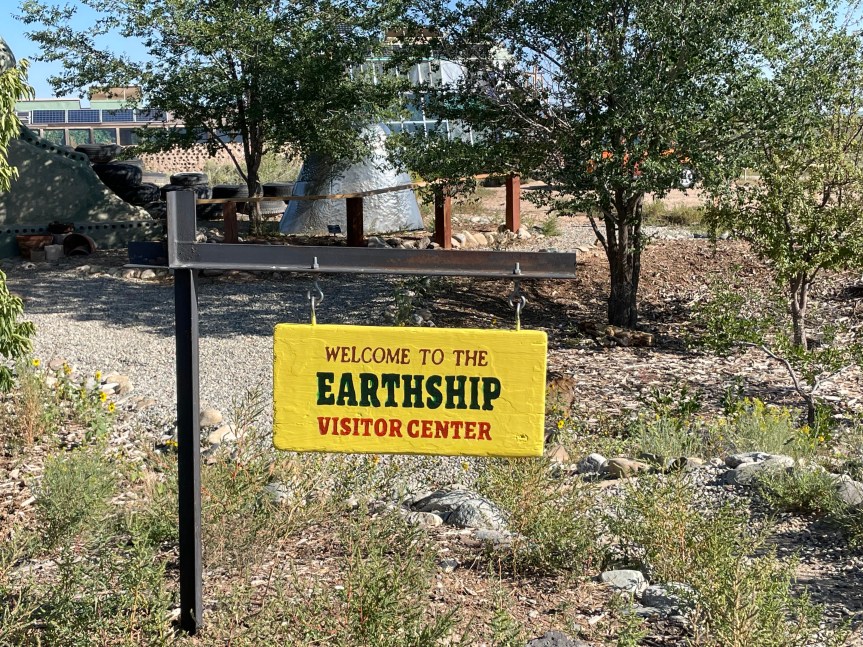
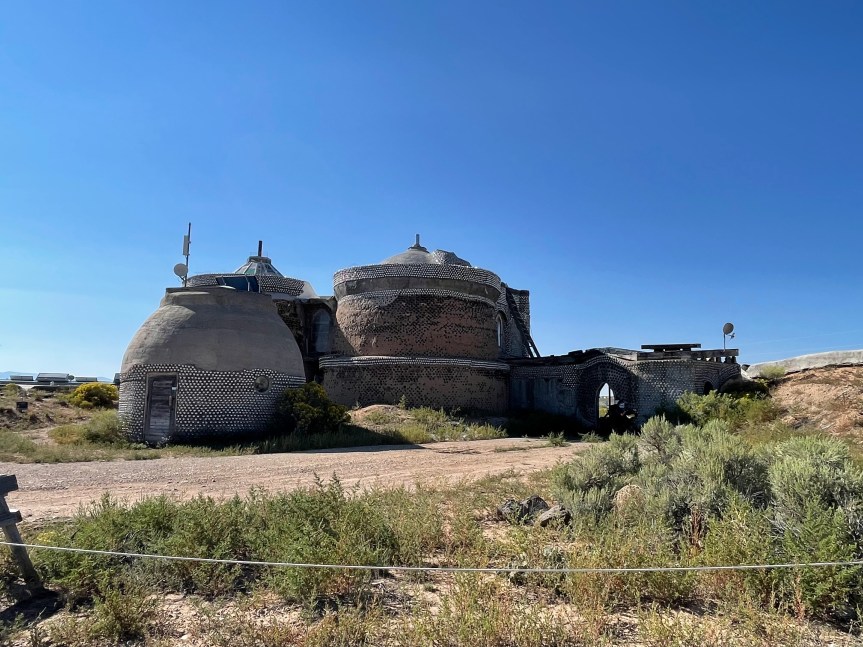
We were only able to get close to and tour the EarthShip Visitor Center. It is a model home that they have repurposed as visitor center, and it is set up so that you can see all the inner workings. First you go through the greenhouse, where they grow all manner of things, and control the temperature of the home by opening and closing windows at different times of day. Rain water is collected to use inside the house. The water is recycled through intricate systems within the house. It is collected as rainwater and stored for cooking, cleaning, and showering. “Greywater”, is collected after sink and shower use, then filtered through plants and botanical filters. It can then be used in toilets. Once the water has fully cycled through the inside of the home, it is used to feed plants outside the home.
I was SOOO excited to get to see an Earth Ship! I had learned about them on CBS Mornings and the idea of seeing one someday had been hanging out in the back of my mind. Then, as we were planning, and each of us were throwing out our ideas for what to do on each stop in our trip, someone added Earth Ships! I was only one who voted “Must See”, but my friends humored me, and in the end, I think they were all glad we included that stop.
Taos Pueblo
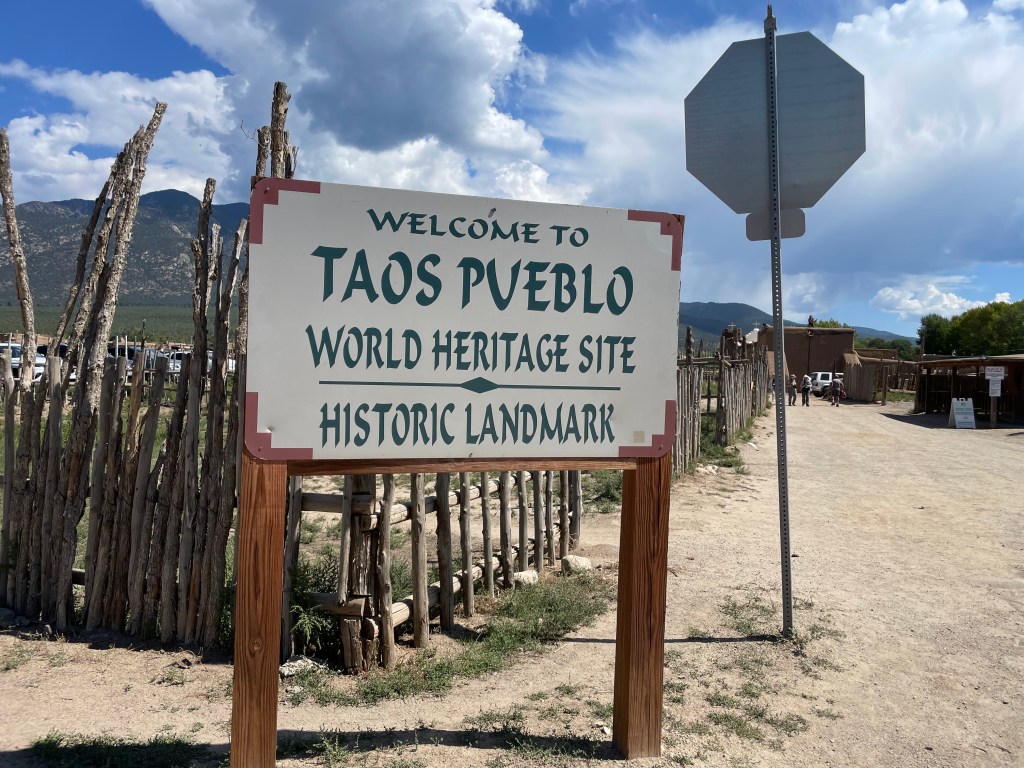
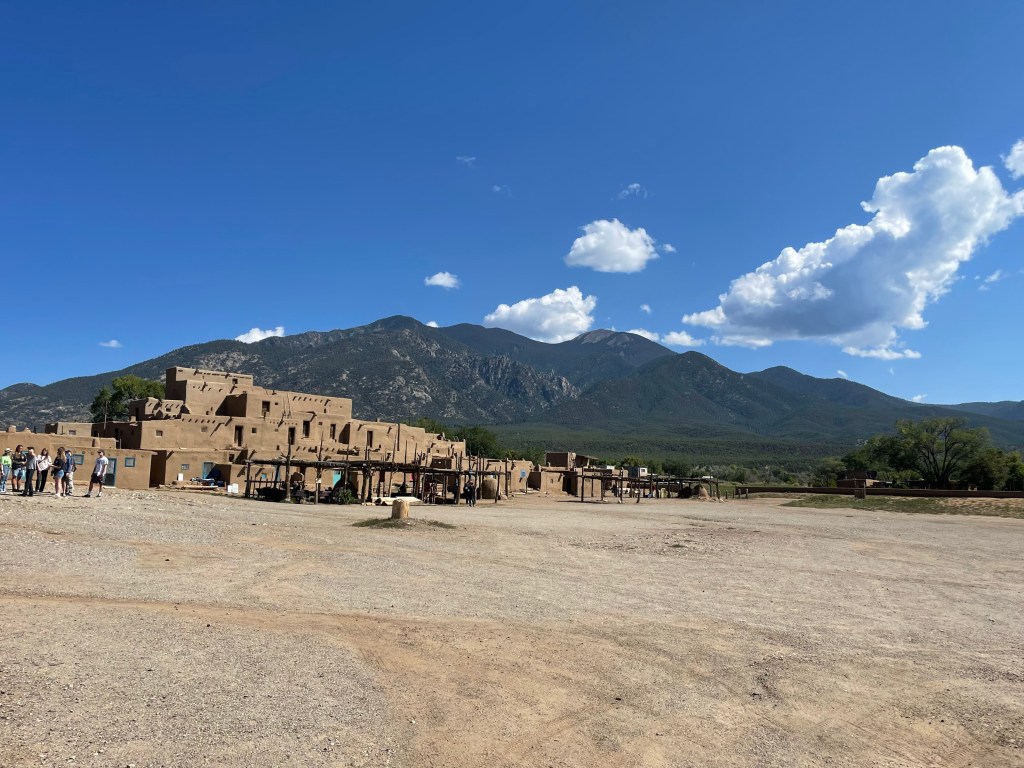
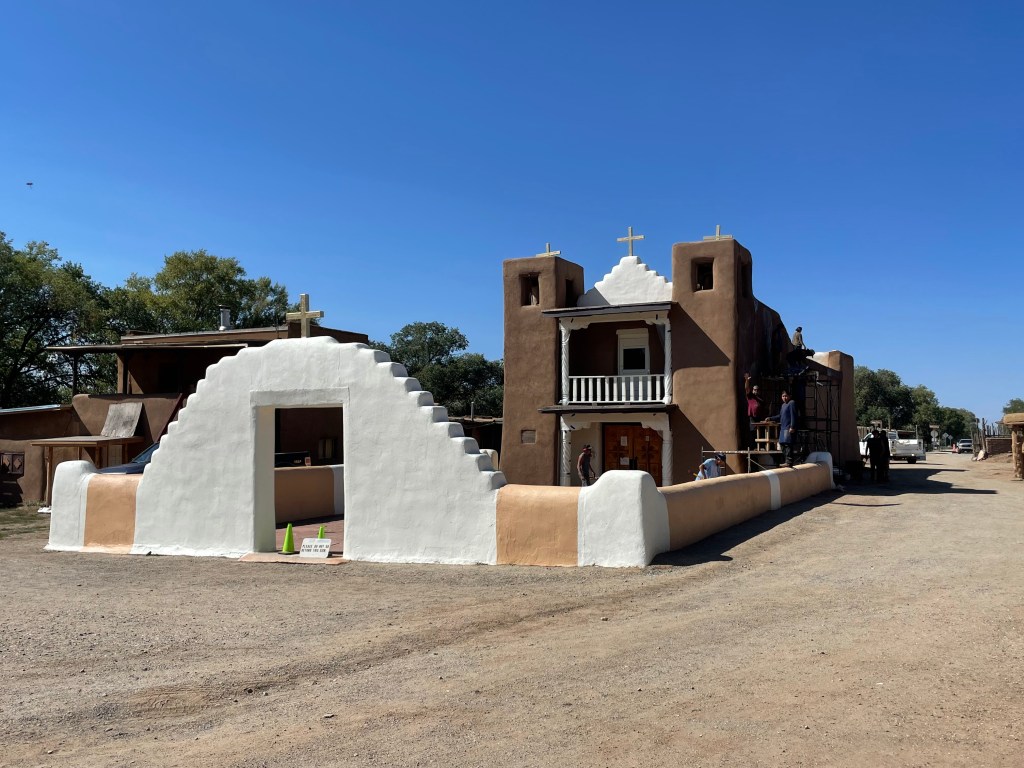
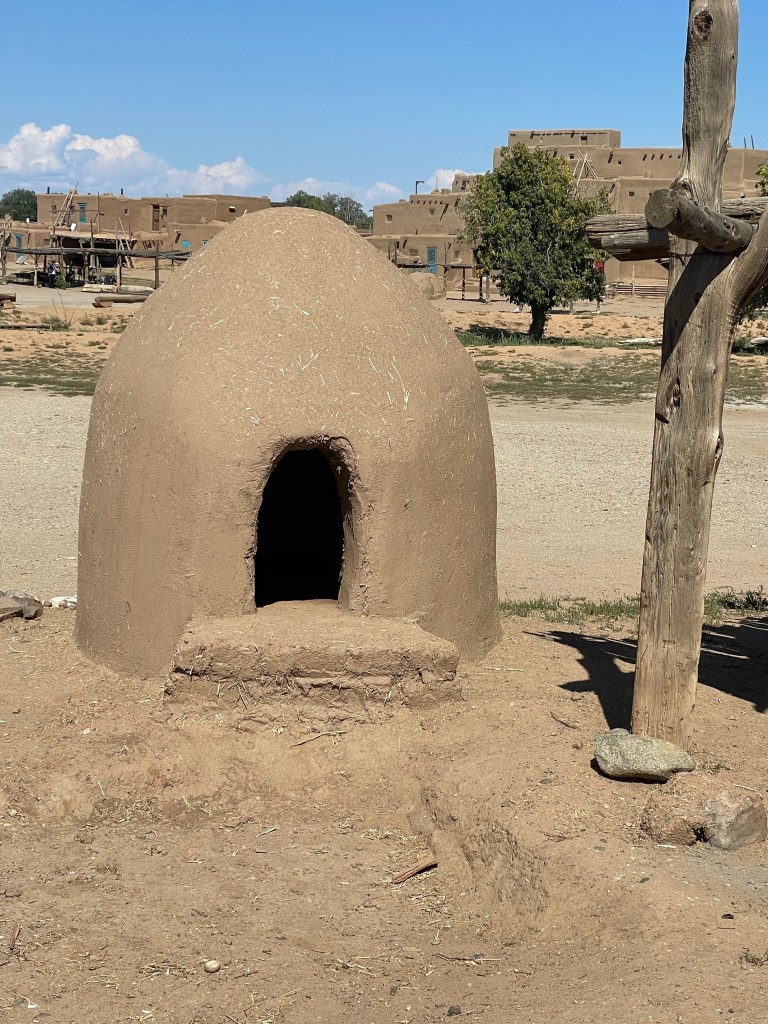
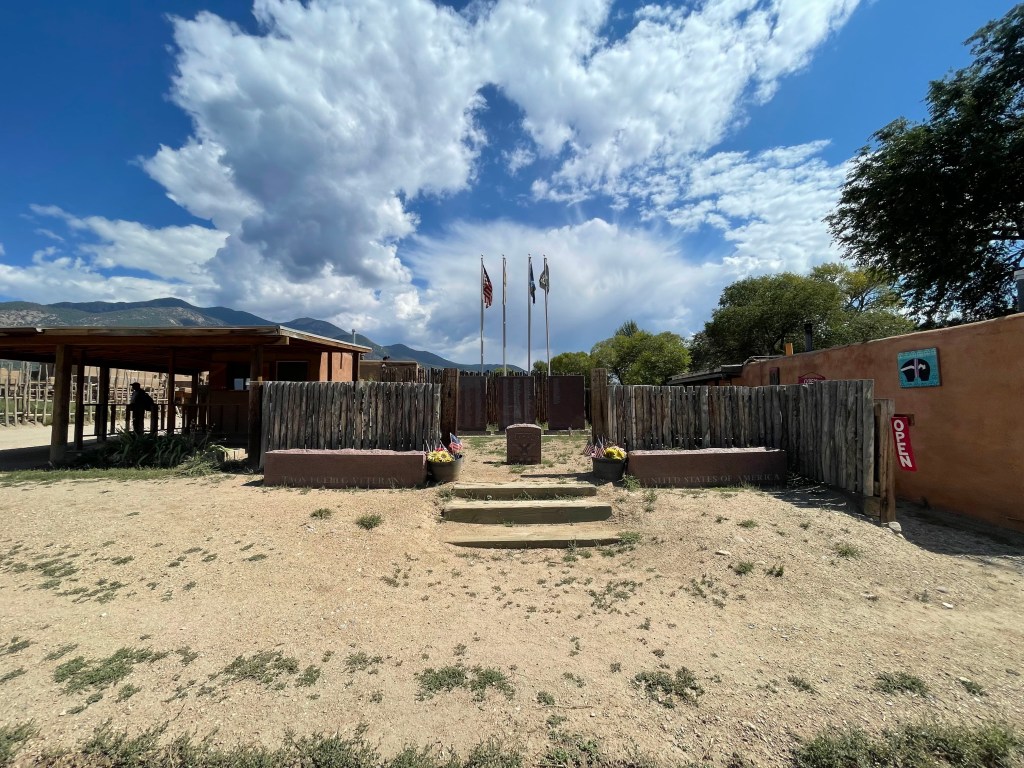
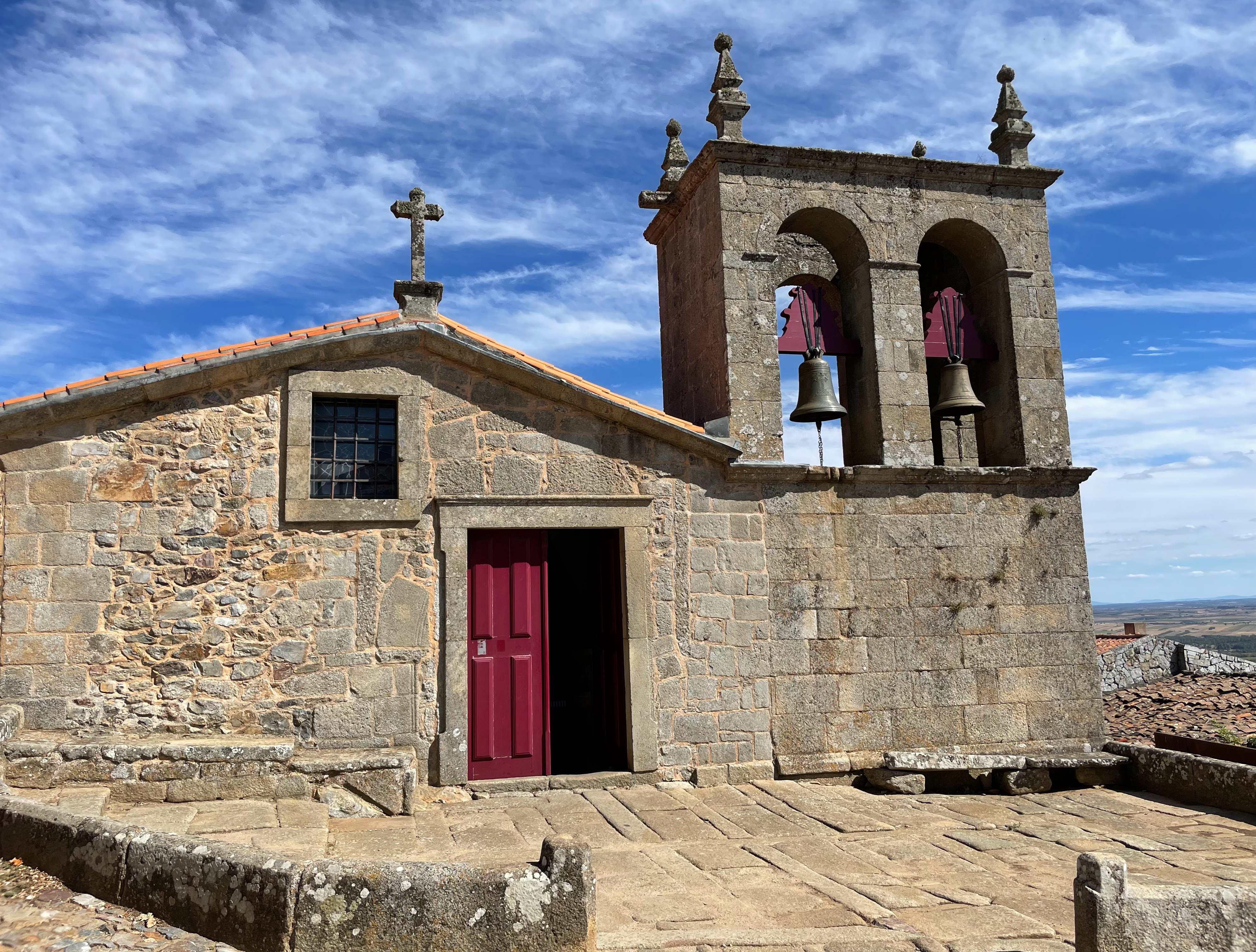
Our next stop was the Taos Pueblo, a living Native American community that has been continuously inhabited for over 1,000 years. There was some rehab work happening on the exterior of the church while we were there. Several huts had signs out indicating they had crafts for sale. I purchased an original painting by an artist who has lived there his whole life. The painting is a beautiful night view of his grandmother’s hut, highlighting the adobe of the hut, with a string of red peppers hanging outside the door, against a deep blue sky full of shooting stars.
Antonio’s Restaurant
By the time we finished at the Pueblo we were ready for some good eats! One of my friends had heard Guy Fieri was a fan of Antonio’s Restaurant. We decided if it was good enough for Guy, it was good enough for us!
Taos Plaza
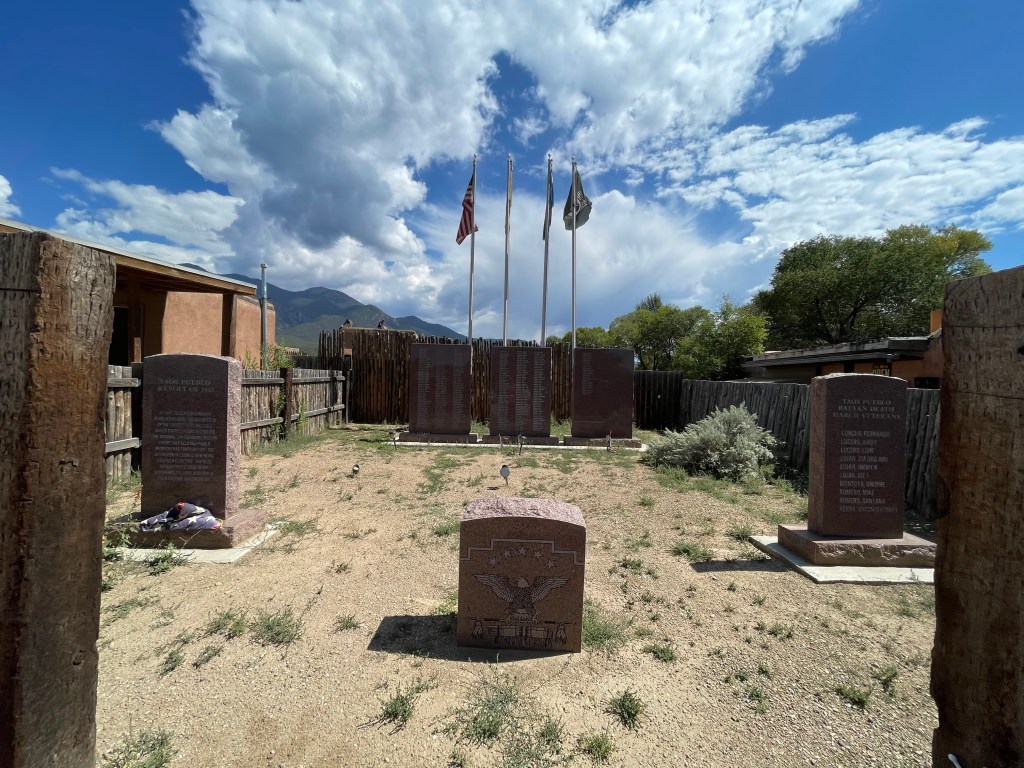
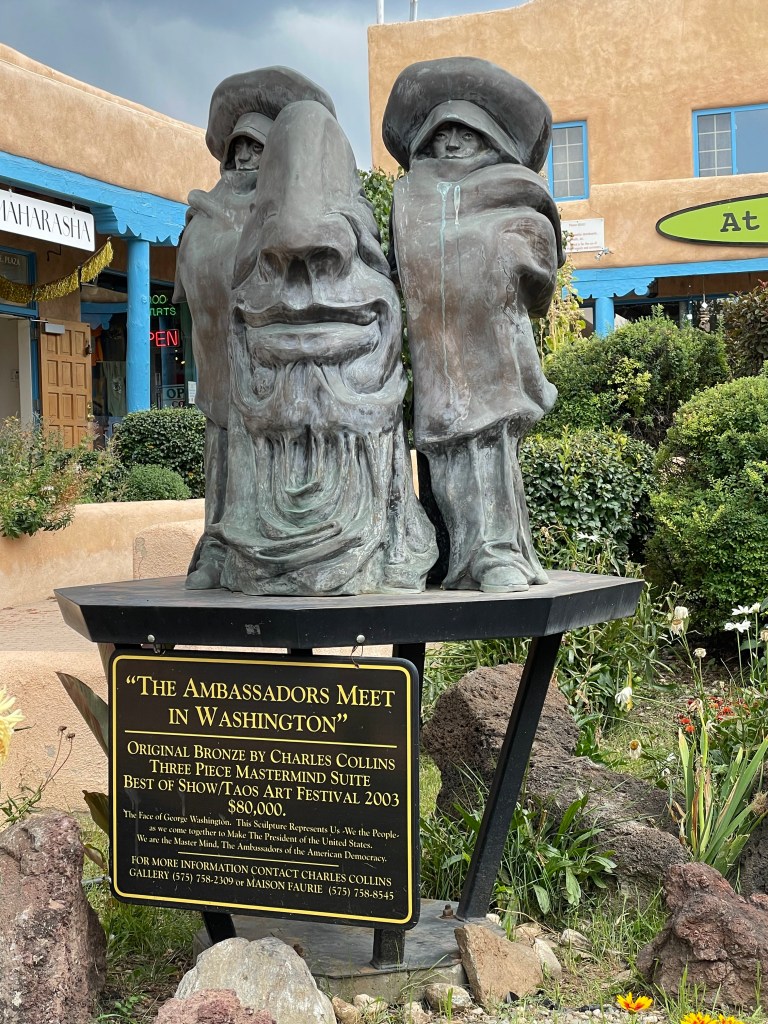
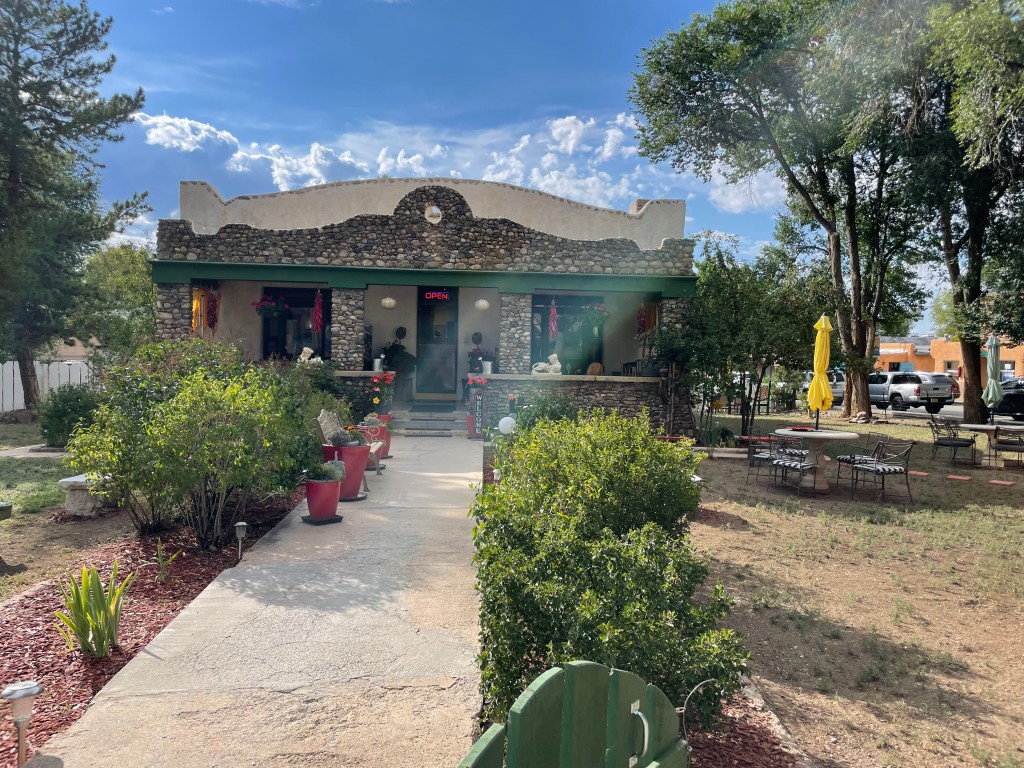
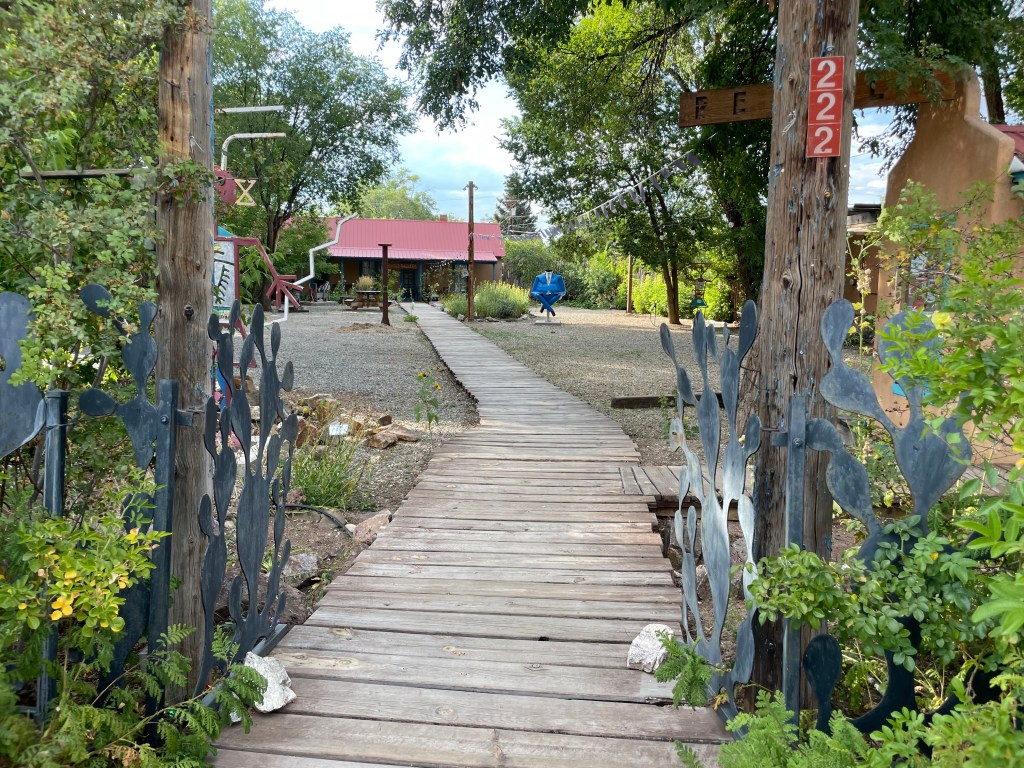
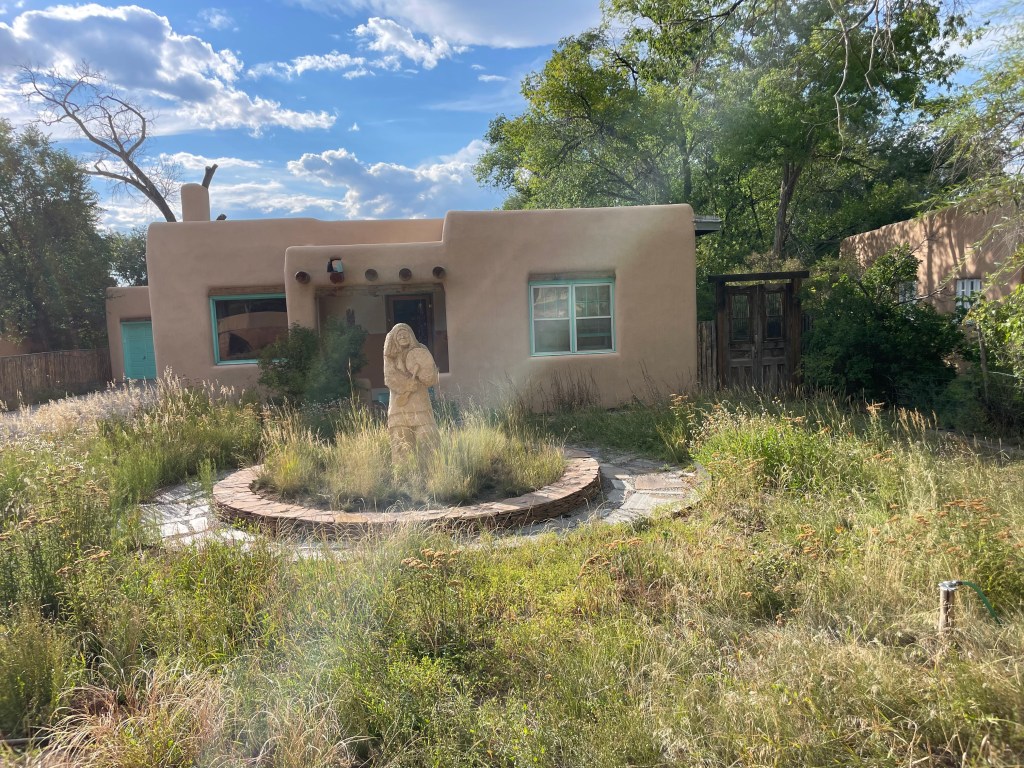
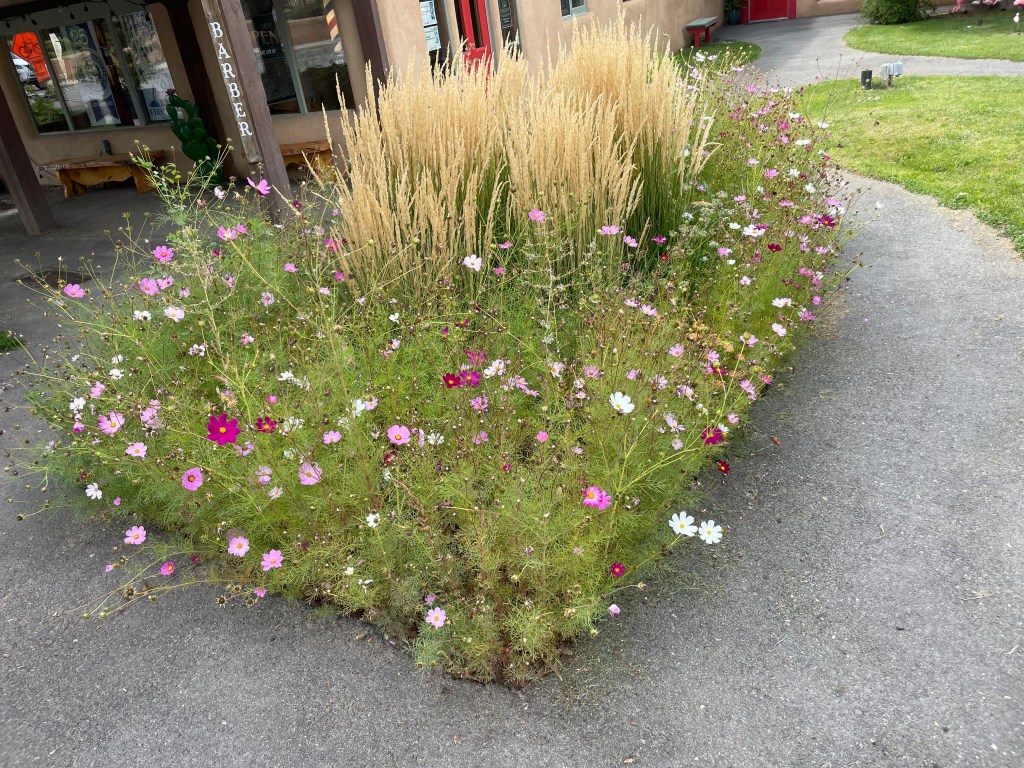
Of course we had to explore downtown. Taos Plaza was full of opportunities to find t-shirts, art, and more. There was construction all around where we were staying, but the walk was worth it, with beautiful gardens and art easily viewed along the way.
On day three of my girlfriend trip to New Mexico, we started at the Petroglyph National Monument, where we walked some trails and took about a million photos of the ancient drawings. It was unfortunate to find that some folks are destroying these treasures by adding their own drawings and initials to the volcanic rocks.
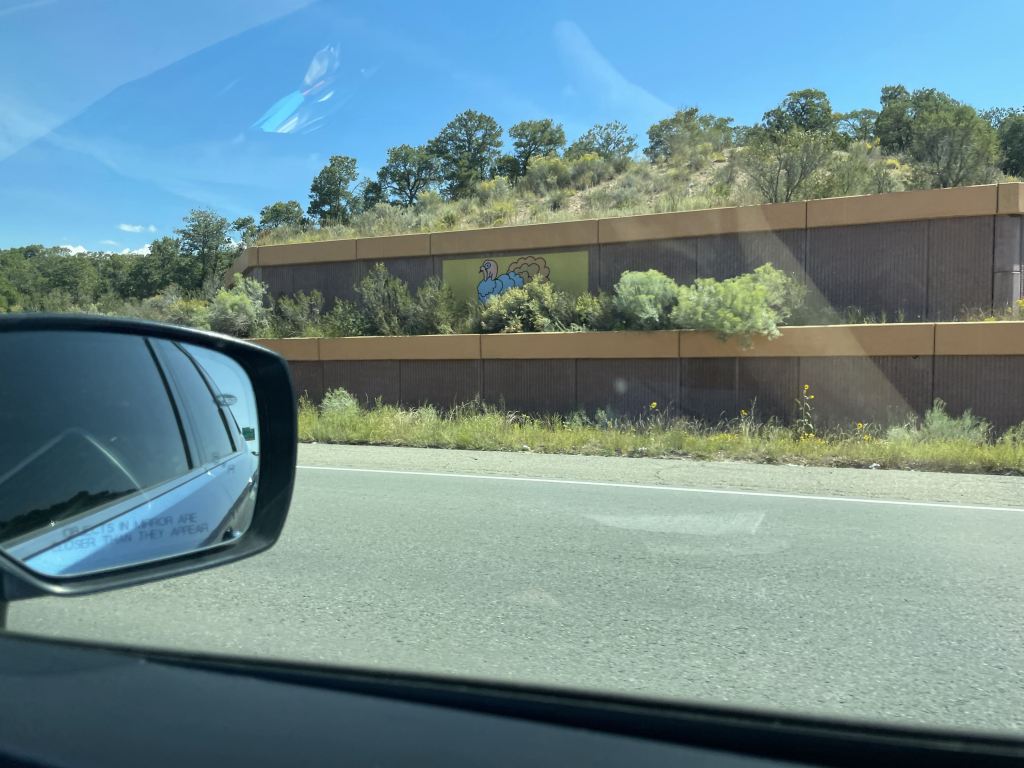
Afterwards we headed out towards Taos, admiring the beautifully constructed and painted highway infrastructure along the way.
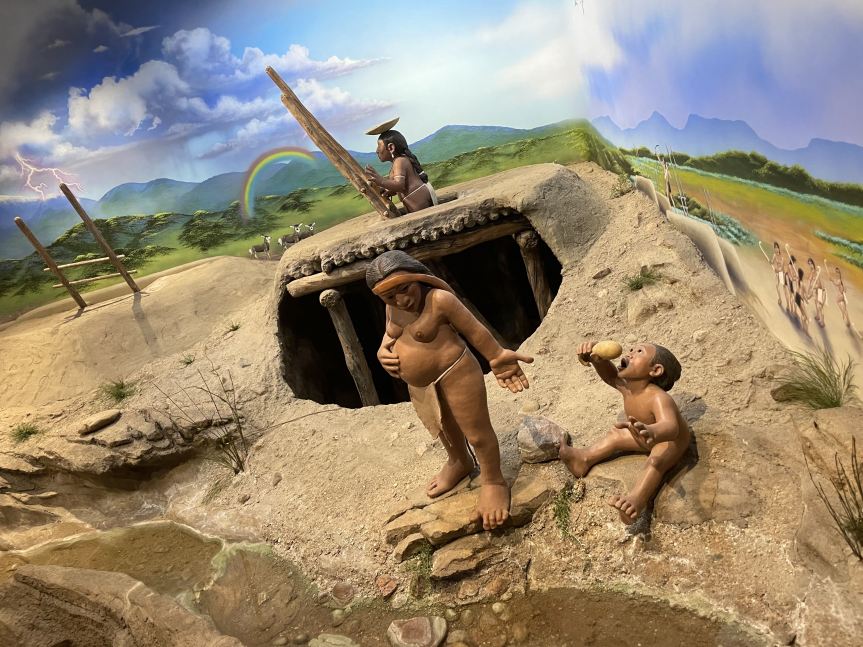
We made an unplanned stop in Pojoaque, NM, where we learned about the Di Wae Powa “They Came Back”, or the return of the 100 Tewa pots. Over the years the Tewa tribe’s pots that were discovered were moved to the Smithsonian’s Indian Museum for storage. Beginning in 2015, the Poeh Museum Staff, along with Tewa representatives, began the process of reclaiming some of those pots and returning them to their home, in Pojoaque.
Lunch was at Sopaipilla Factory Restaurant also in Pojoaque.
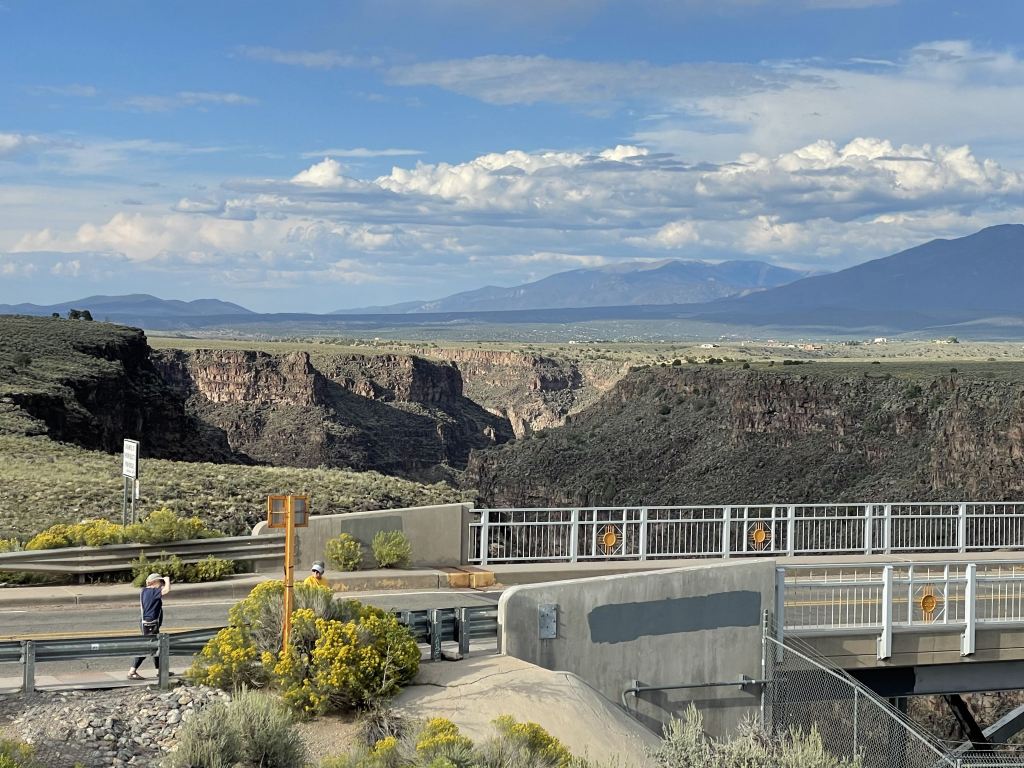
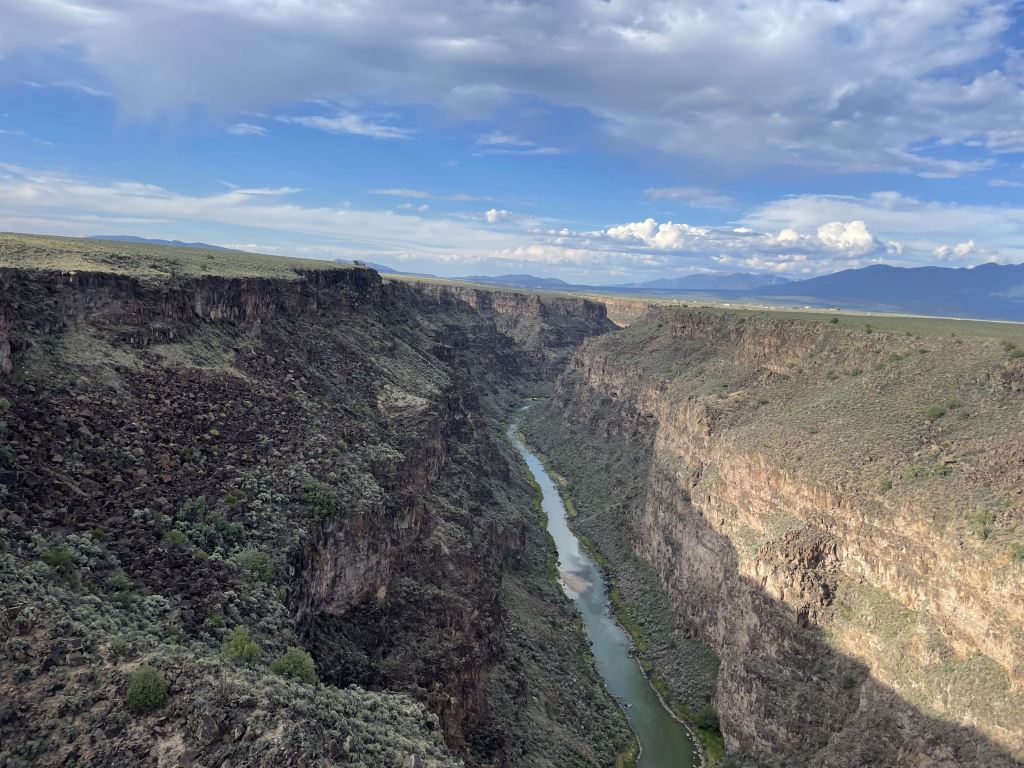
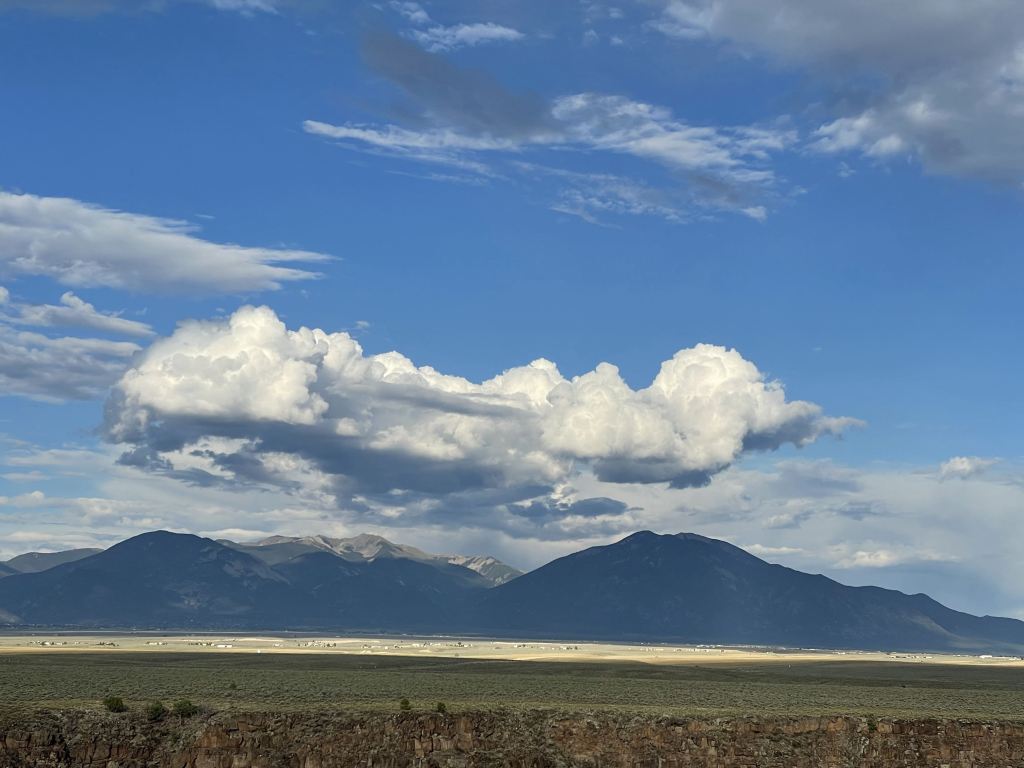
After checking in to El Pueblo Lodge we drove to Rio Grande Gorge Bridge, where we walked the bridge, took lots of photos and then walked along the edge of the gorge.
Later that evening, we dropped in to The Alley Cantina for some chips, salsa, queso and fried mushrooms – yum! – and margaritas (not as fabulous as 12 Street, but still good).
Day two of our New Mexico girls’ trip began with breakfast in the hotel. Meh.
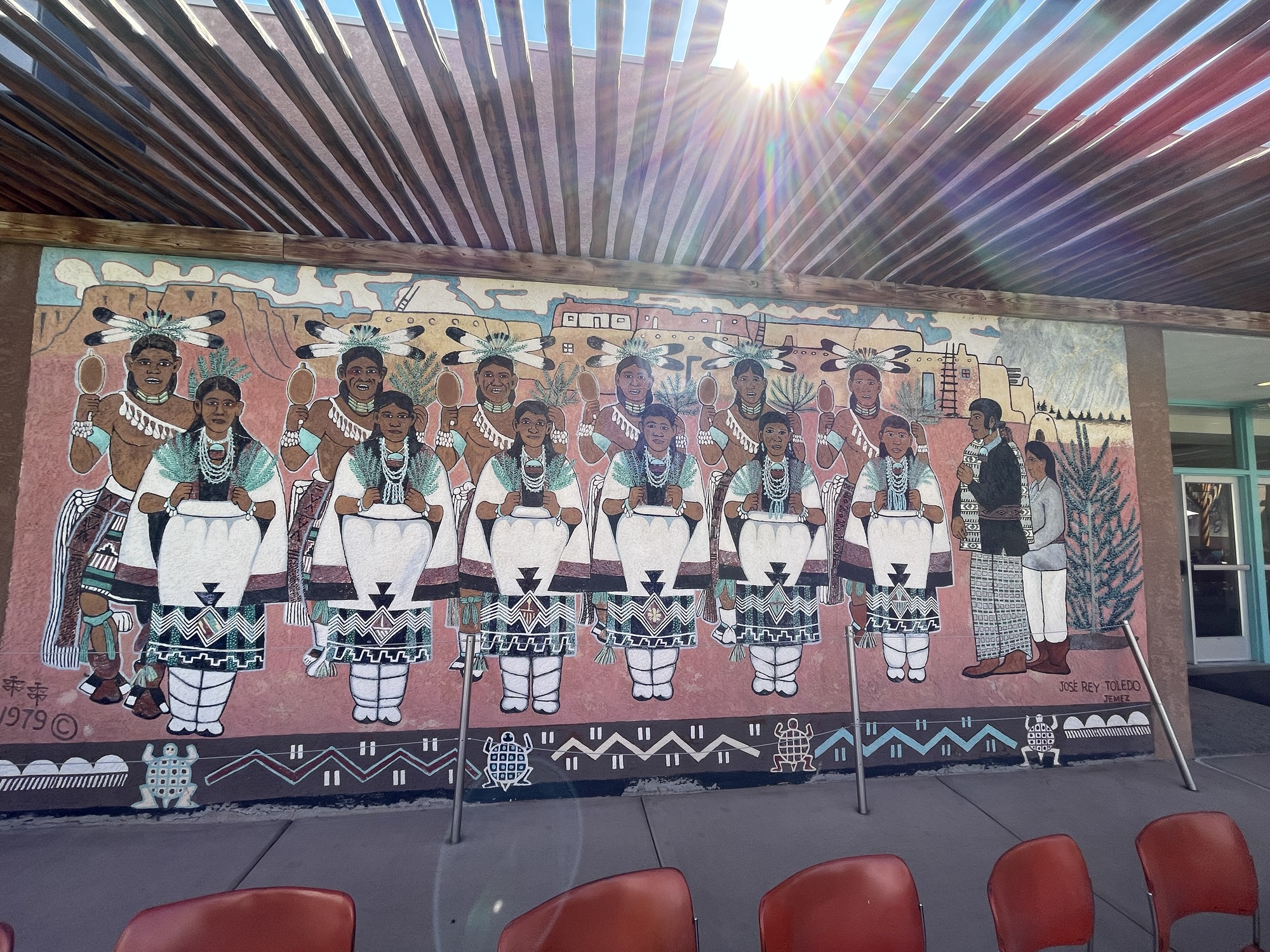
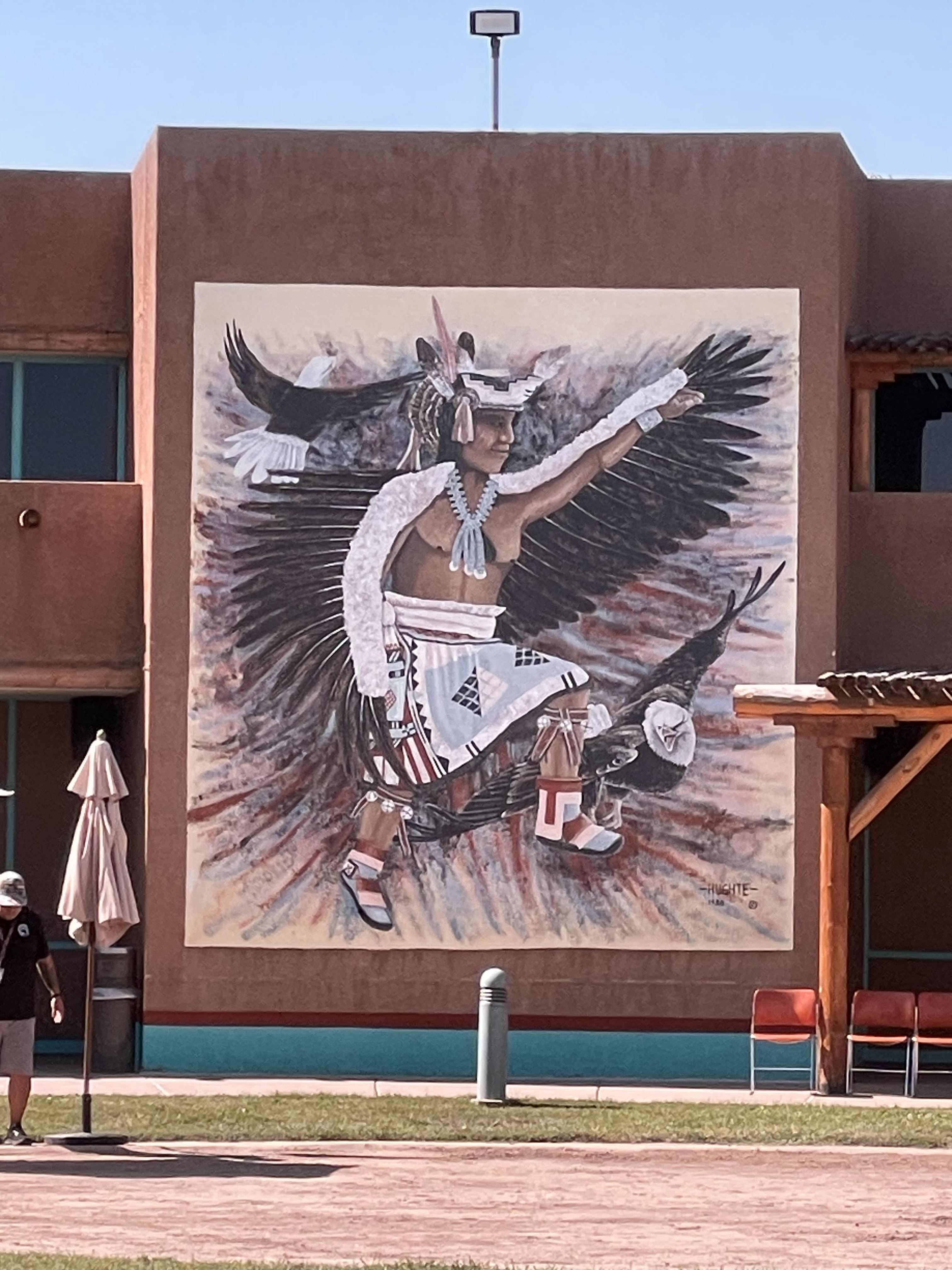
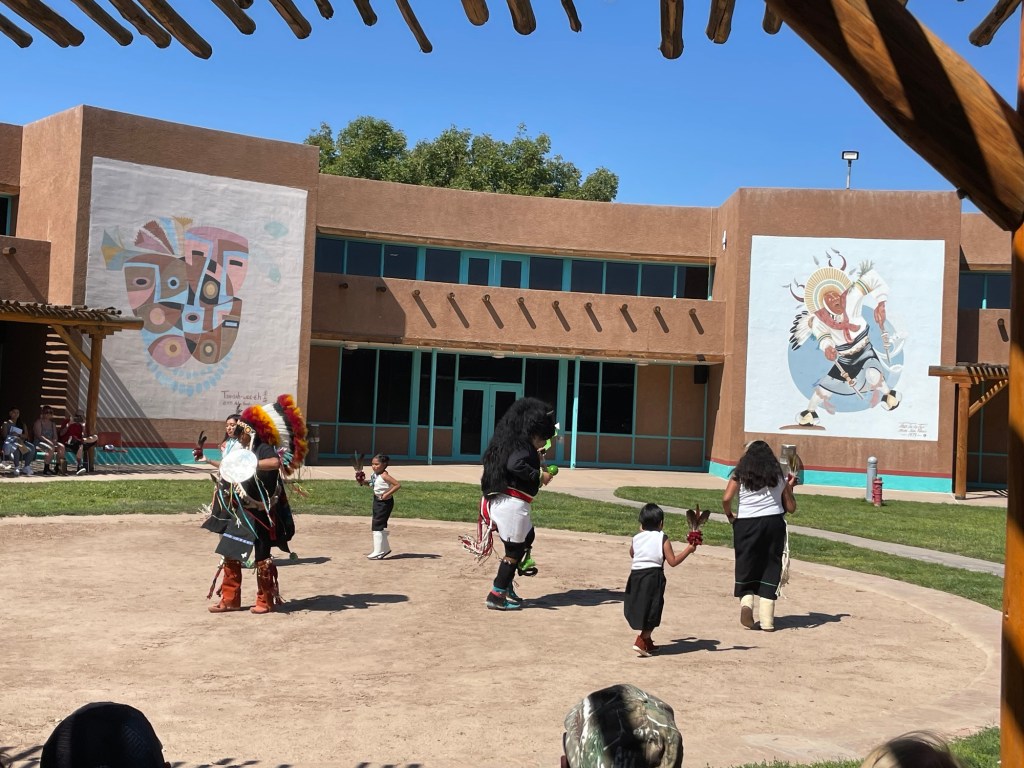
After breakfast we walked across the street to the Indian Pueblo Cultural Center where we toured the museum and watched Comanche Indian Dancers.
I learned that baseball has been a big part of the 19 Pueblo communities as far back as 1885! Team members aged 15 – 55 would play together, and this is where a lot of mentoring would happen within the community.
Today there is a Northern Pueblo League and Southern Pueblo League.
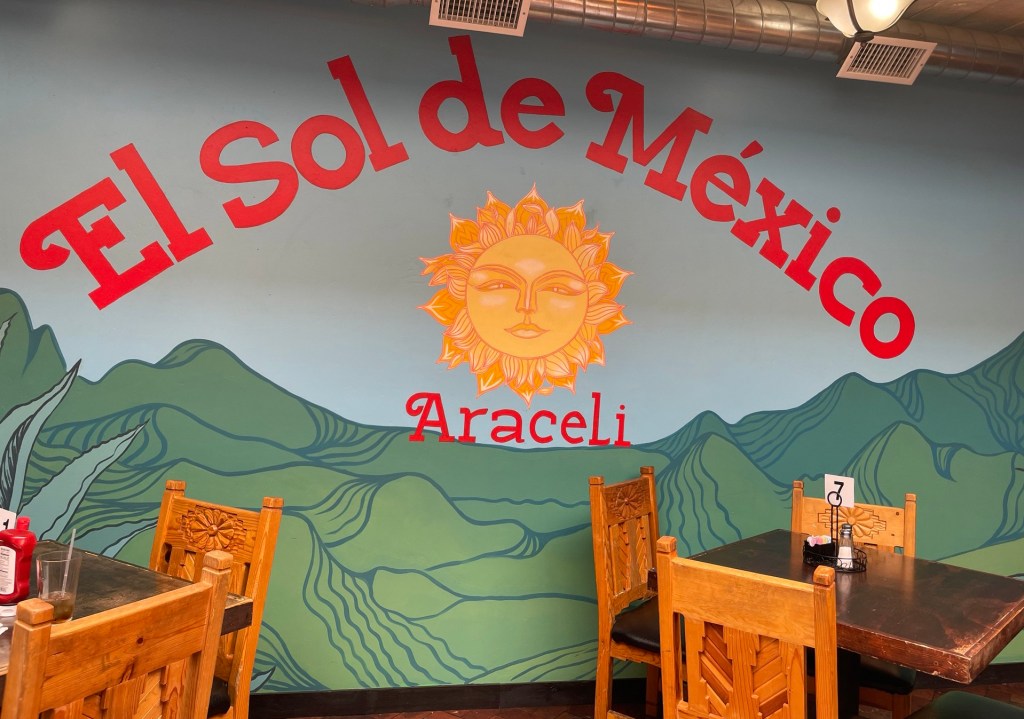
Next we headed to Old Town for some shopping, and had lunch at El Sol de Mexico – Araceli.
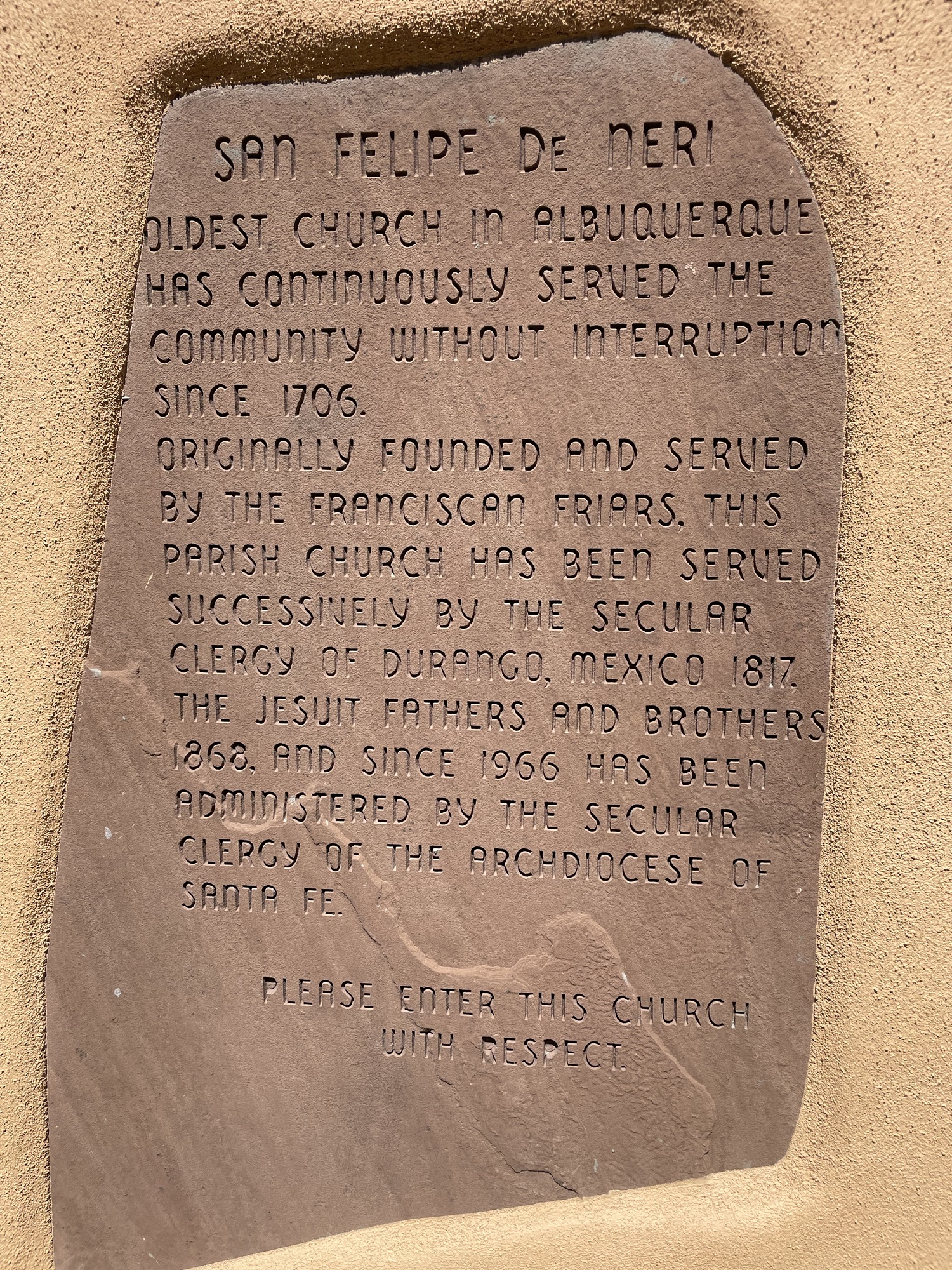
There is a beautiful church in Old Town, known as the oldest church in Albuquerque, serving the community since 1706.
Exhausted from shopping, we headed back to the hotel to rest up a bit, then back to 12th Street Tavern for dinner (no margaritas this time) and time to firm up plans for day three.
My girlfriend trip to New Mexico started today! We’ll spend two nights in Albuquerque, two nights in Taos, two nights in Santa Fe, then one more night in Albuquerque, before our flights home. There are four of us: one from Nashville, two from St Louis, and one from Mesa, AZ.
I had an early start, coming from Nashville and connecting thru Atlanta. My Nashville flight boarded at 7:30 am, so got myself to bed at 9:30 pm and set my alarm for 4:30 am.
Unfortunately, my body decided 2:00 am would be a good time to wake up, so after tossing and turning for another hour or so I got up and got myself out the door.
I was a couple hours early for my flight so decided to treat myself to breakfast at Titans Press Box. Two eggs, a biscuit, tater tots (enough for a table of four imo), a side of sausage and a coffee set me back $40 with tip! Holy Canoli, Batman!
Two hour layover in ATL, which wasn’t bad. On the ABQ leg I enjoyed an inflight movie, “IF”, which was cute, then watch a couple episodes of the new Frasier, which I expected was not going to be as good as the original, but I found it quite funny!
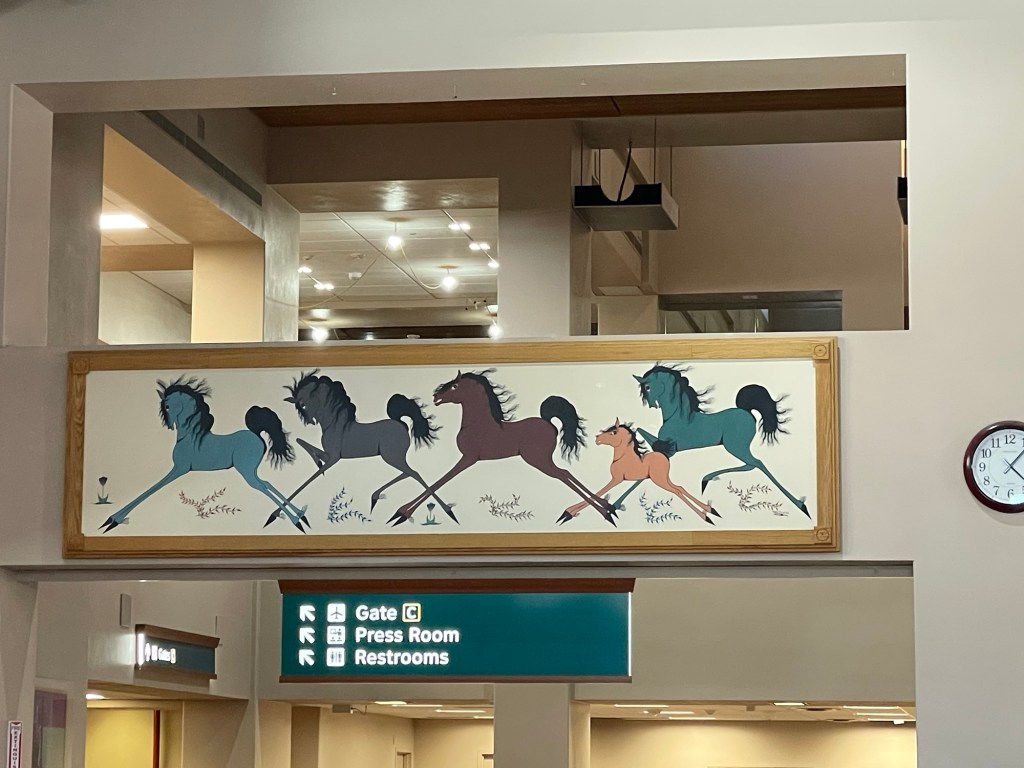
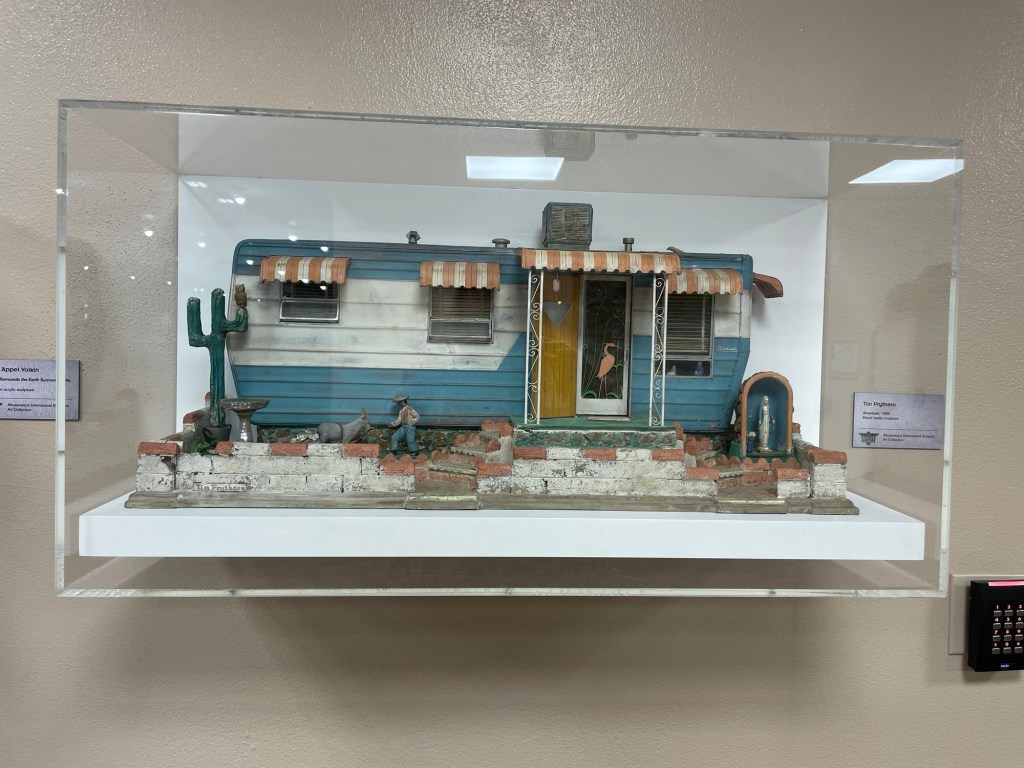
Here’s some art from the ABQ airport:
Upon arrival at ABQ, I was picked up by two of the ladies on the trip who had arrived earlier, and we went to lunch while we waited for our fourth’s plane to arrive.
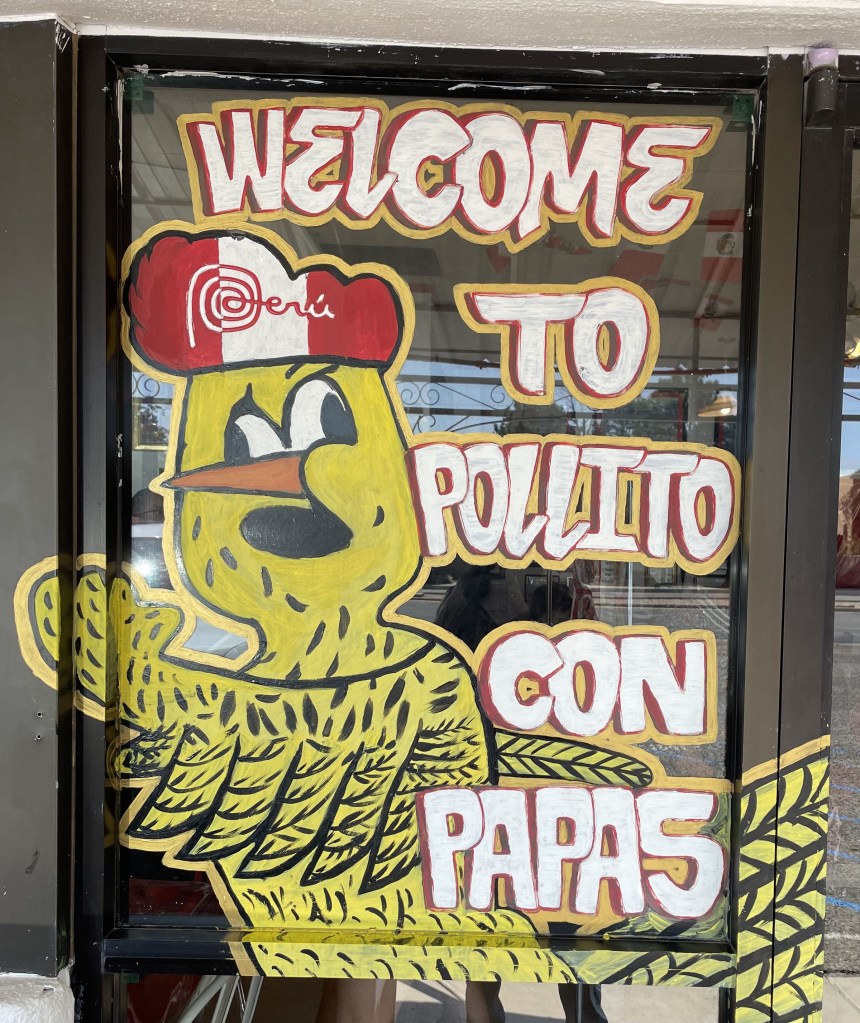
Lunch was at Pollito con Papas, where I learned about Chicken Stuffed Potatoes. Pretty tasty!
We picked up our last travel buddy, and then headed to the hotel, which was conveniently within walking distance of 12th Street Tavern, so after settling in, we headed over for nibbles and beverages. And by the way, 12th Avenue Tavern has just about the best margaritas I’ve ever tasted! Two margaritas and some cheesecake later, we purchased a four pack of Sadie’s Classic Margaritas on the way out and continued our party back at the hotel.
Next morning note to self: three margaritas = one too many margaritas. 🍹
This was an early-to-rise day, as we needed to be on our buses at 8:00 for the trip to Salamanca, Madrid, Spain. So, we were up at 6:30, hit the breakfast buffet, and boarded our bus in time for our 8:15 departure!
As we were driving along, our tour guide informed us that we were about to see a border crossing like none we’d ever seen before. We were riding along windy and sometimes precarious roads and at some point we could see a bridge in the distance. Our guide said, “Be ready!” We crossed the bridge, and he said, “We’re in Spain!” That was it! We crossed a bridge and we were in Spain. No checkpoint, no gate…nothing! Just drive right on in!
On the way we say some beautiful views of communities, and stork nests. We stopped at a little cafe for a bathroom break and some lovely coffee.
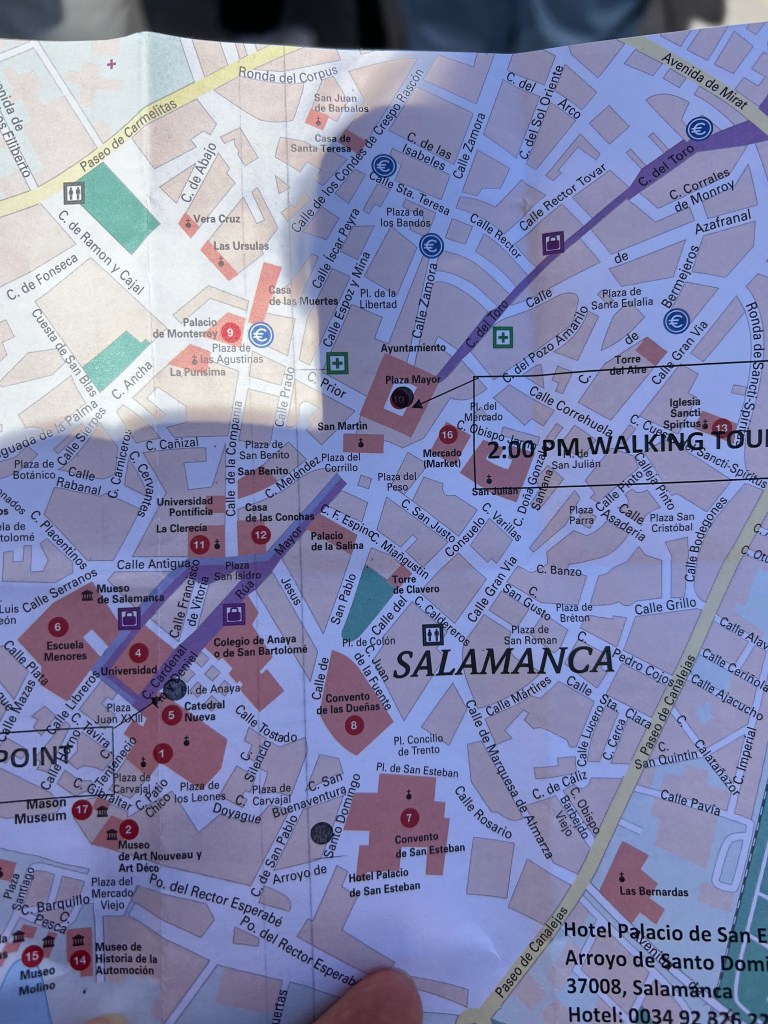
Once in Salamanca, this was our map for the day.
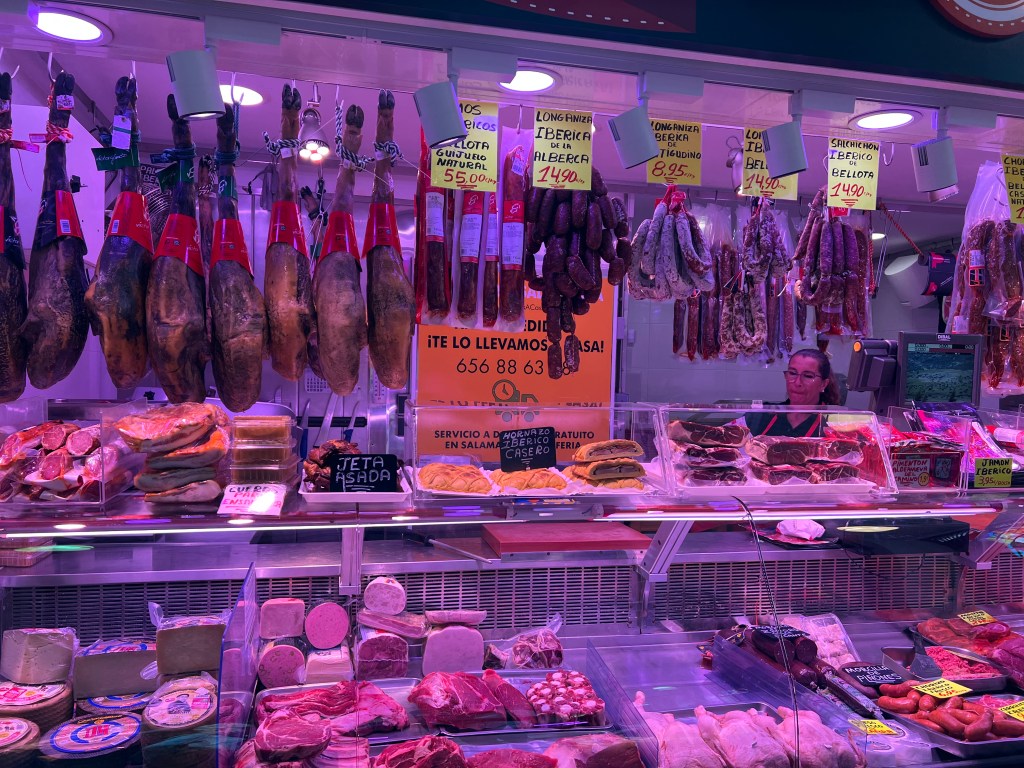
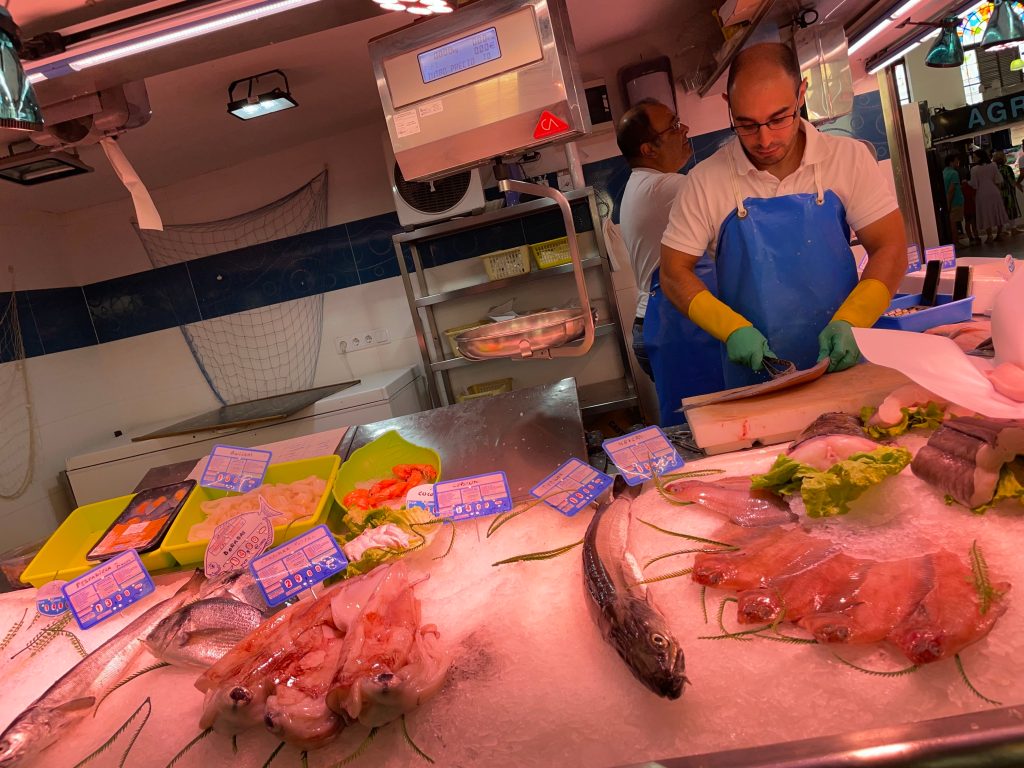
We started at the Plaza, but immediately went on to the Mercado, where we saw lots of fish, produce, and cured meats. We also learned that some meats are cured for 5-8 years! The longer the meat is cured, the more expensive it is. Some was selling for $100+ / kilo!
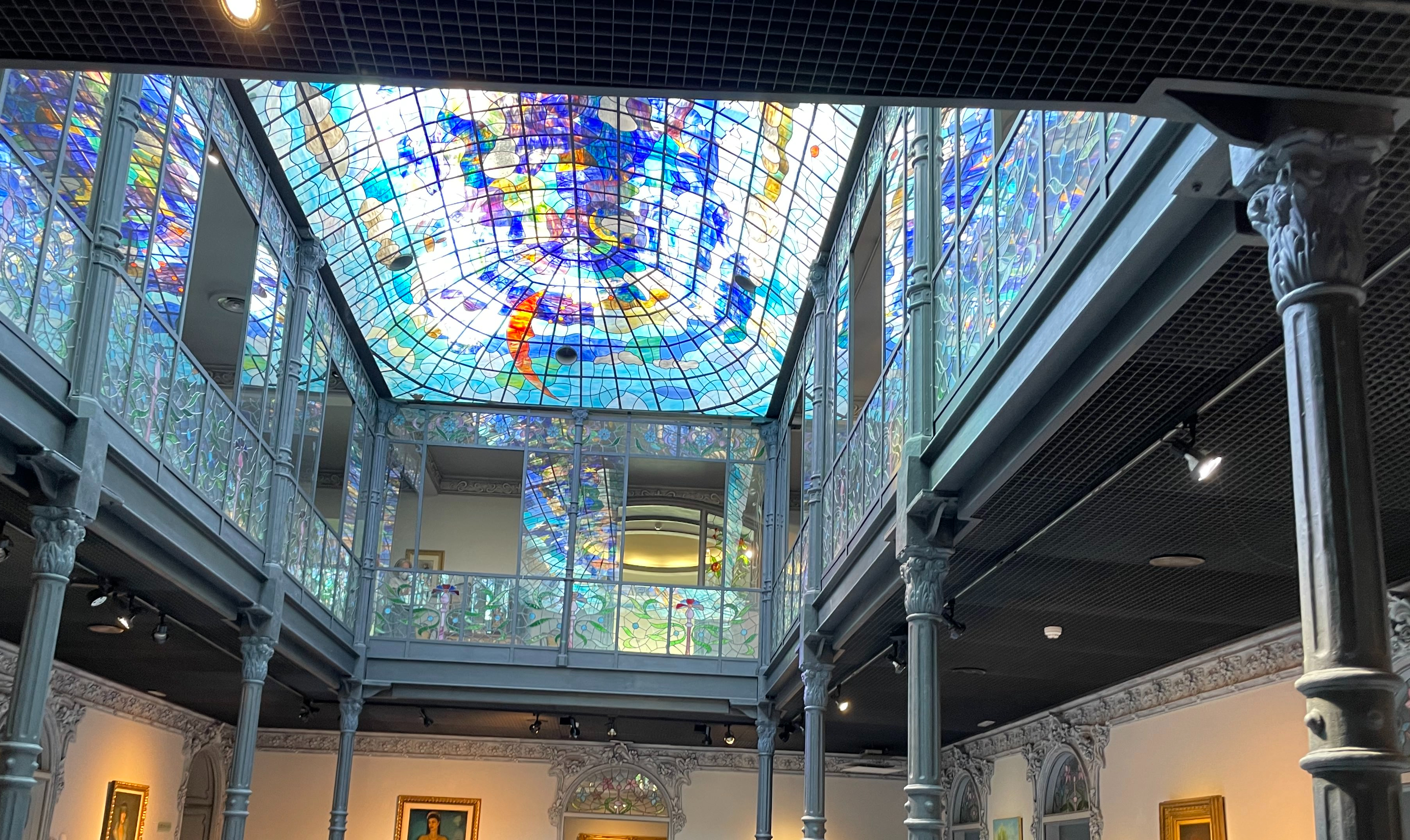
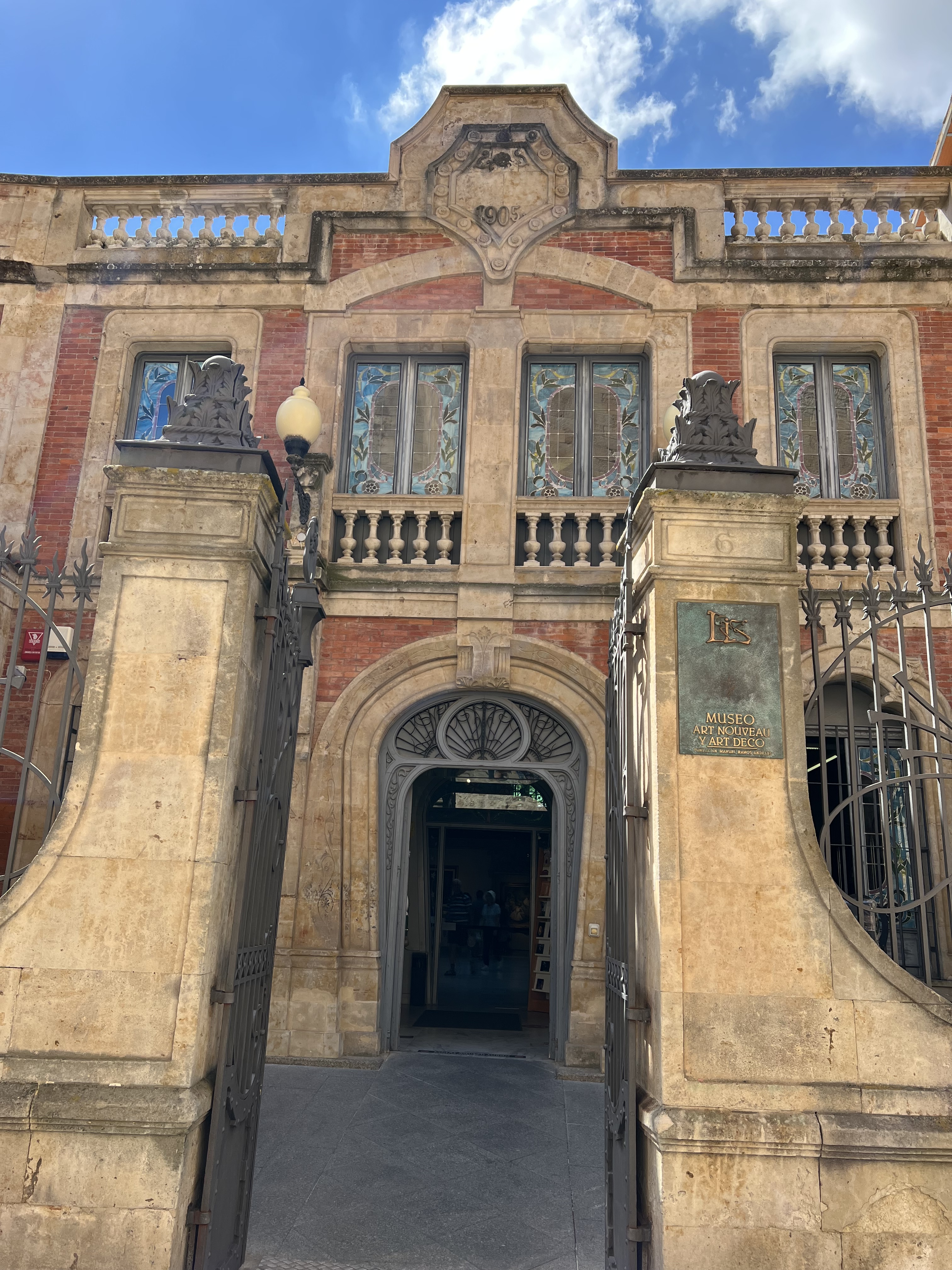
Our next stop was the Art Deco Museum. We weren’t allowed to take photos inside, but I did take one before I was caught!
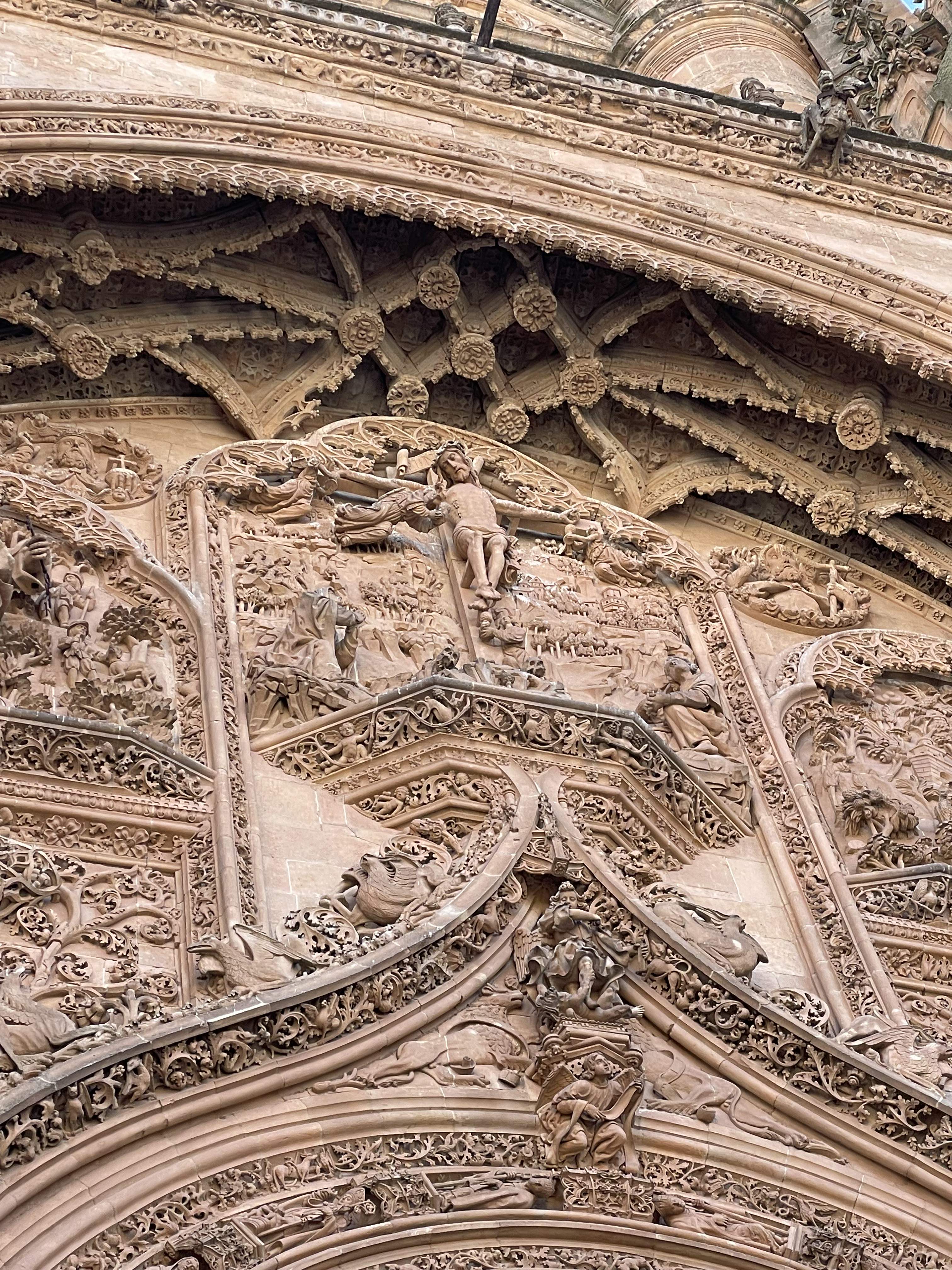
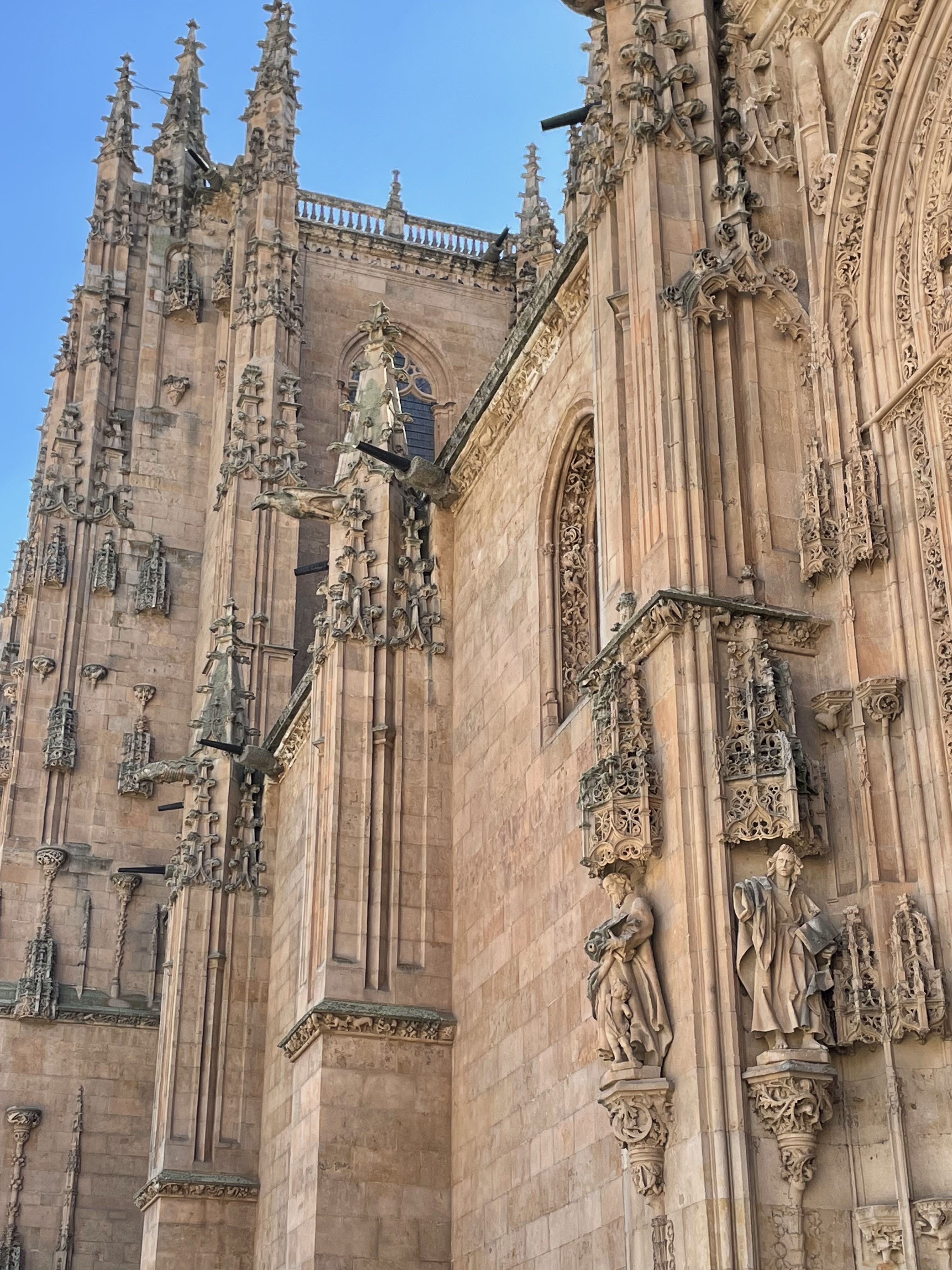
Then on to Catedral Nueva “New Cathedral”, which is literally attached to the Old Cathedral, so that we had to walk through the New Cathedral to get to the Old Cathedral. There were two different weddings in progress while we were there, in different locations. Old Cathedral is such a popular place for weddings that you need to reserve five years in advance! In some cases, a young woman will reserve the Cathedral first, and then look for a husband. If they don’t find a husband in time, they may sell the reservation. Truth!
I stopped for some pics at Casa de las Conchas (House of Shells). This mansion is covered in scalloped shells, the symbol of the military Order of Santiago. This is a very eclectic building in terms of the styles in which is was architected. I don’t have the space (or photos) to add it all here, but if you follow the link above you can learn more.
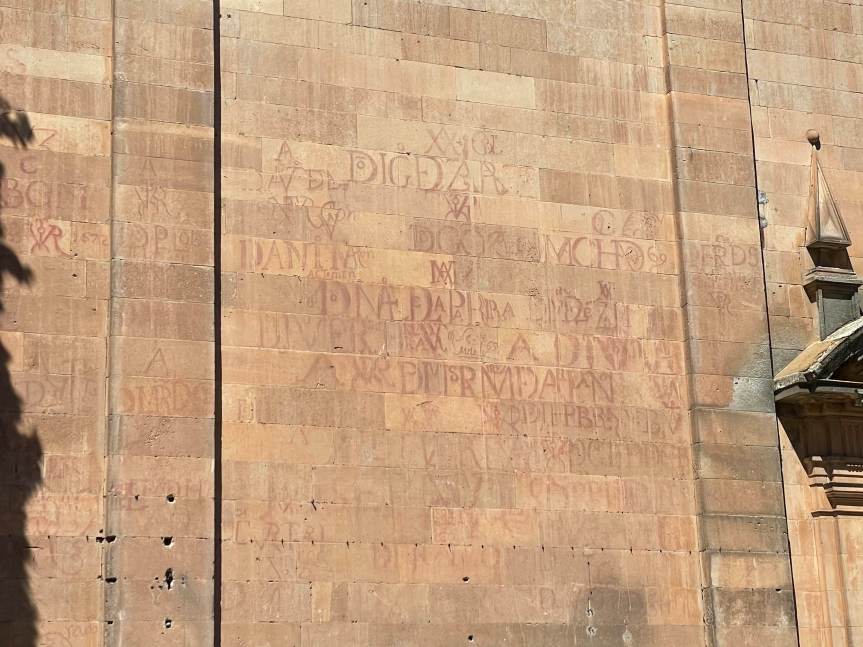
Centuries ago, when a student earned their PhD, the family would host a celebration. The entire city participated, and there was a bullfight. After the bullfight, the student would write their name on the University wall in bull’s blood, mixed with olive oil and herbs. The writing still remains to this day.
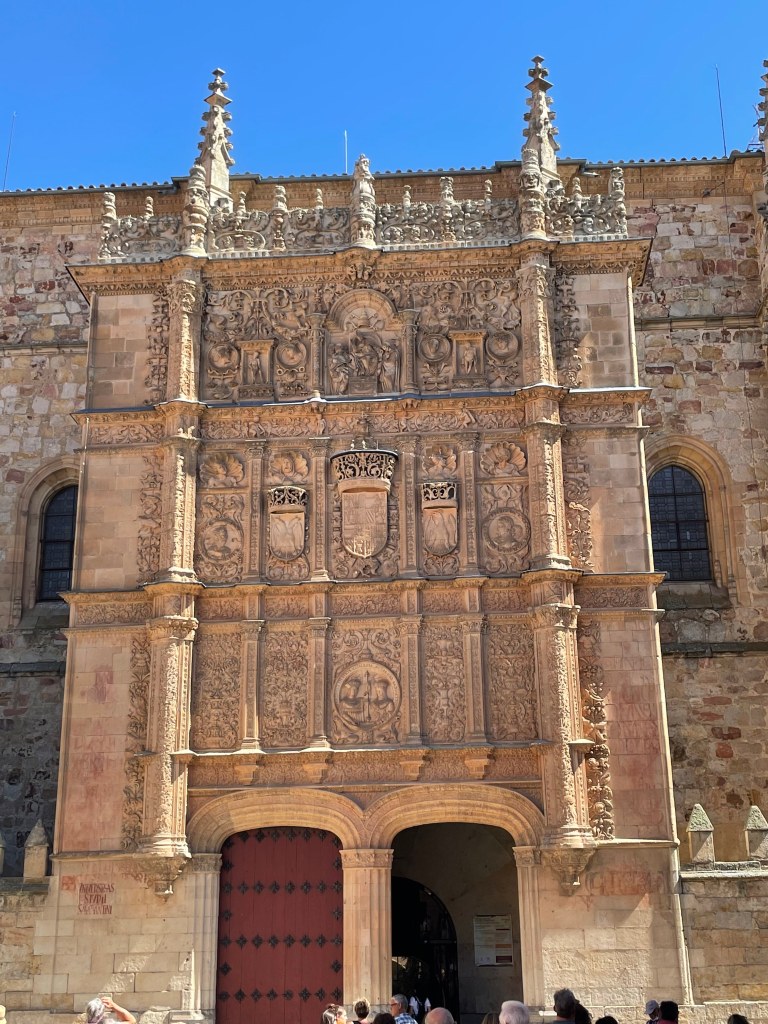
Meet the Salamanca frog (If you can find him). At the entrance to the Universidad Civil, hidden in the carved stonework above the Puerta de Salamanca facade, is the Salamanca frog. It is believed that if you spot it you’ll have good luck in the following year (especially in exams). In the second pic in the slide deck below, if you zoom in on the skull on the left side of the pillar you’ll see the frog. The third picture shows an example of some the creative work added in a 20th century restoration project. Somewhere, on one of the pillars (not pictured), you’ll find a gargoyle eating ice cream!
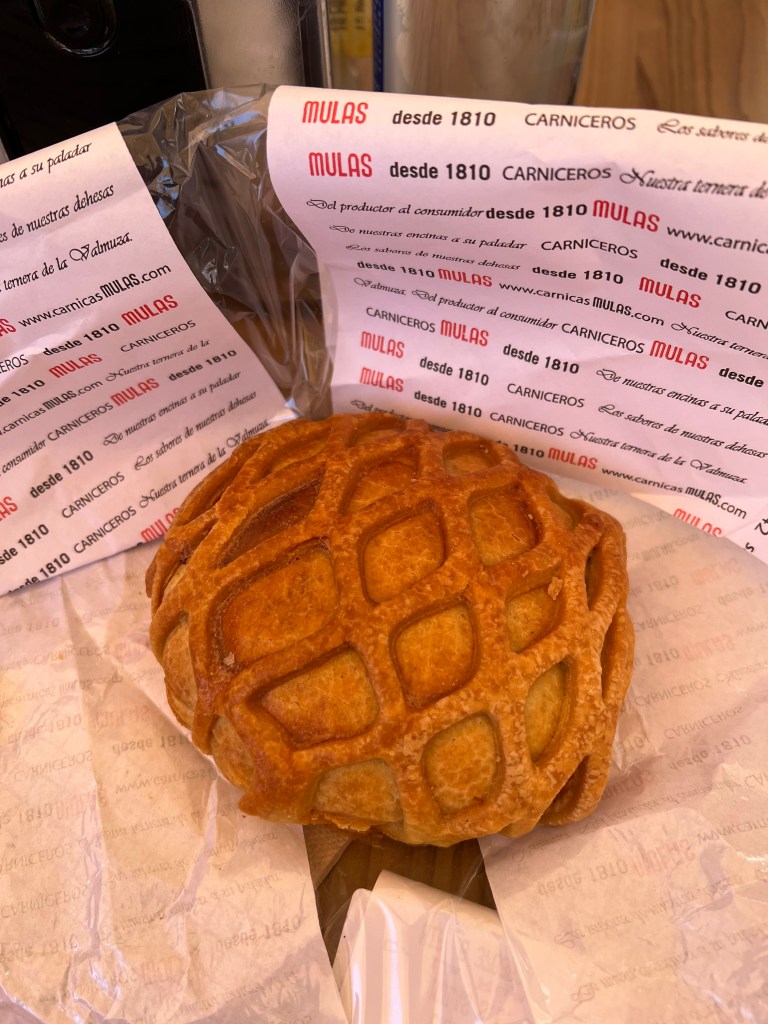
Back at the Plaza, I had a refreshing beer and a Spanish meat pie called “hornazo” while we waited for our group to come back together.
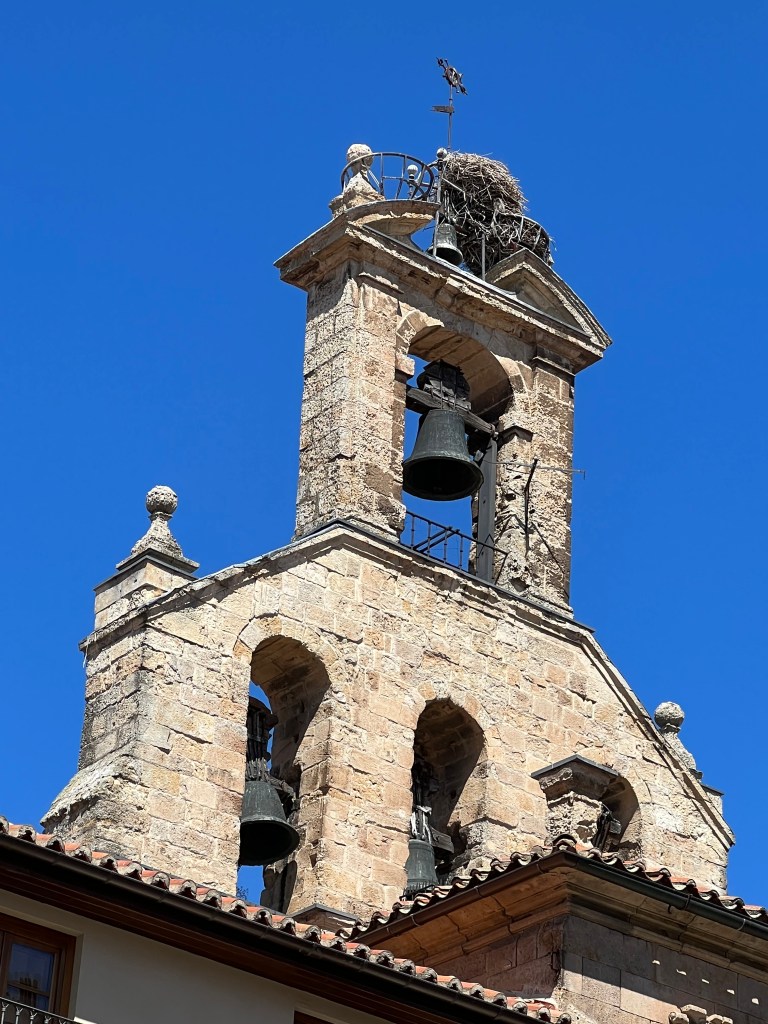
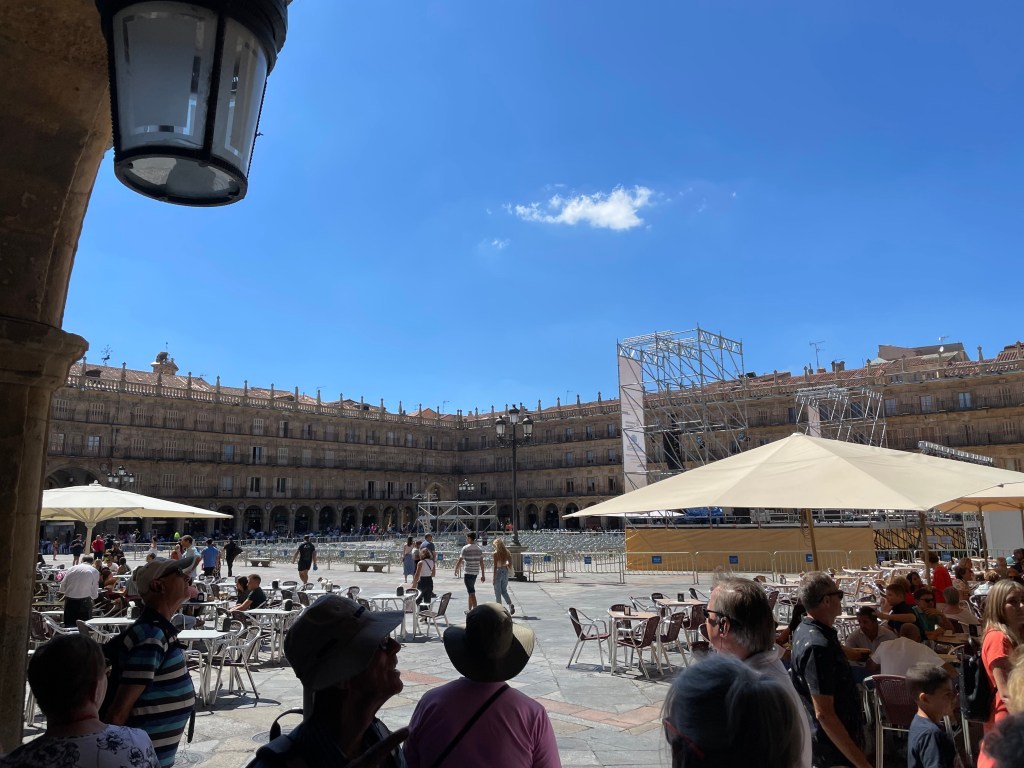
Plaza Mayor is a huge esplanade in the city center. The esplanade construction was begun by King Philip III, whose statue stands in the square. At the top of the bell tower there is a stork nest. The storks weren’t interested in nesting elsewhere, so metal frames were installed to protect the nests, the stork babies, and the people who may pass under the nests.
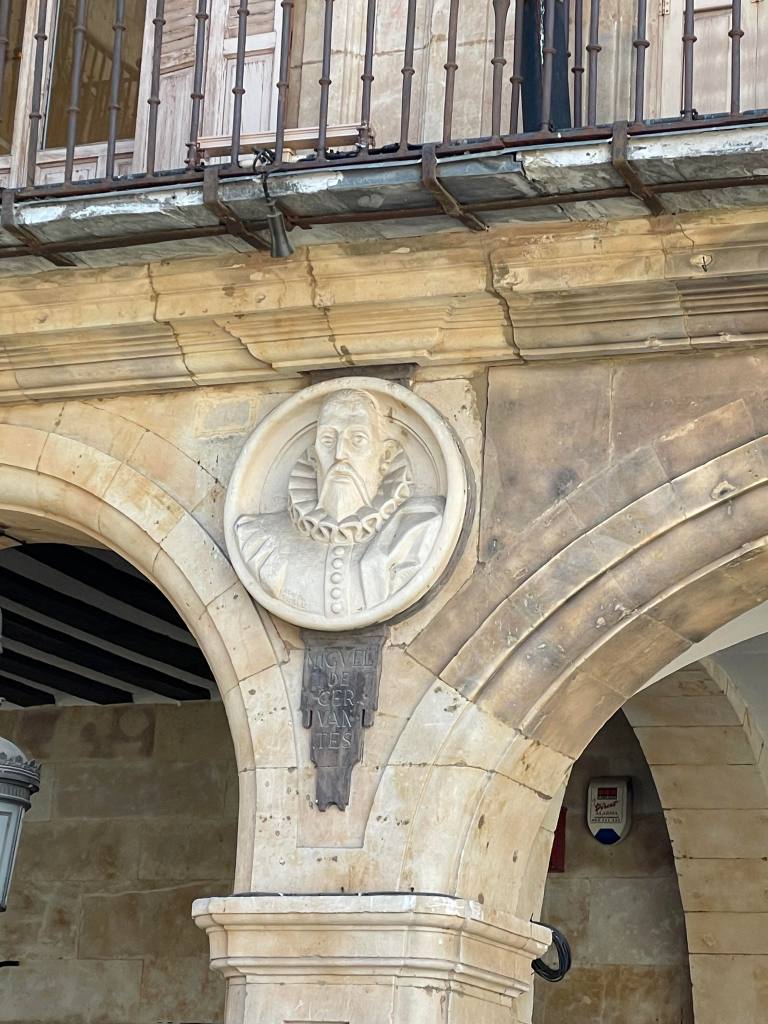
Francisco Franco Bahamonde was a Spanish dictator who led the Nationalist forces in overthrowing the Second Spanish Republic during the Spanish Civil War. He ruled over Spain from 1939 to 1975. Since his passing in 1975, there has been an effort to remove all references to his face and name in public view. You’ll see an example of that in the last picture in the slide deck below, where his face has been removed from the medallion on the pillar on the left, but the face of Miguel de Cervantes Saavedra, who was the Spanish writer known for Don Quixote, remains on the pillar on the right.
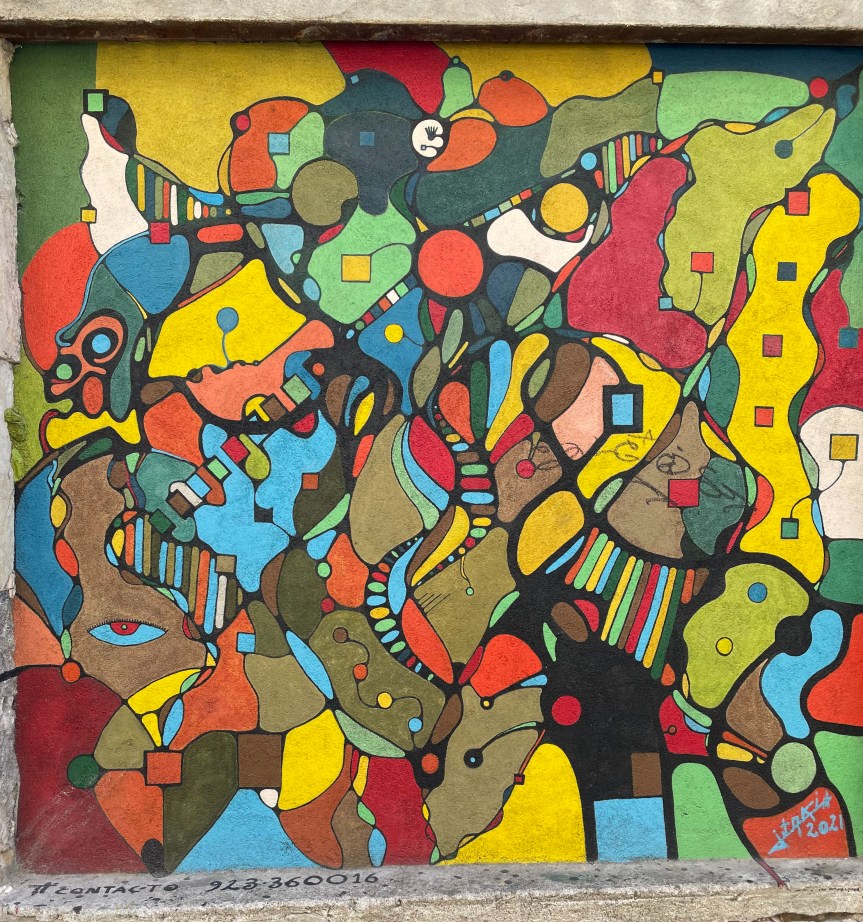
Here’s some cool art I found along the way. There’s even a number if you’d like to contact the artist:
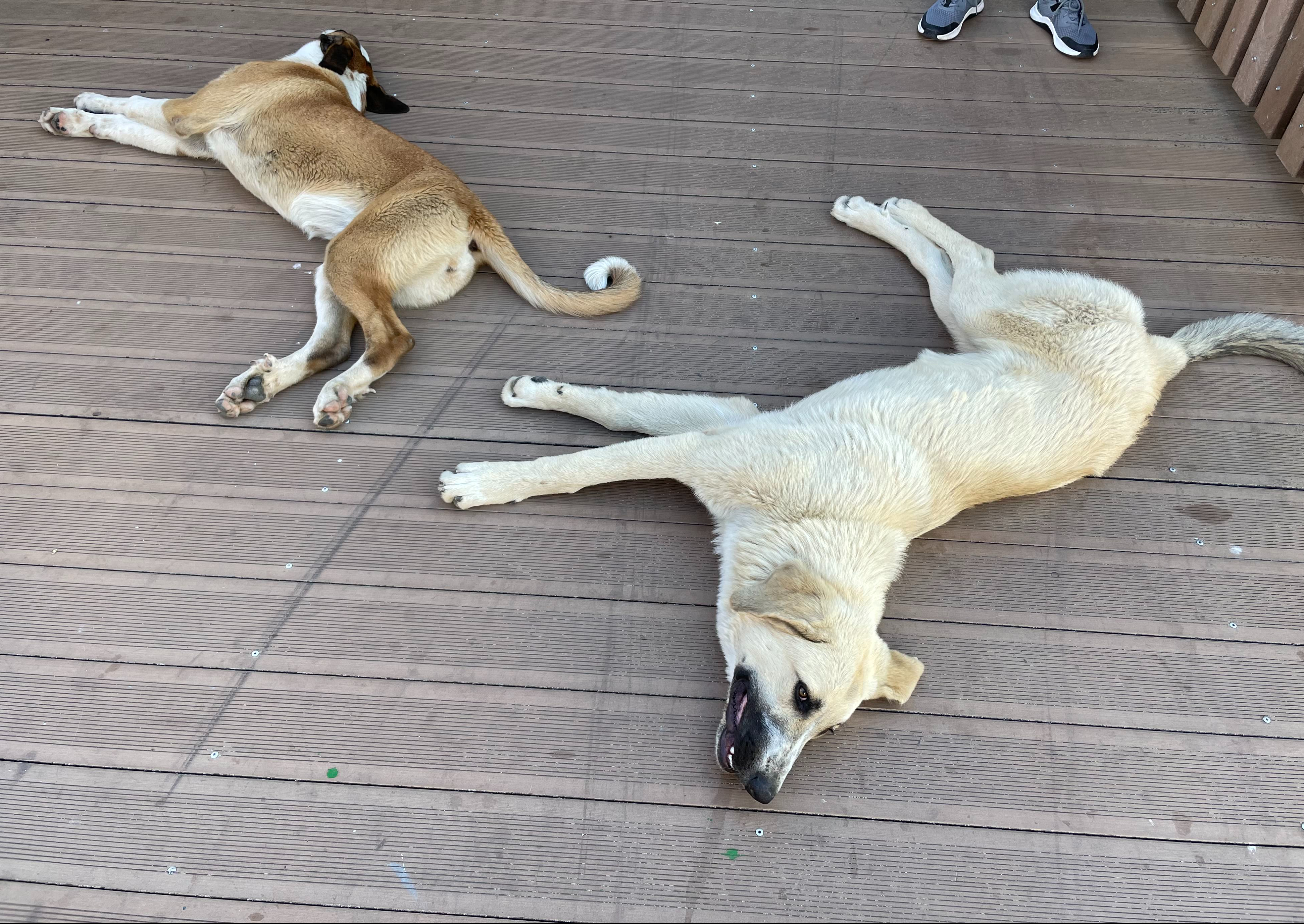
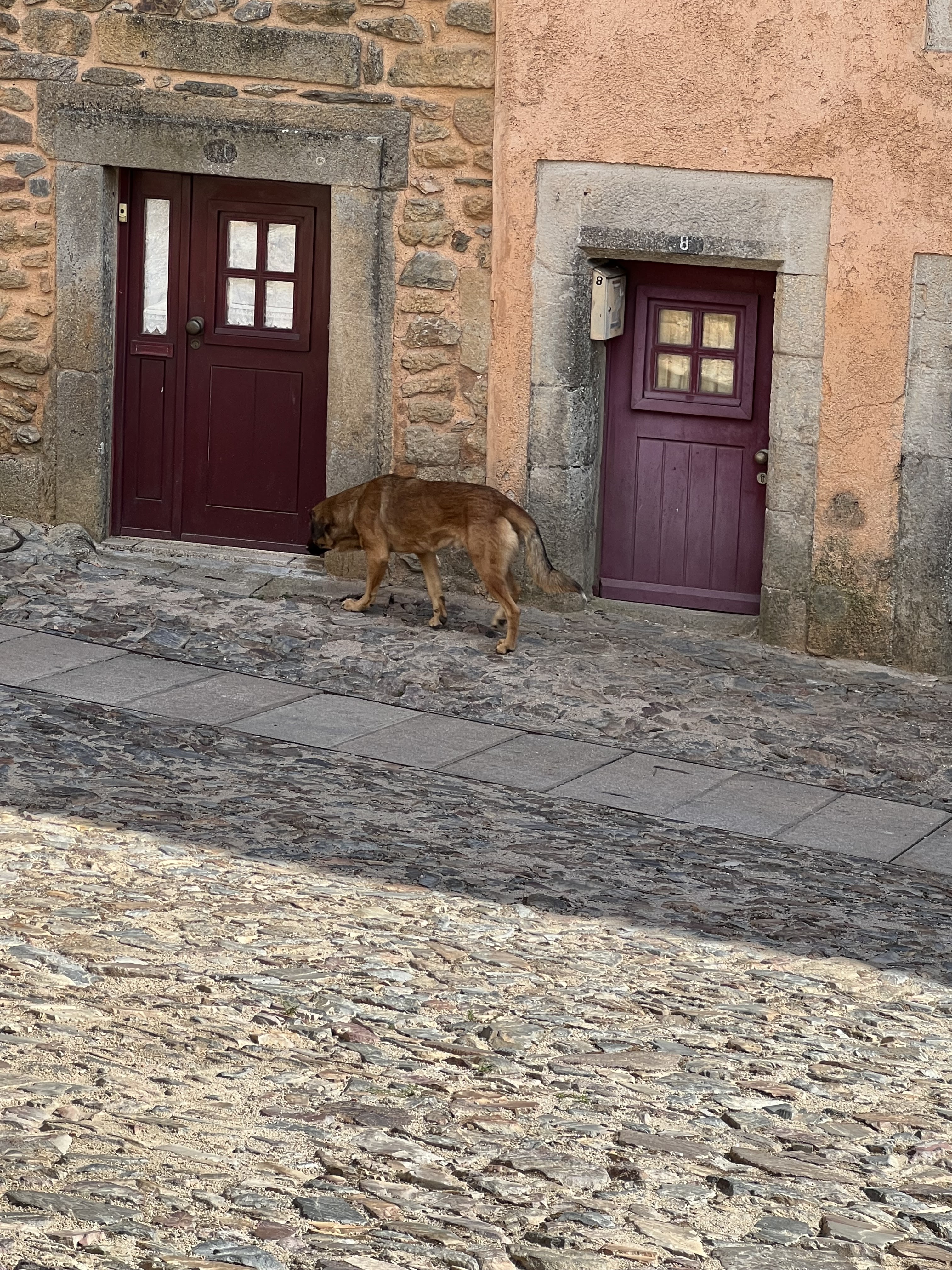
OMG! I almost forgot one of the best parts of the whole day the dogs of Portugal! They are everywhere! In the streets, sleeping in doorways, nobody owns them, they just live there, and people feed them. These two snoozers were waiting on the ramp to the boat when we returned:
Overall, it was a lovely day! I bought a coaster to commemorate it. 😄
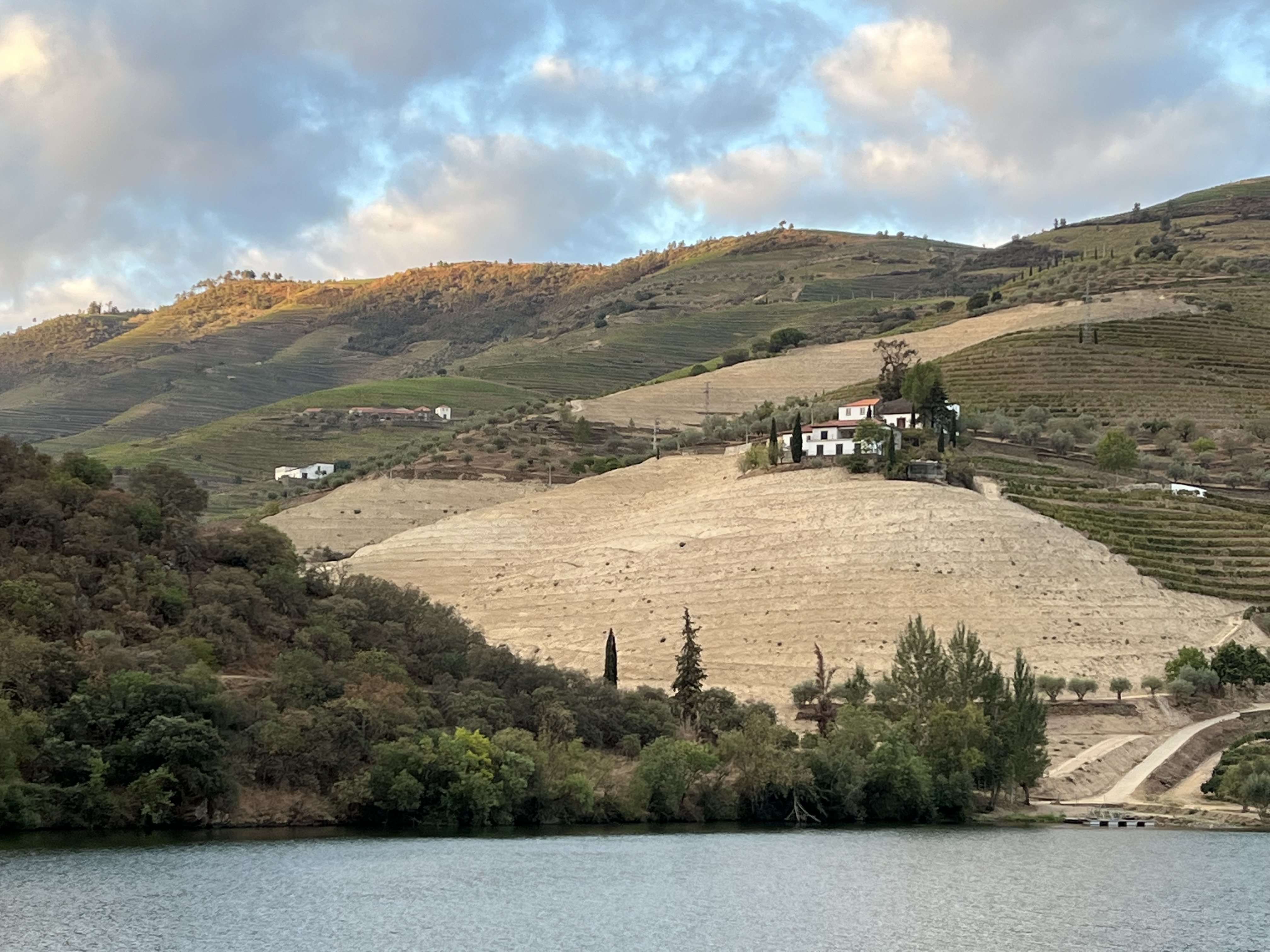
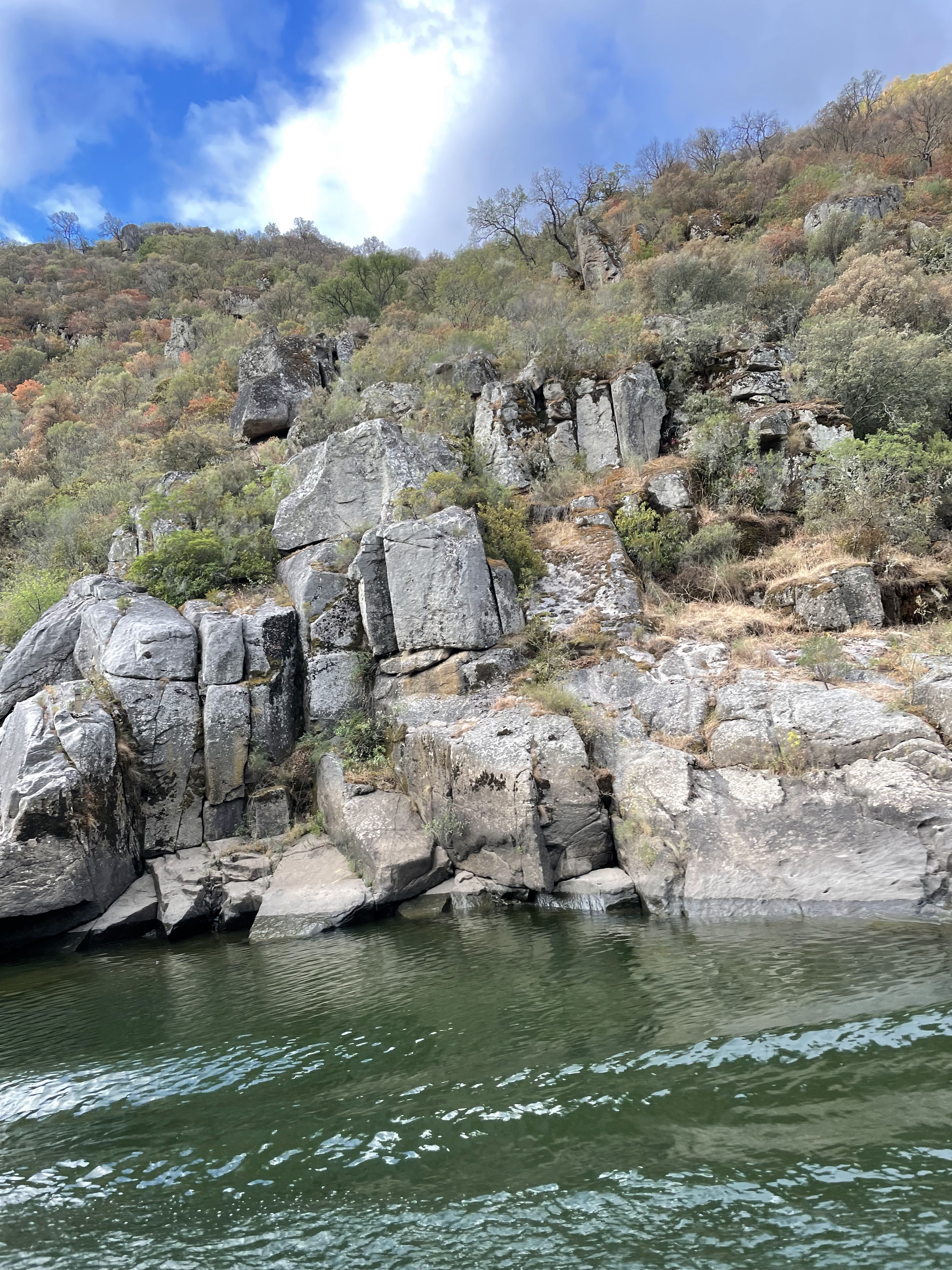
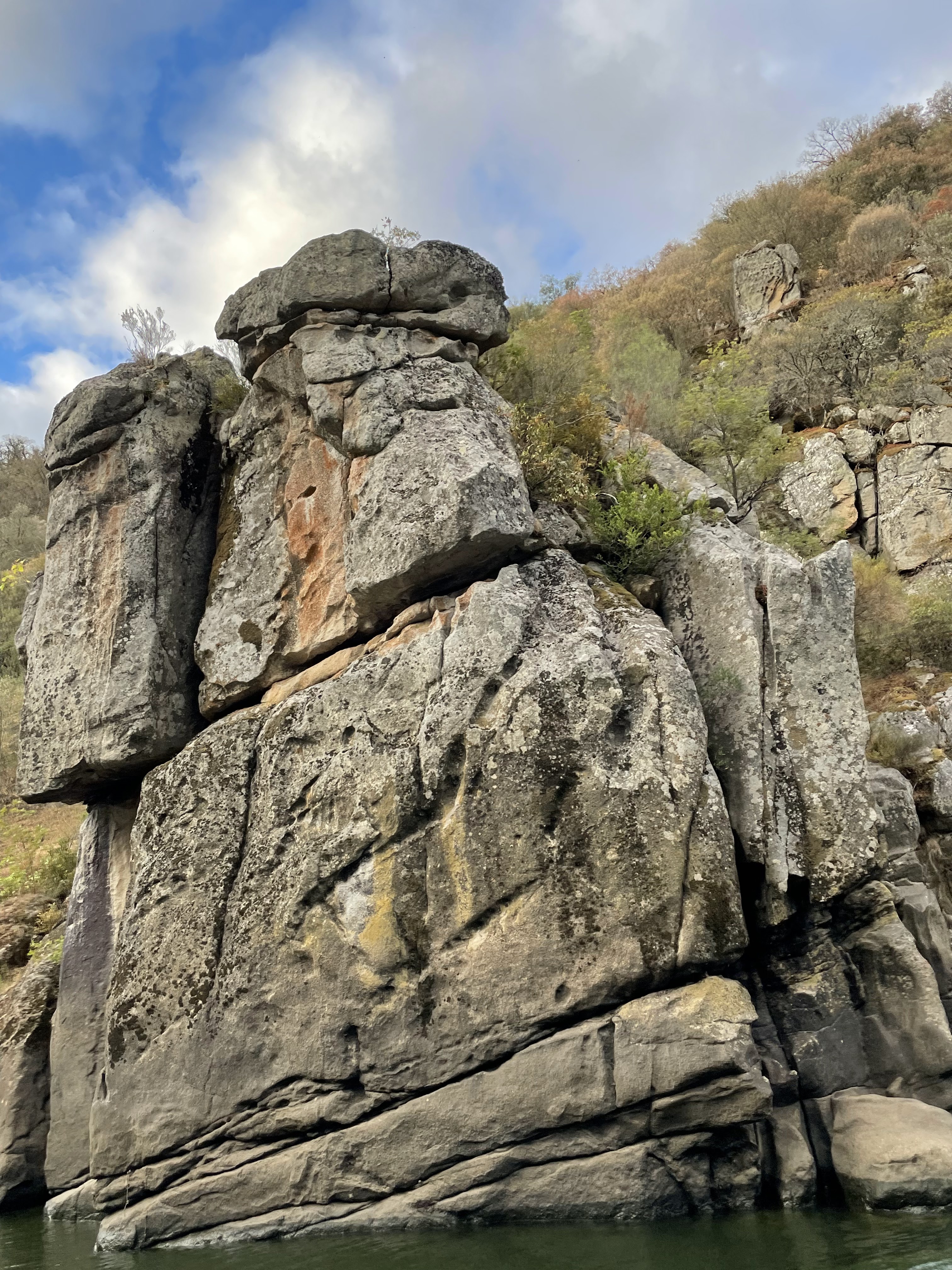
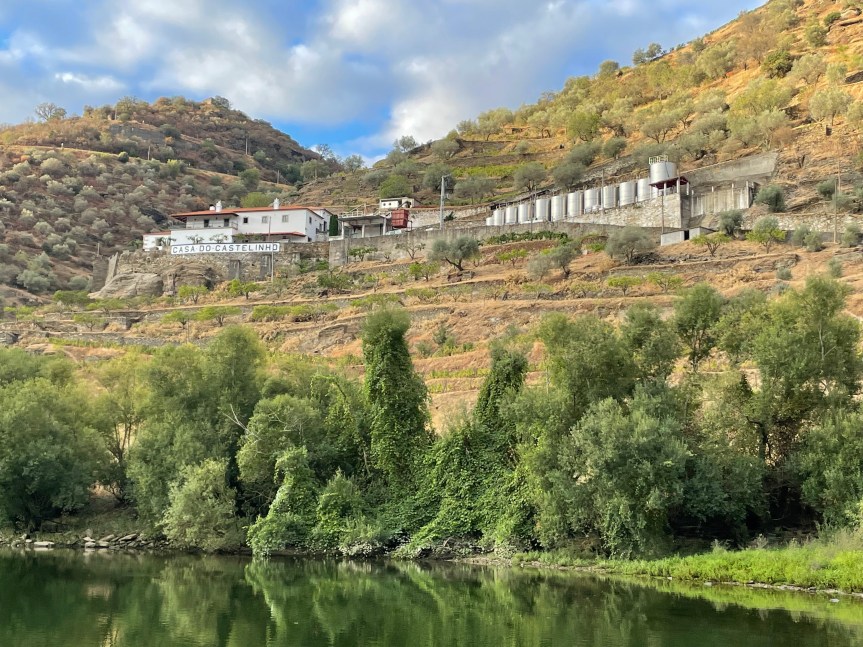
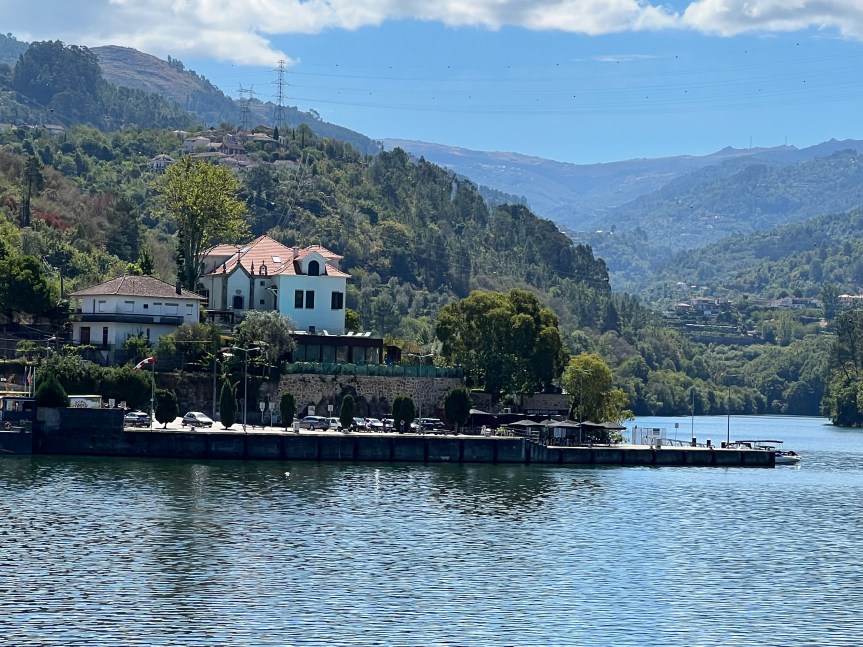
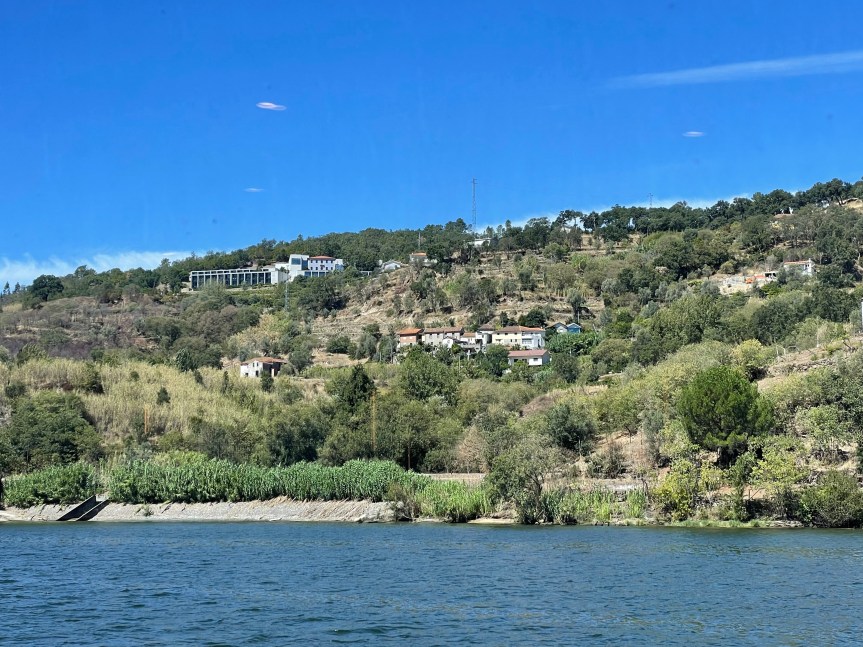
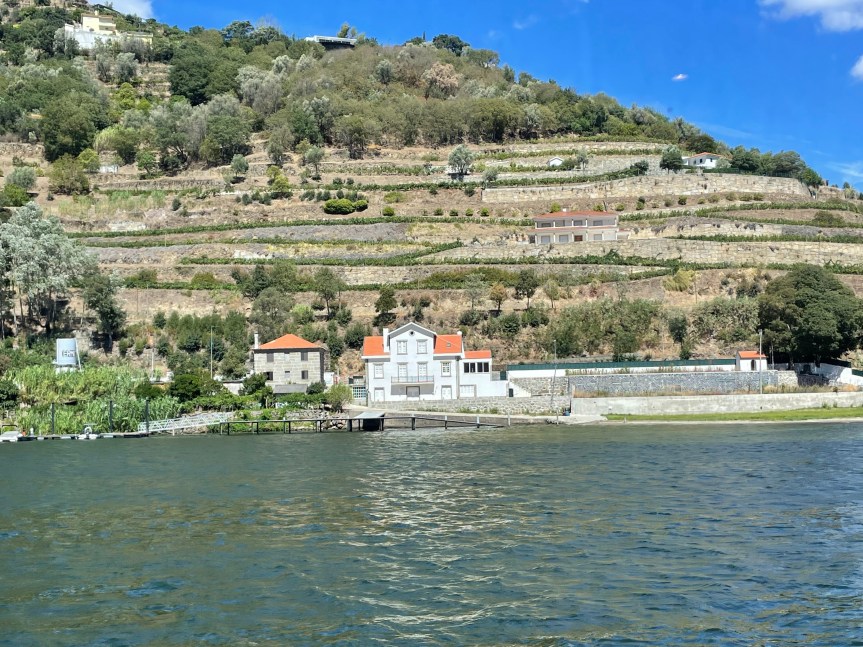
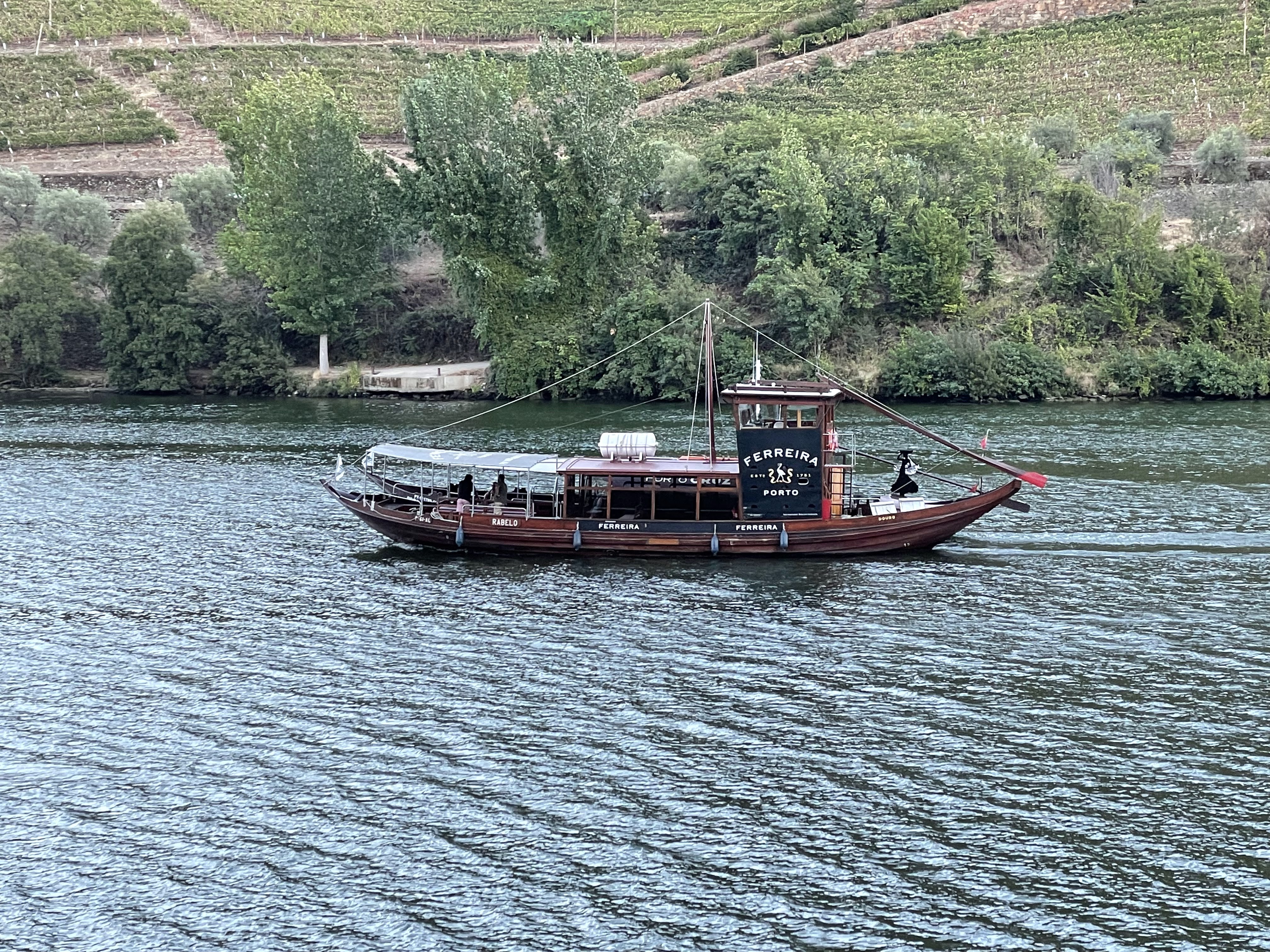
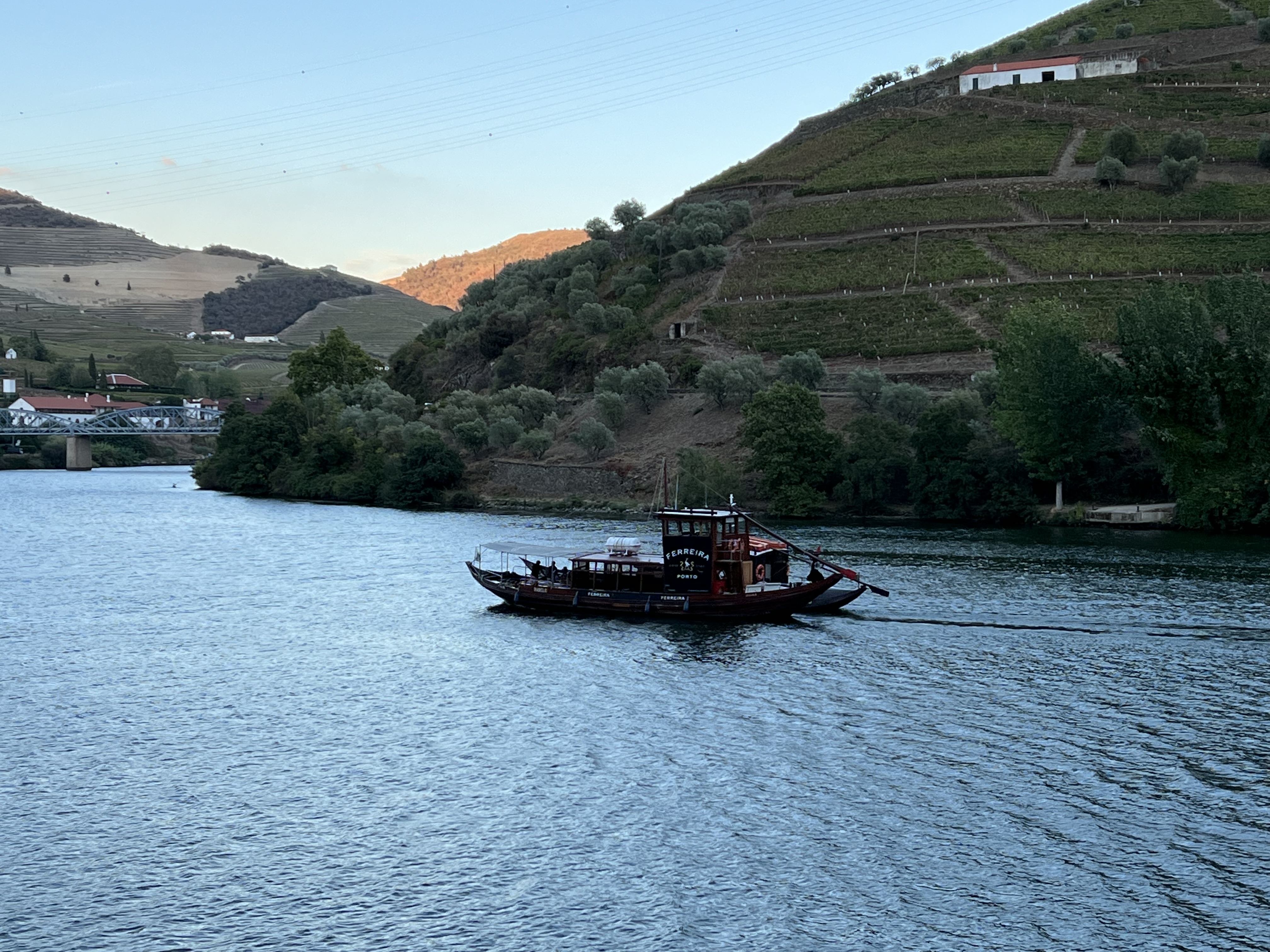
On day 5 of our Viking River Cruise, we departed Pinhao for a beautiful sail to Pocinho, where we would make a short stop to allow some passengers off for an alternate excursion. We stuck to the included excursions, so we remained on board and enjoyed the view on the way to our final destination, Barca d’Alva. Our travel dates aligned with the start of the picking season, so we often spotted workers in the fields. I wasn’t able to get a picture of them, but there was one vineyard where the workers stopped picking, and jumped and waved their arms as they shouted a greeting to us. (I choose to believe it was a heartly hello!) Our Captain responded with a sounding of the ship’s horn.
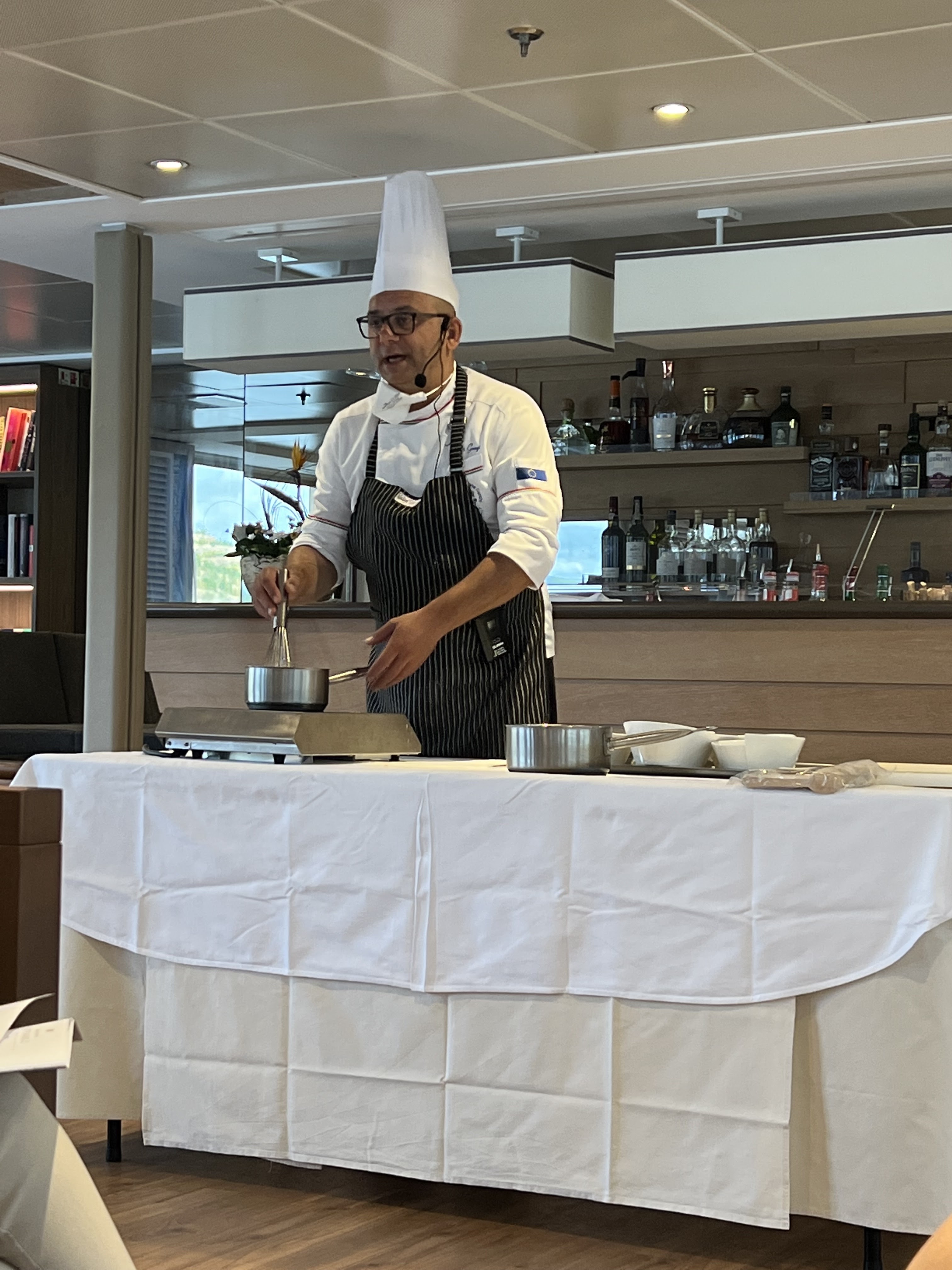
Between breakfast and lunch, Chef Andrea demonstrated how to make Pastel de Nata (Portuguese Custard Tarts).
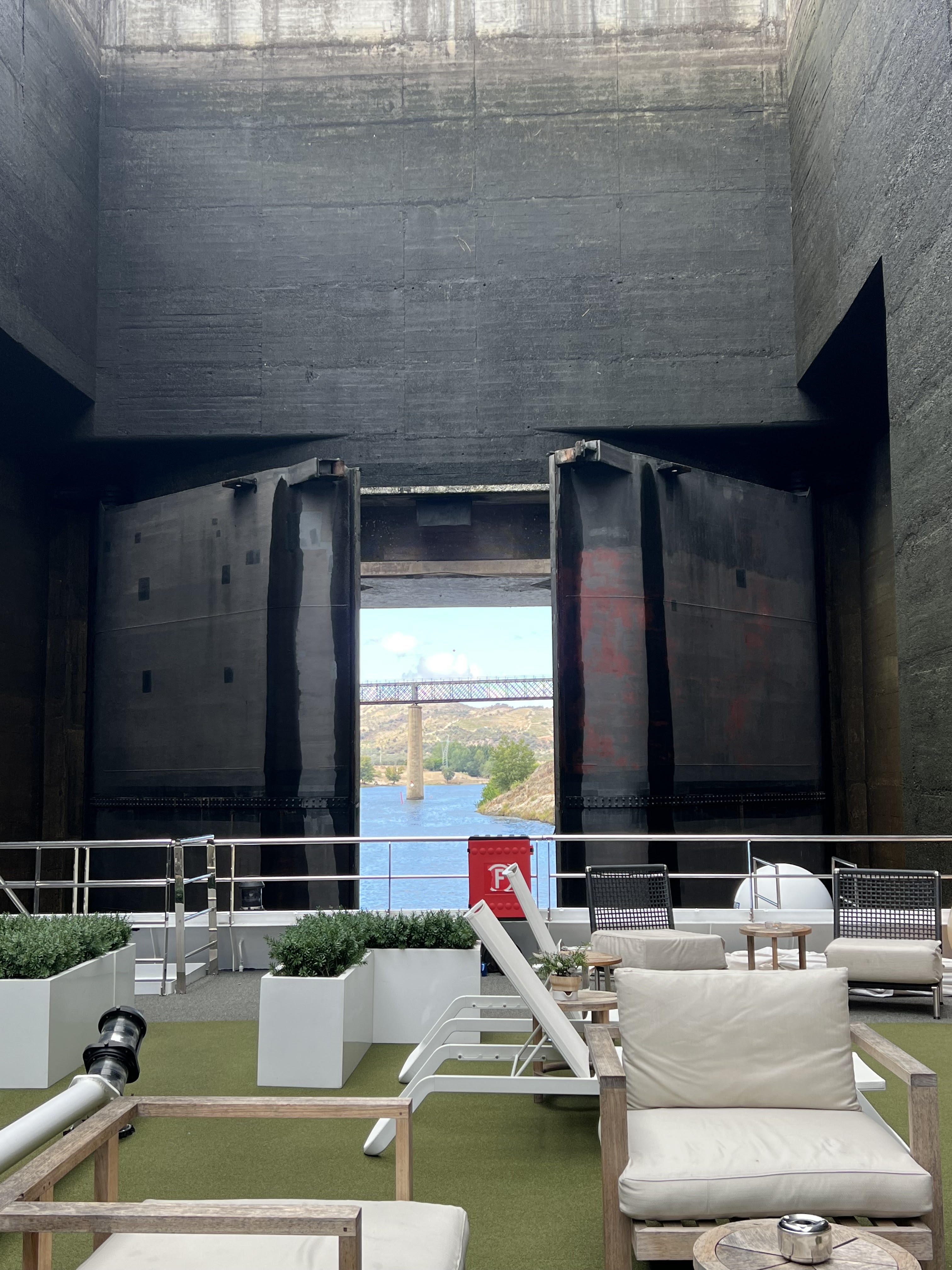
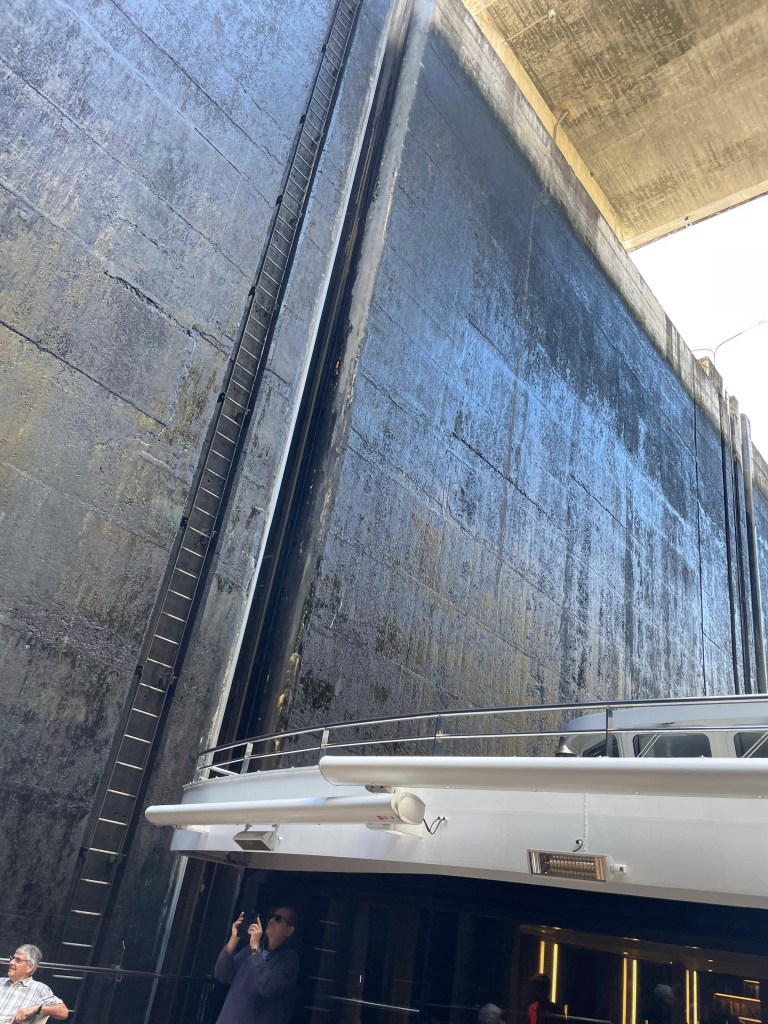
A short time later, we passed through the Pocinho Lock:
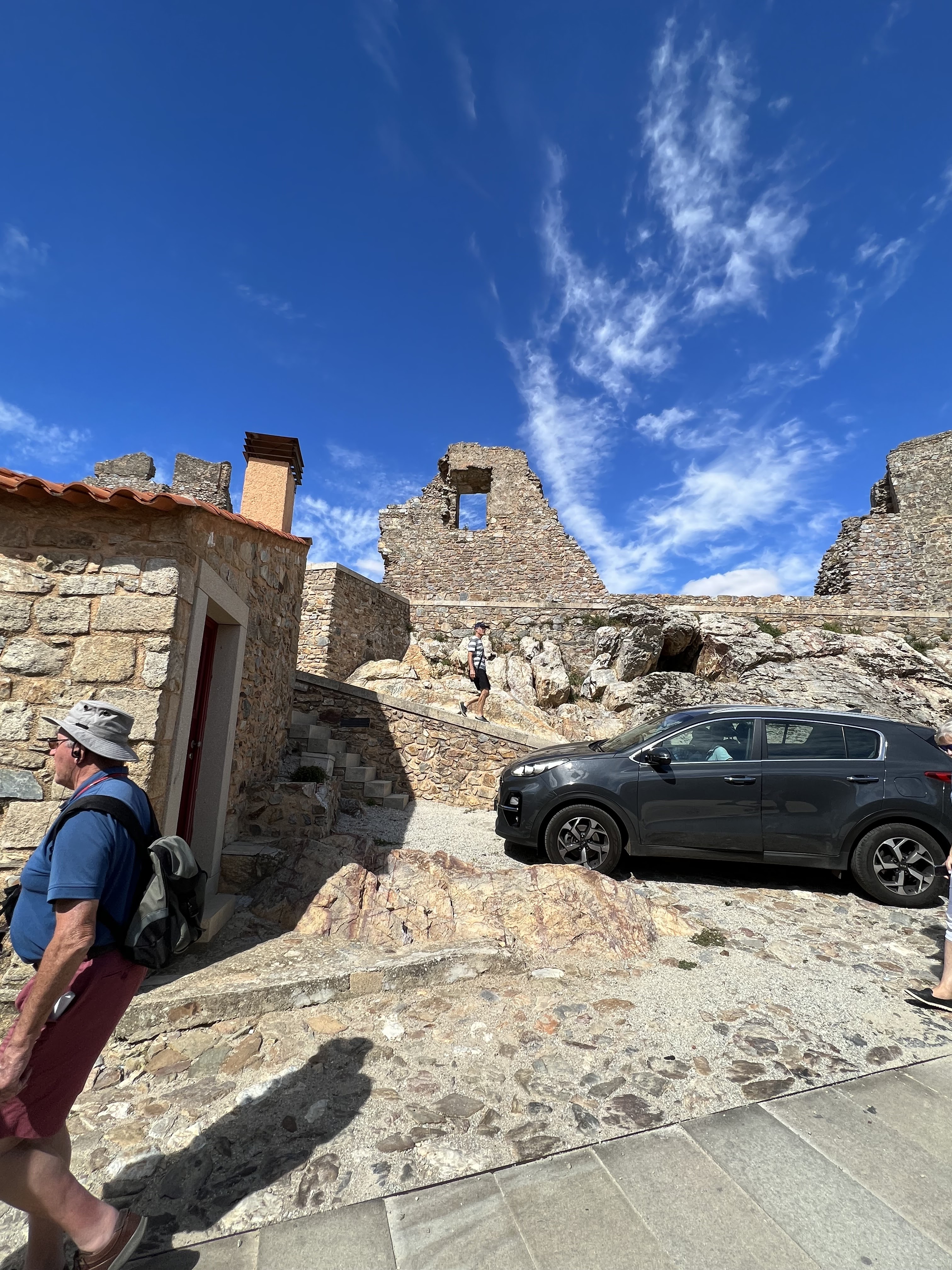
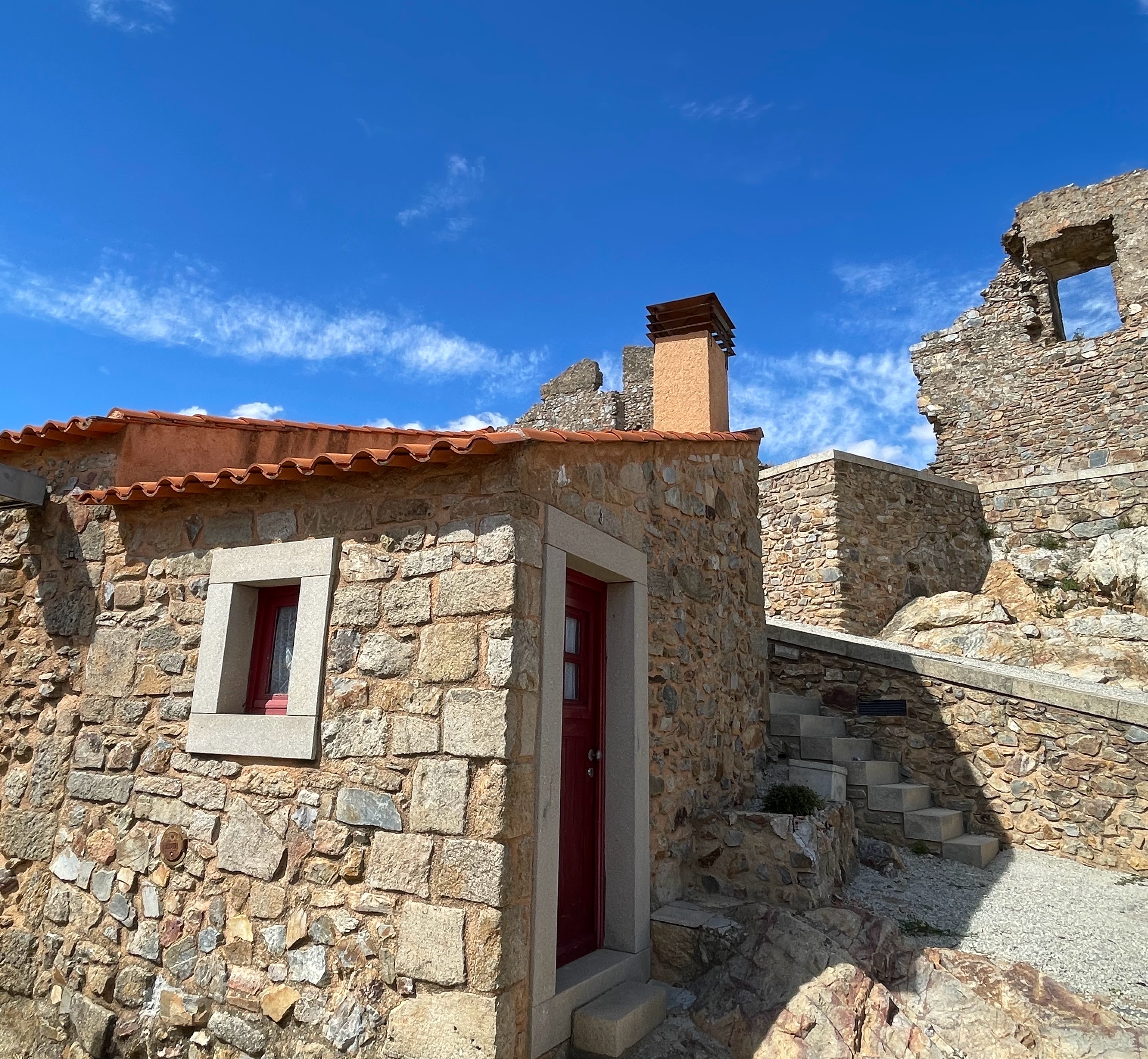
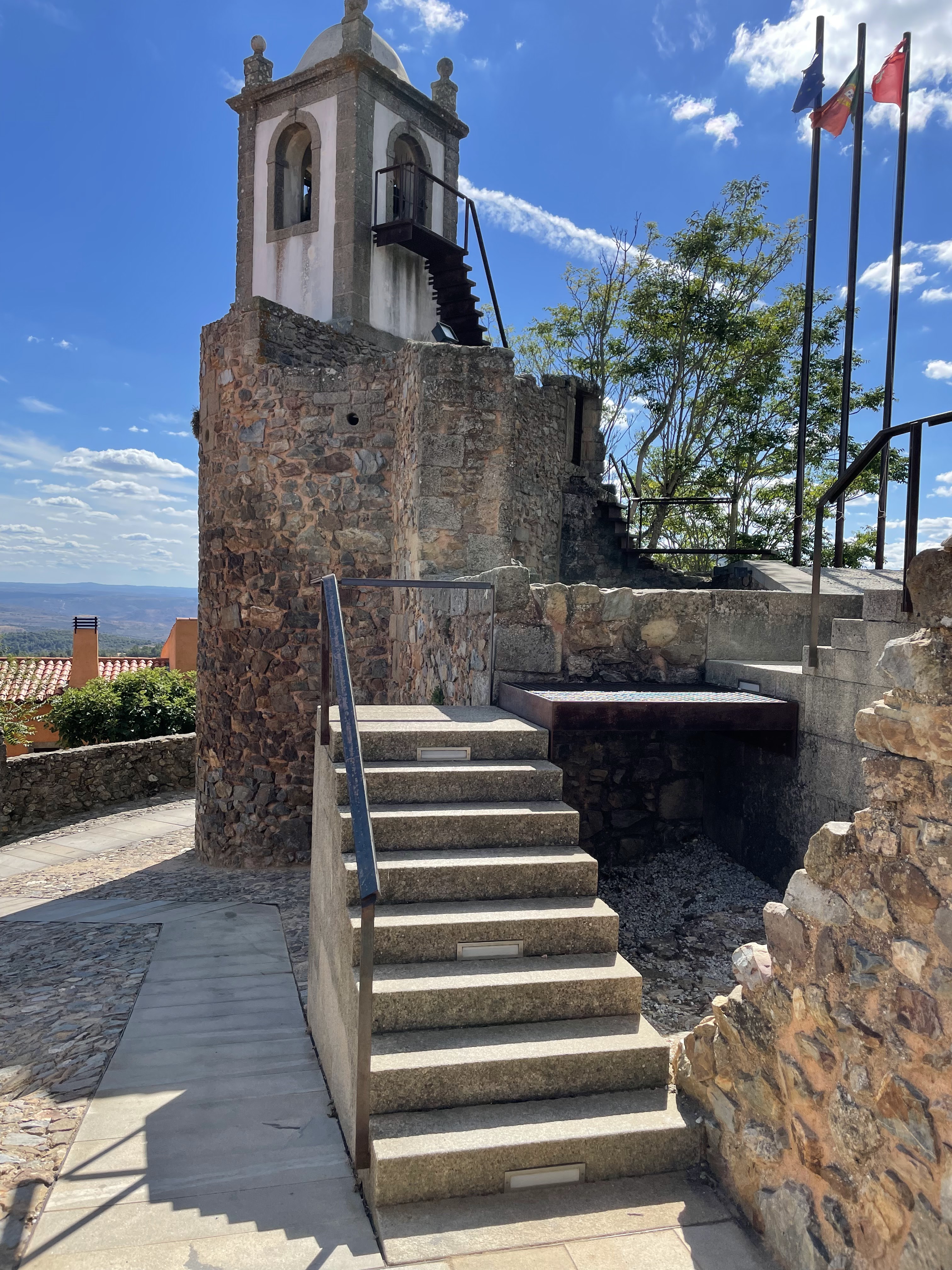
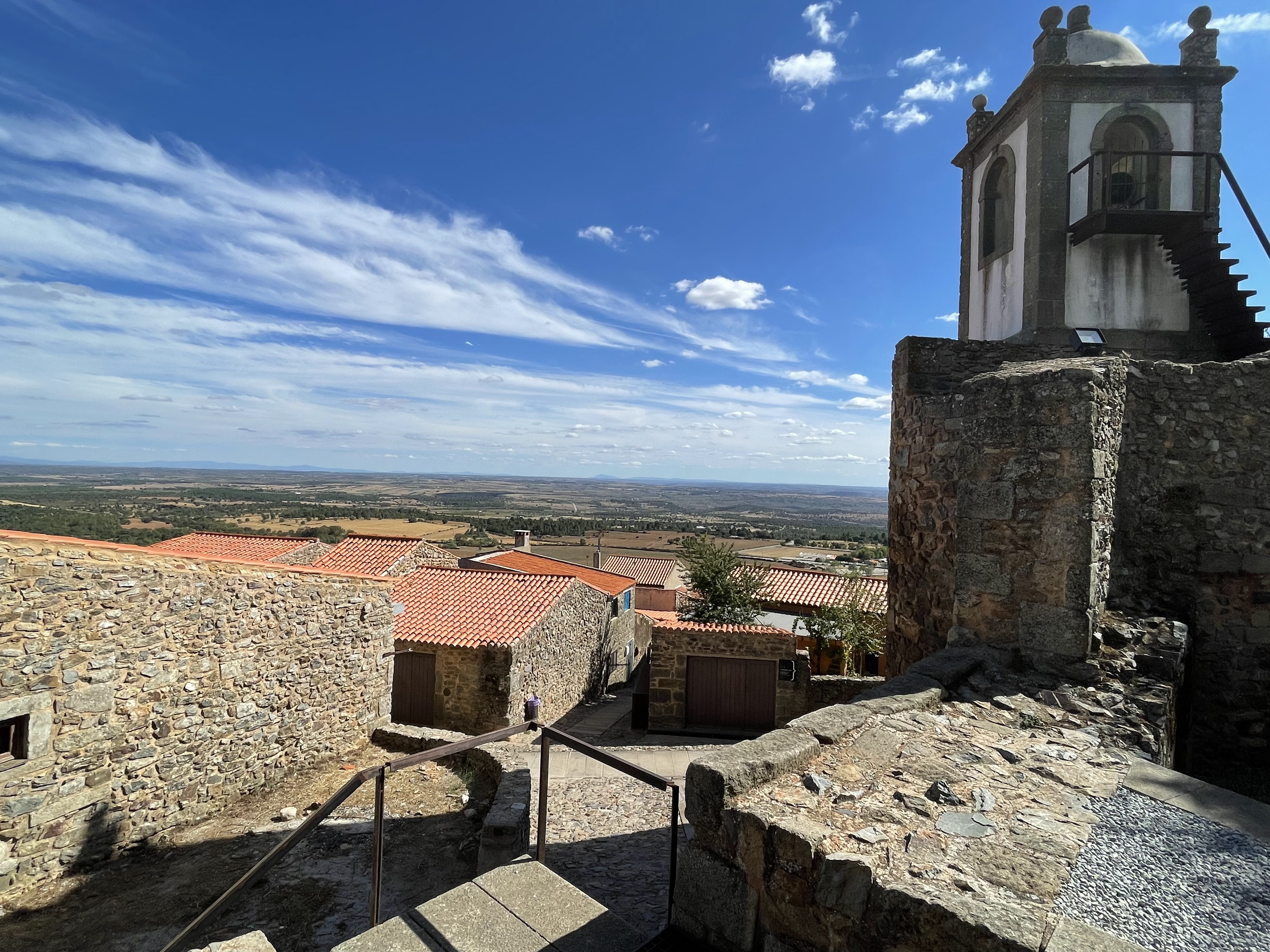
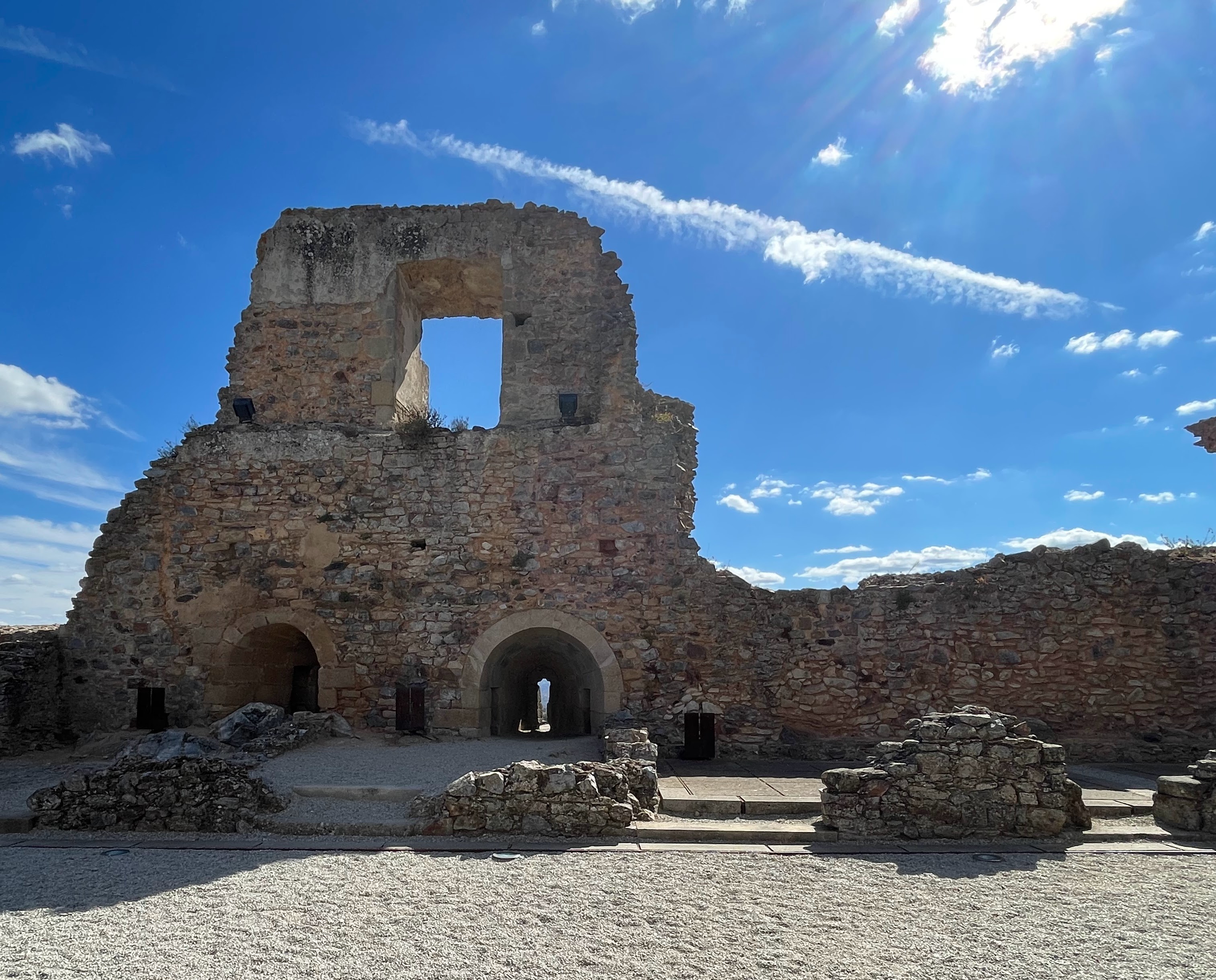
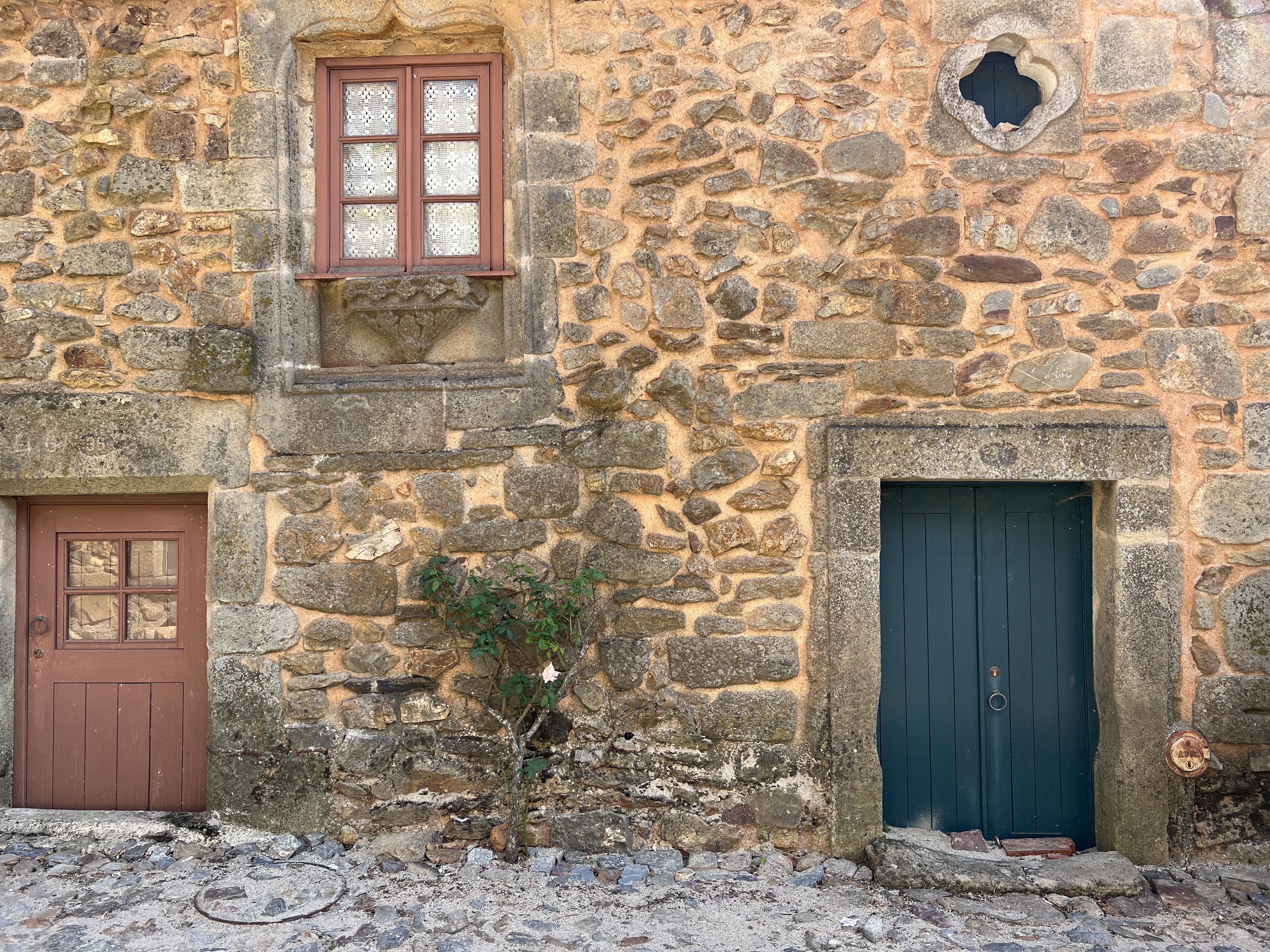
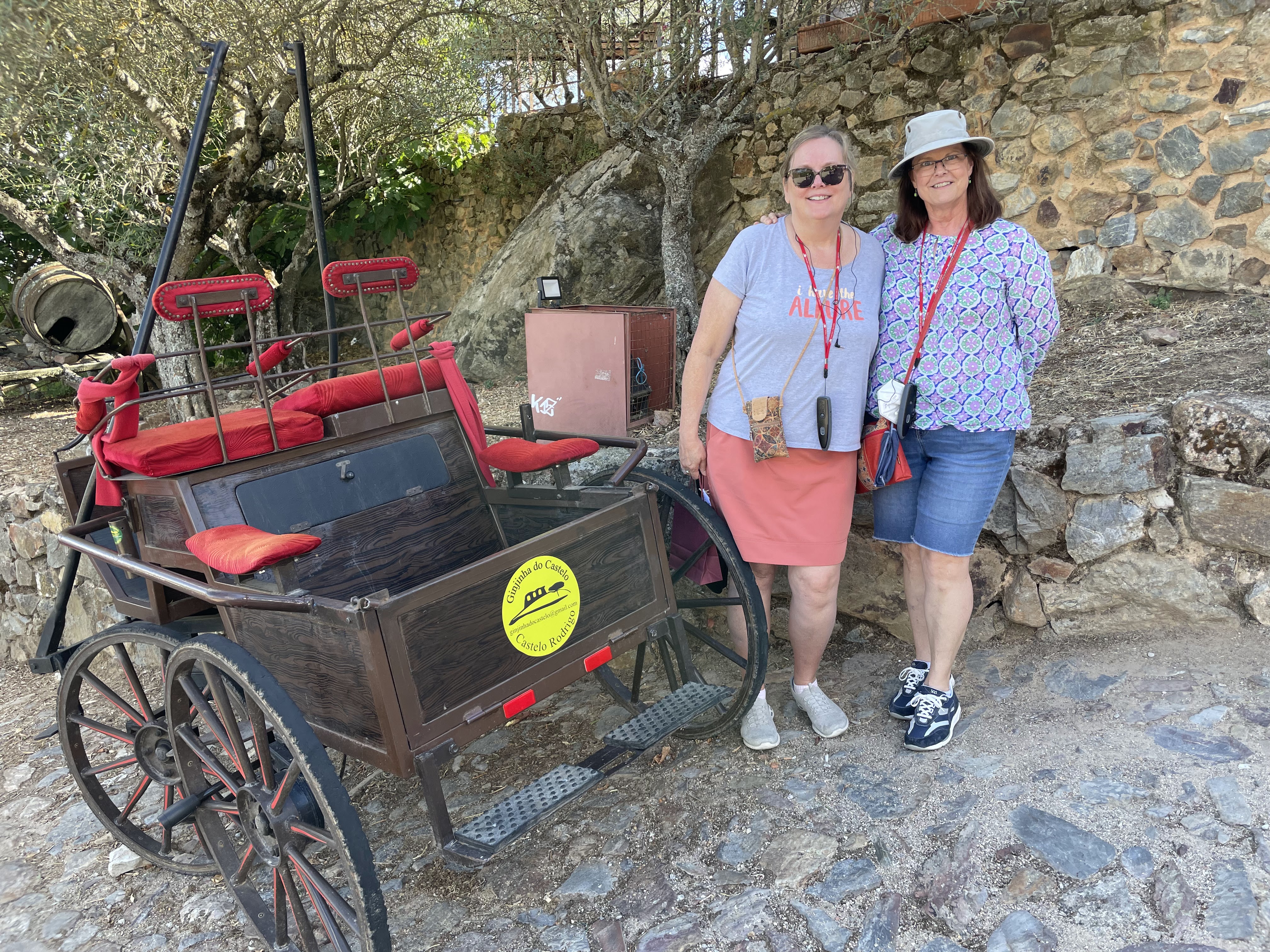
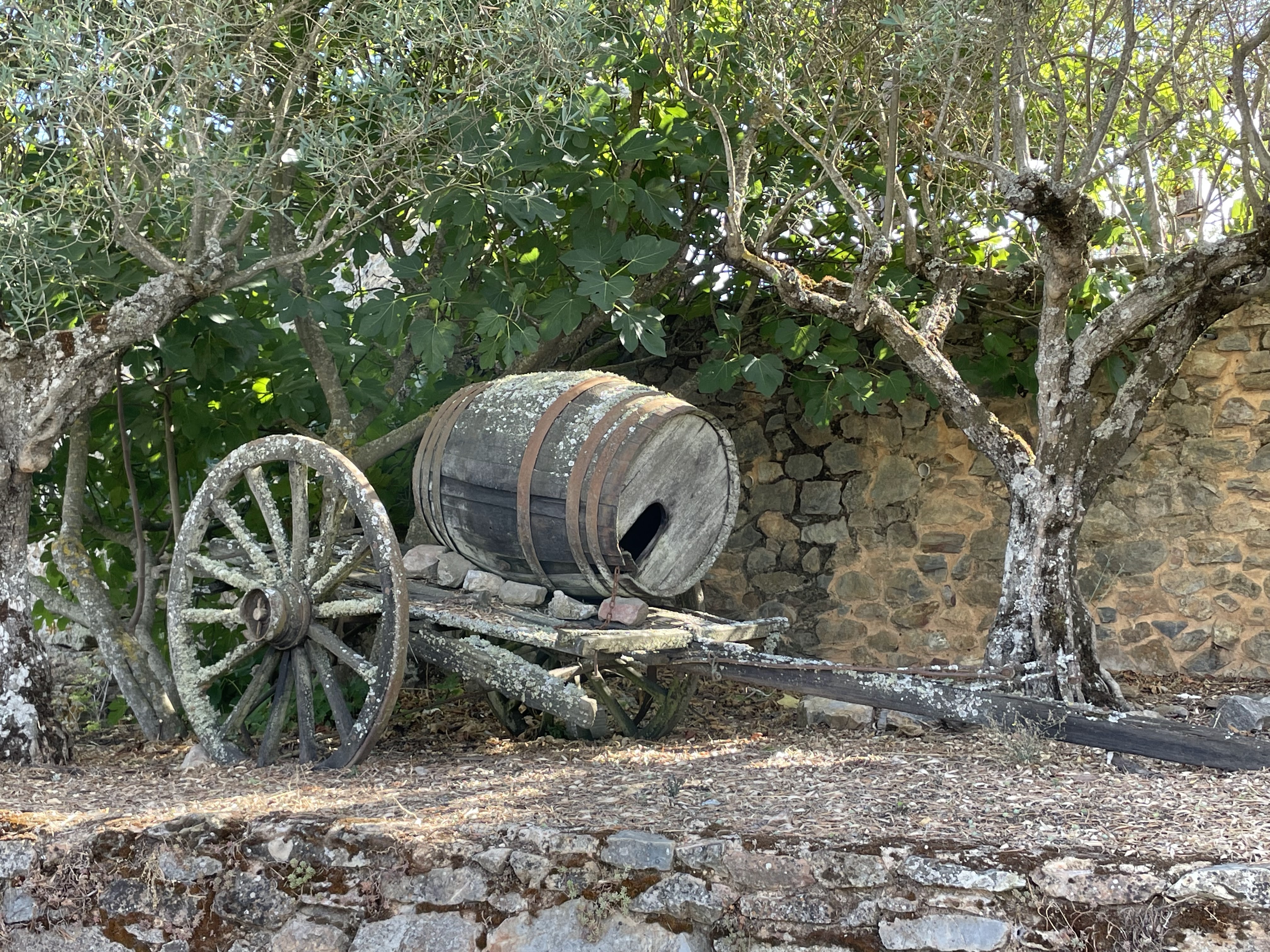
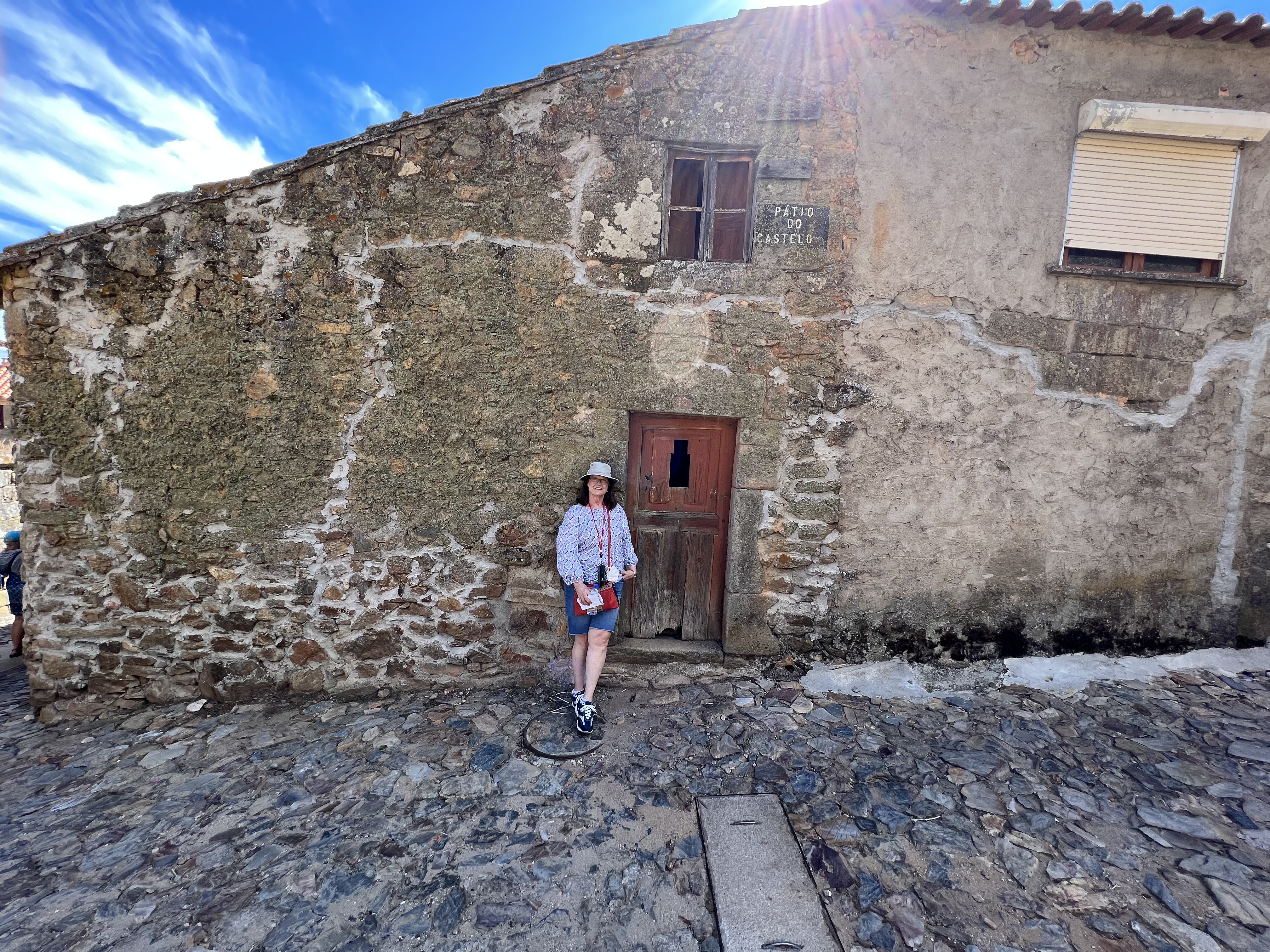
We arrived at Barca d’Alva after lunch and transferred to our designated bus to made the scenic trek to Castelo Rodrigo. You’ll see from some of the pictures coming up that there are people living in these old dwellings surrounding the castle. While the castle is only remains at this point, the area is a thriving tourist location. They even have 5g fiber, believe it or not!
There were so many beautiful pictures from this stop I have to add them in several separate slide decks. First we went down to the church:
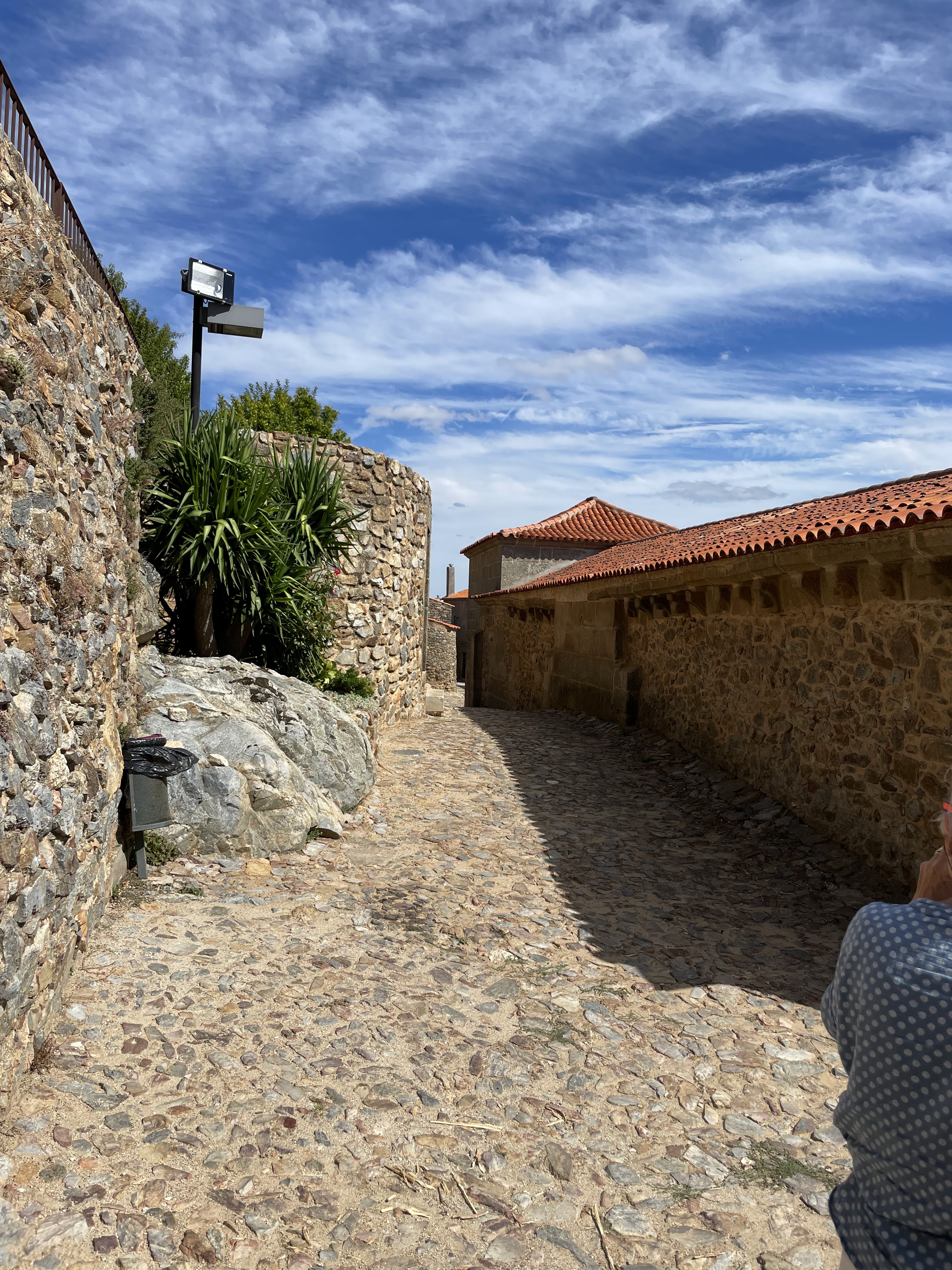
Then I did some wandering on my own:
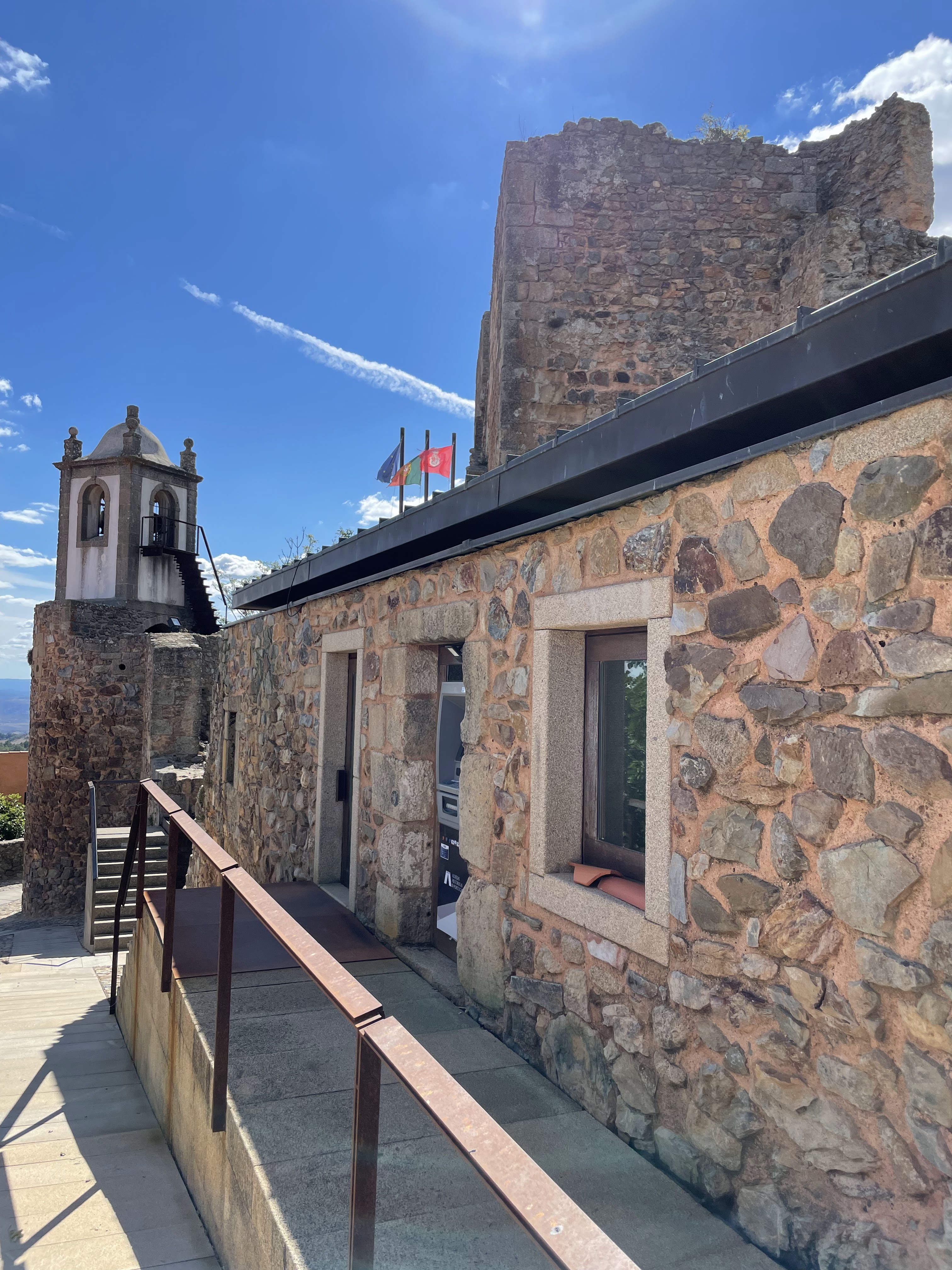
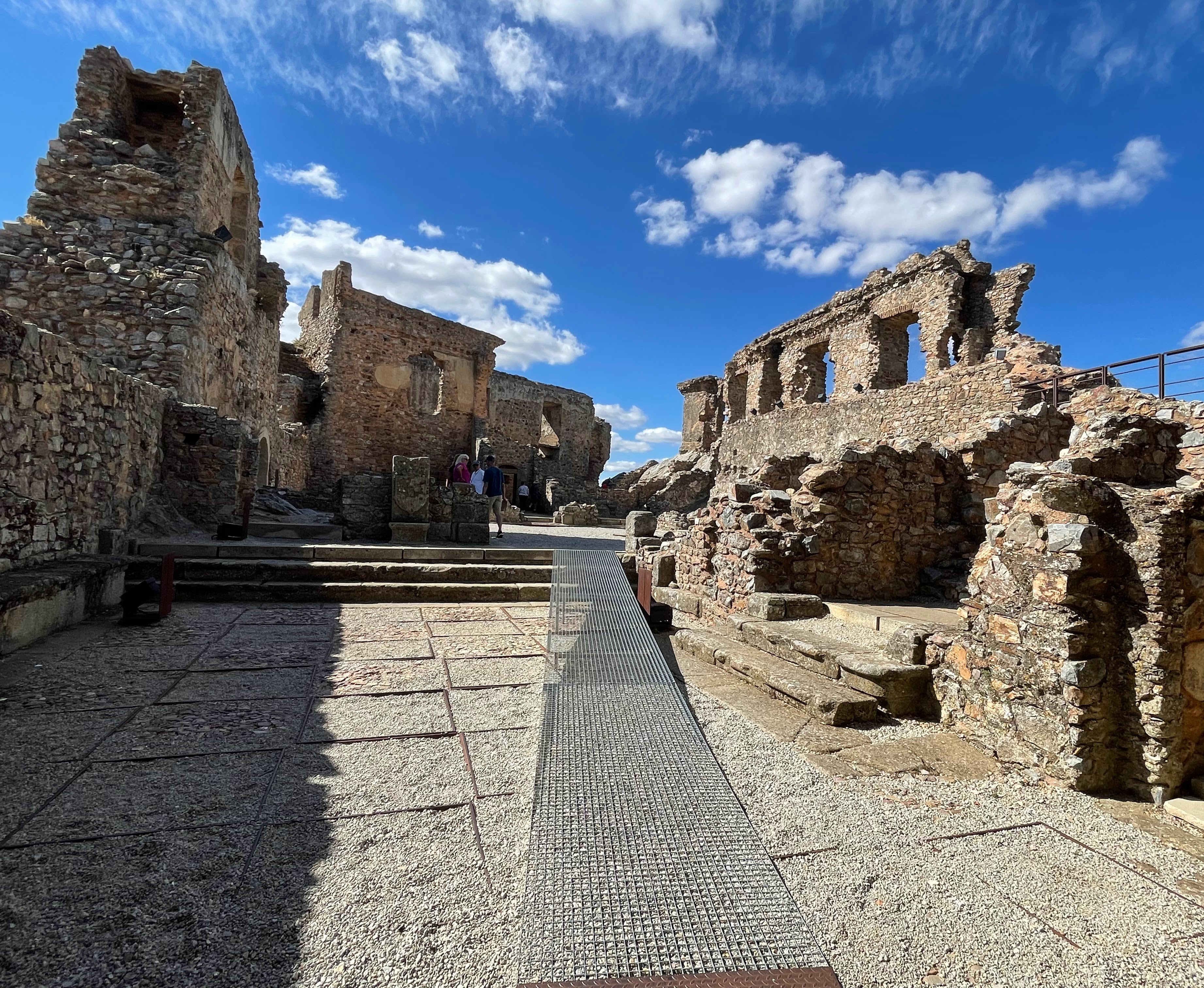
Then into the castle where they have a museum, and…an ATM:
After touring the castle on my own, I made my way back to my group, marveling at the beautiful views along the way. Back near the entrance there were shops were filled with – you guessed it – cork products, olive products and wine! In one of the shops I tasted Almond Sparkling Wine, which was a mixture of almond liqueur made only in that area of Portugal and sparkling wine. If I hadn’t already bought a few bottles of wine from some of our other stops I would have grabbed some of that Almond liqueur, but I knew I was already near the tipping point on my suitcase weight limit, so I had to walk away sad. 😦
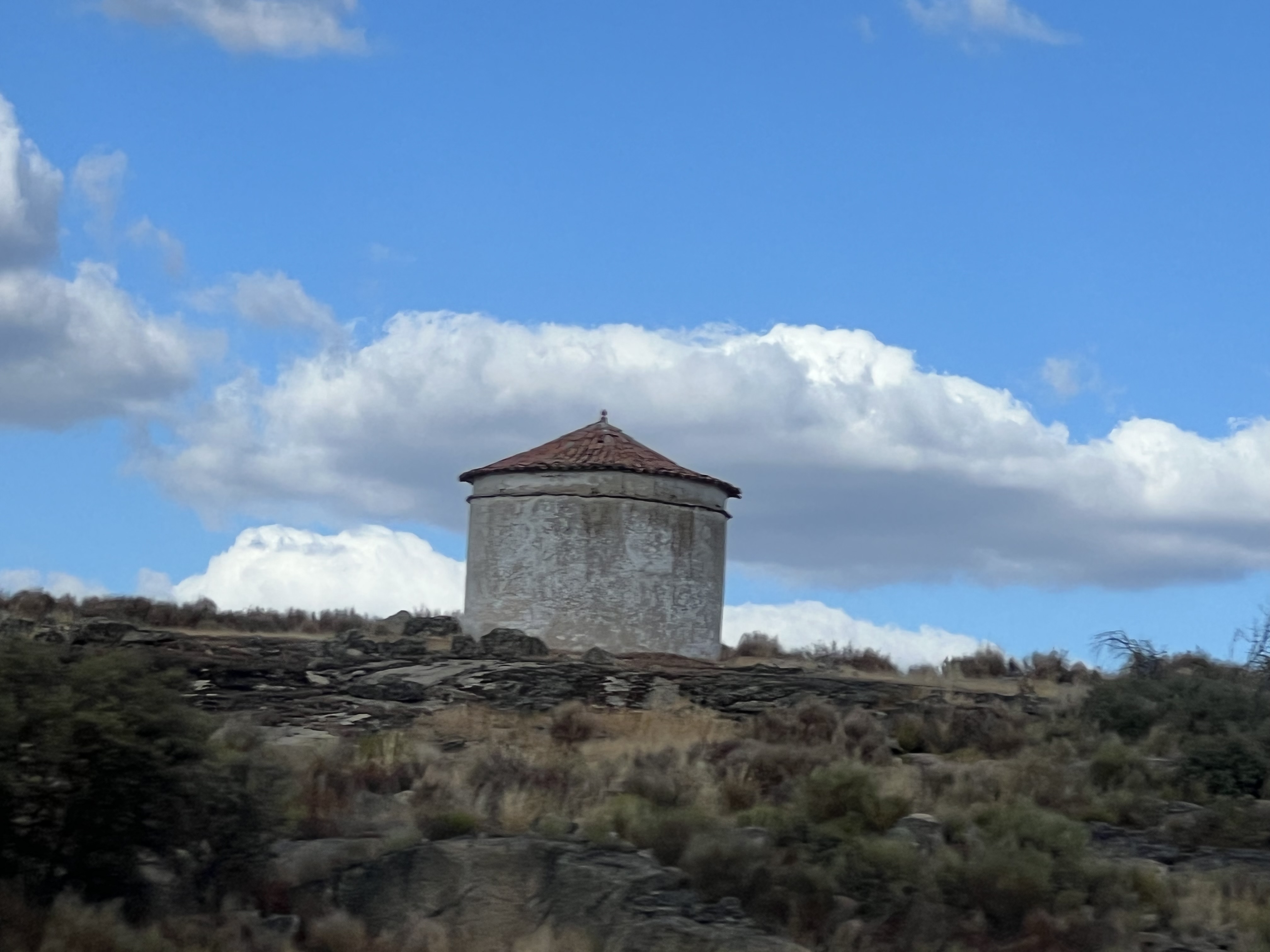
On the ride back I was able to get a few pics of the pigeon houses. Our guide told us a story of how pigeons were, and still are used as food in Portugal (pigeon rice, yum!). Also, their droppings are used as fertilizer. There was a time long ago when Coca-Cola was banned (I don’t remember when and couldn’t find a reference online), and so smugglers stored it in the pigeon houses. Pigeon houses were scattered among the rocky hills all along our route. This is the best picture I was able to get:
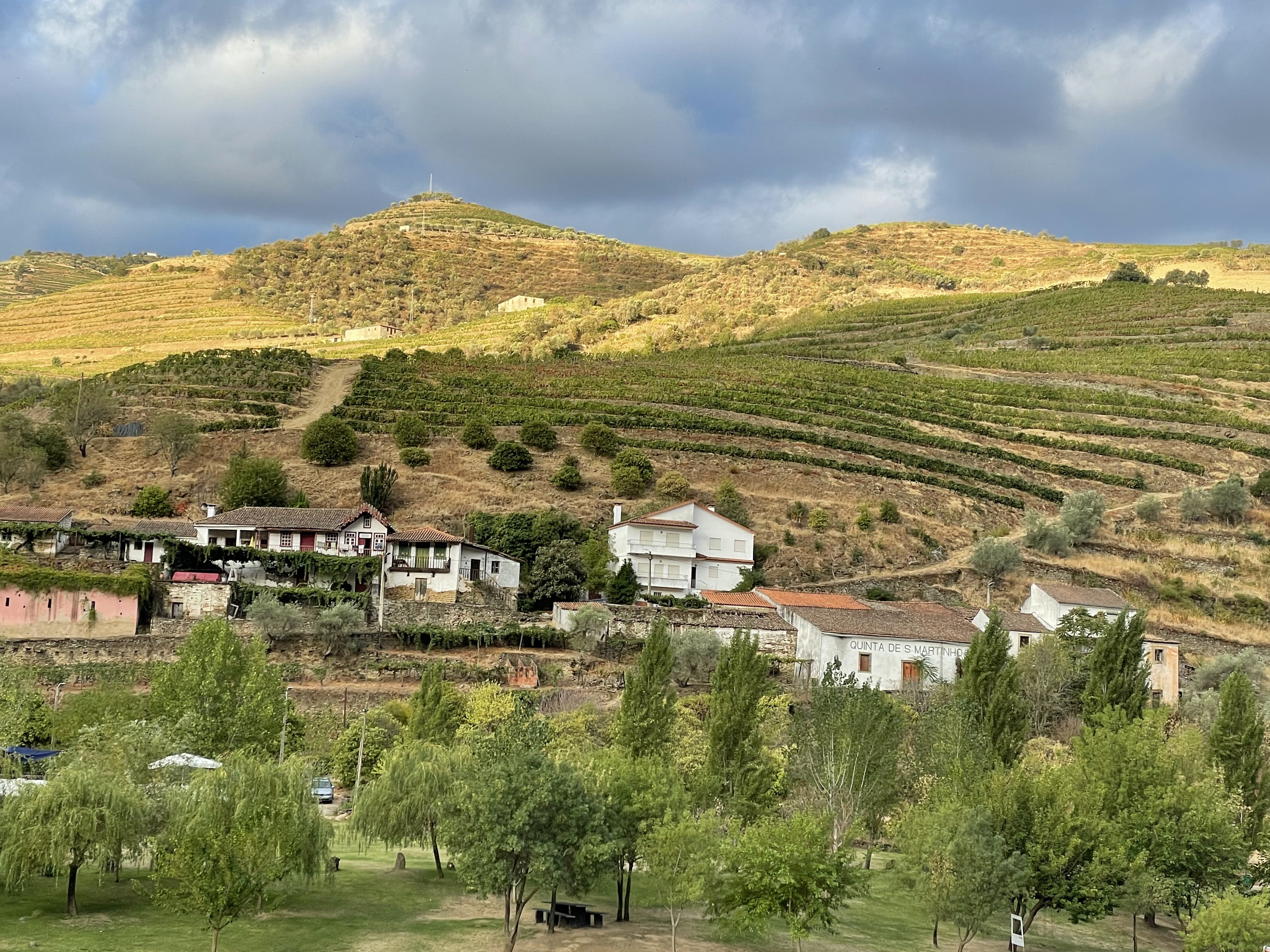
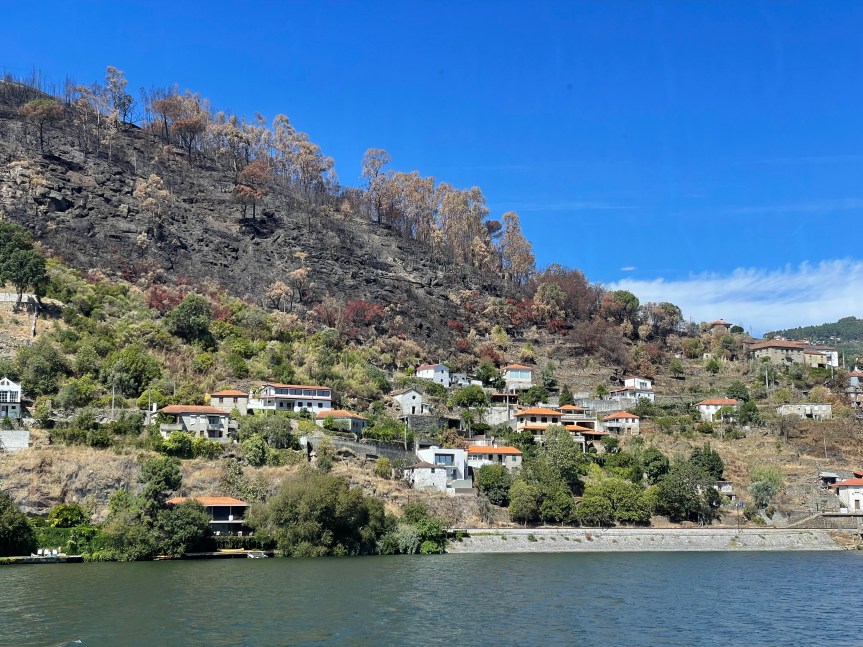
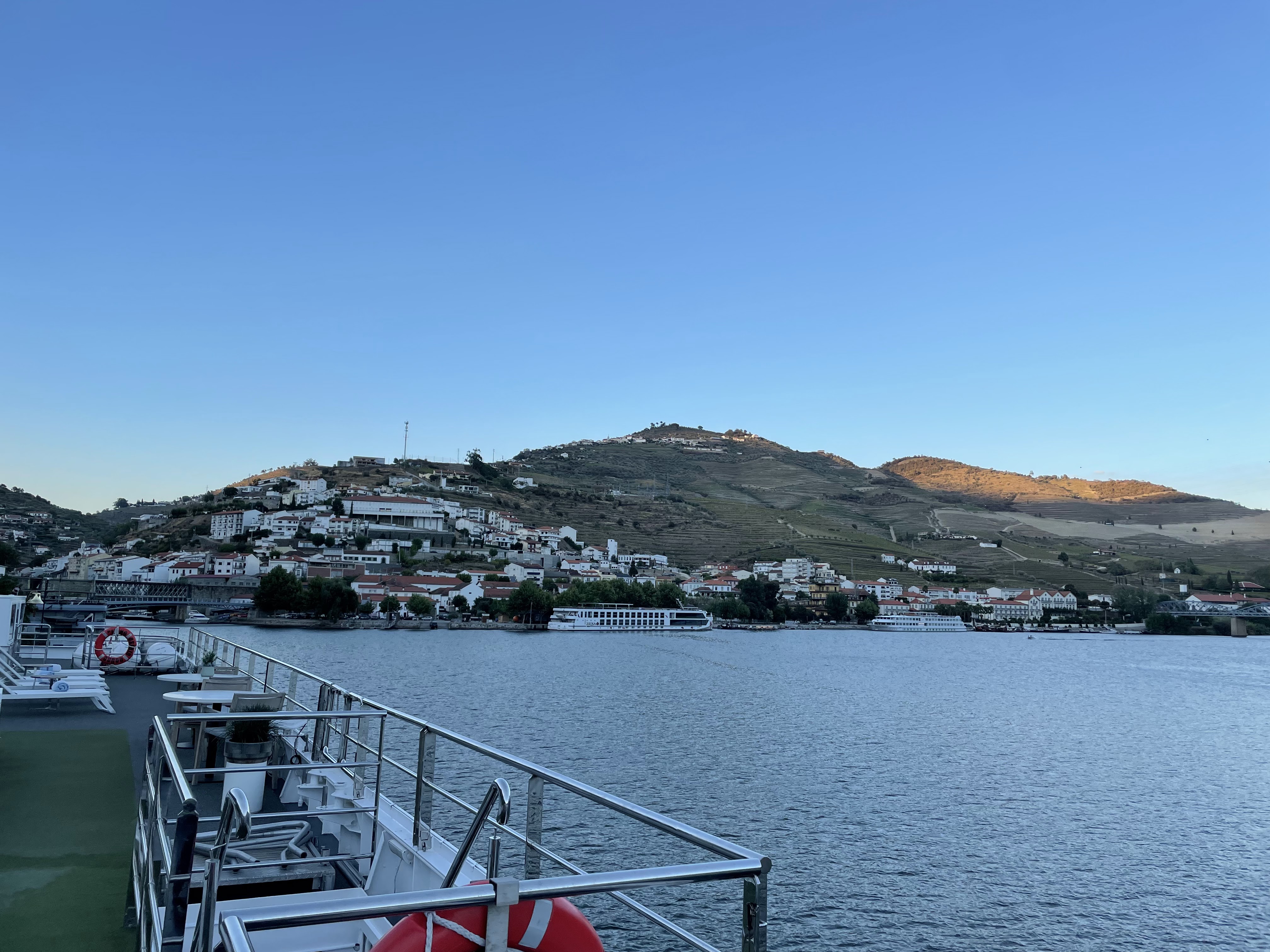
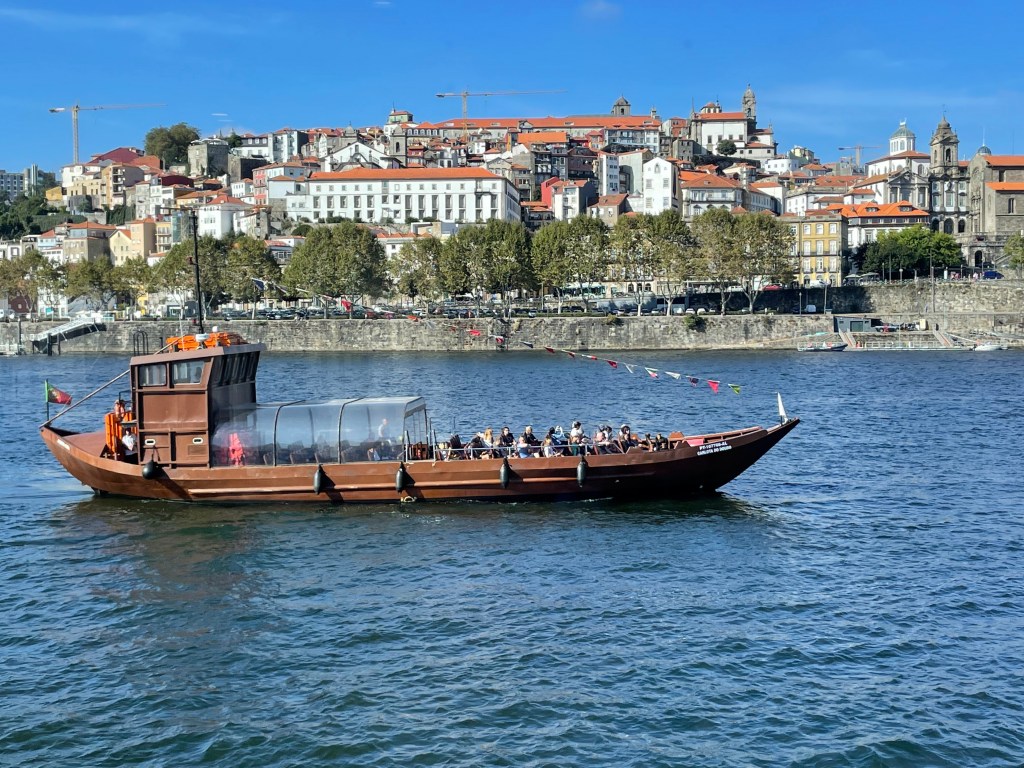
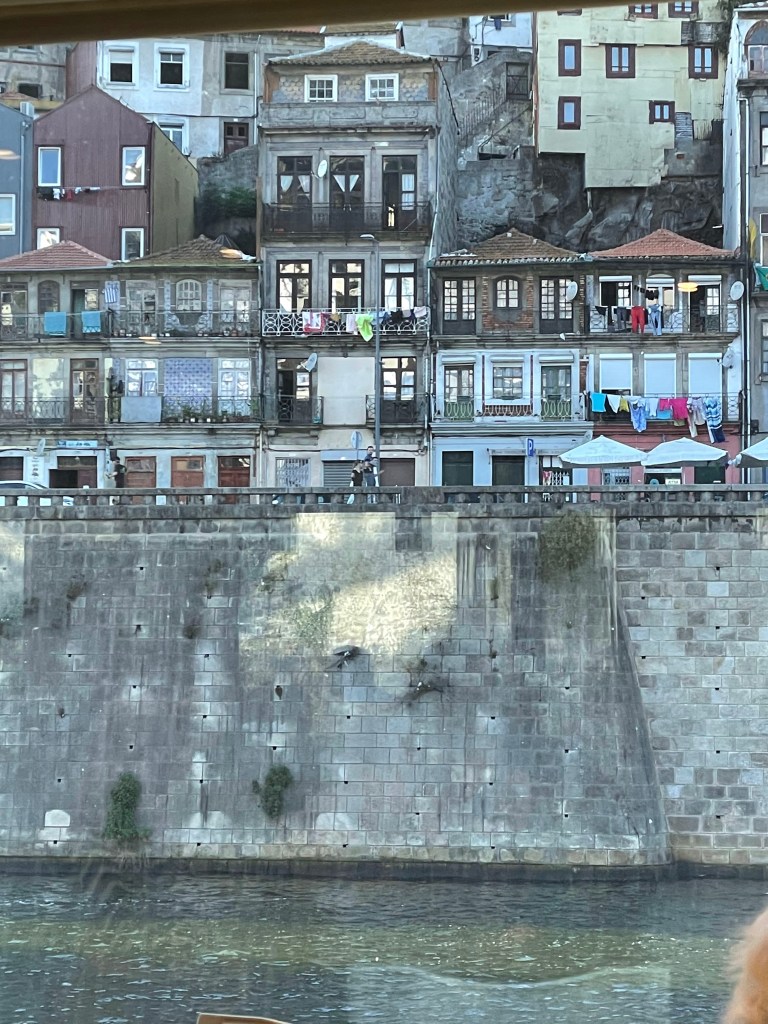
Day four of our Viking River Cruise began with a sail along the Douro river from Vila Nova de Gaia to Regua. In the photos below you’ll see the Crestuma Lock, one of 5 locks we moved through on our travels. You’ll also see some beautiful views of vineyards and evidence of some of the wildfires the Portugal mountains have suffered – they came very close to many homes along the water!
We weren’t docking until 2:30 PM, so after breakfast we headed to the lounge for a presentation by “The Cork Lady”. The Cork Lady brought loads of products that she makes by hand (presumably): handbags, notebooks, wallets, hats and jewelry. But…before we could shop, she gave a presentation about cork and its importance to Portugal.
It turns out, cork has many uses beyond sealing wine bottles. It is used in products like flooring, clothing, shoes, insulation, and many other things. Quality cork doesn’t burn, so it’s a very useful product in homes. Growing and harvesting cork is quite a lengthy process. It takes many years for a tree to produce high quality cork. The cork is taken from only the trunk of the tree, and the cork can be harvested only so high up the trunk in order to keep the tree healthy. A cork tree must grow to 51″ high and 27.5″ in diameter before it can be harvested. The first harvest will be low quality cork, but there are still uses for that. Nine more years later the cork is harvested again, and again it is low quality. Finally, after nine more years, the tree will yield a quality crop, and it will continue to produce for about 100 years!
According to The Cork Lady, since trying to set fire to store inventory is frowned upon, the best way to test whether the cork used in textiles is good quality is to scrunch it up in your hand. When you release it, if the wrinkles pop out, it’s good cork. This tip came in handy for the rest of the trip, as everywhere we stopped there were cork products for sale.
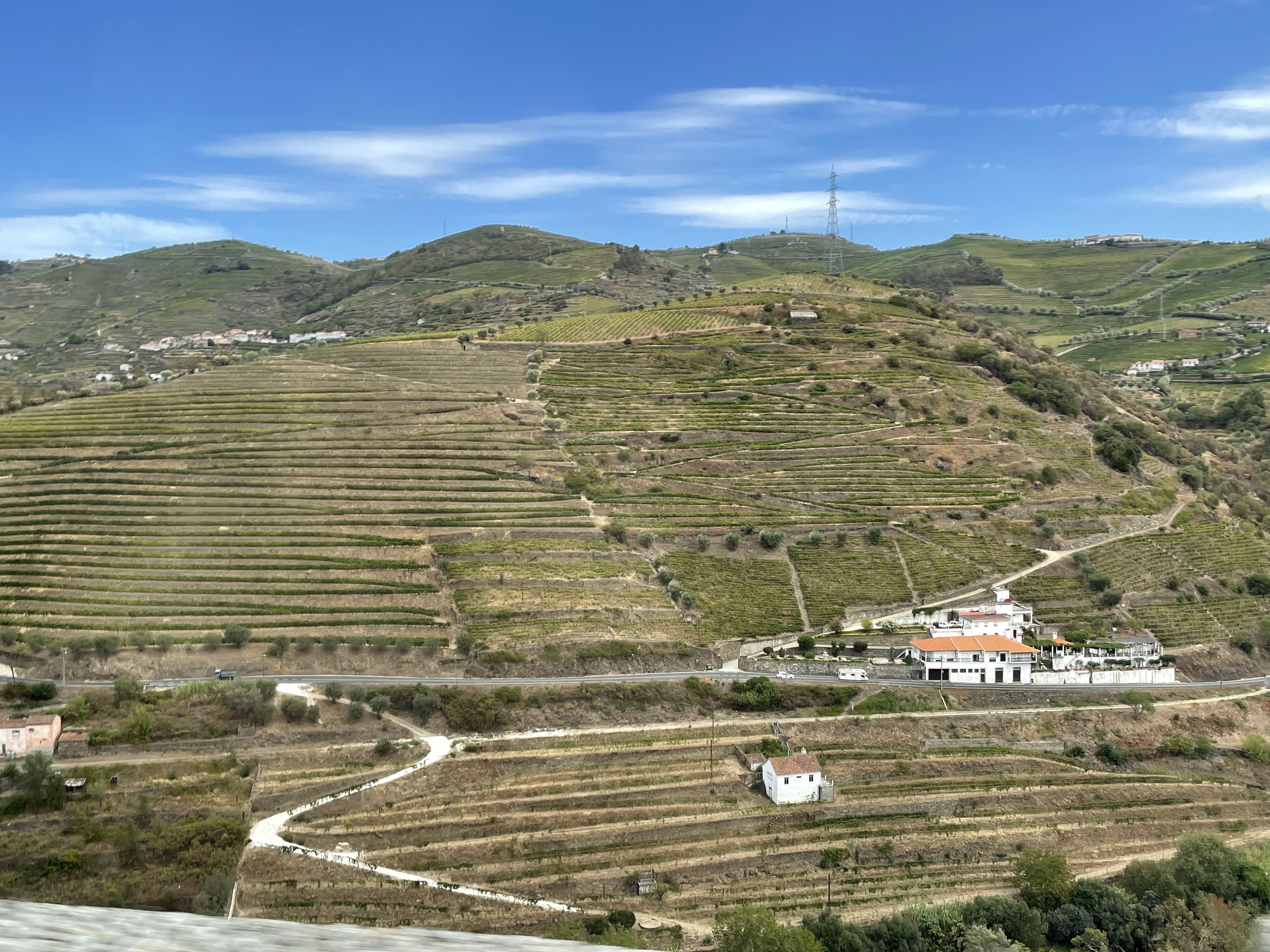
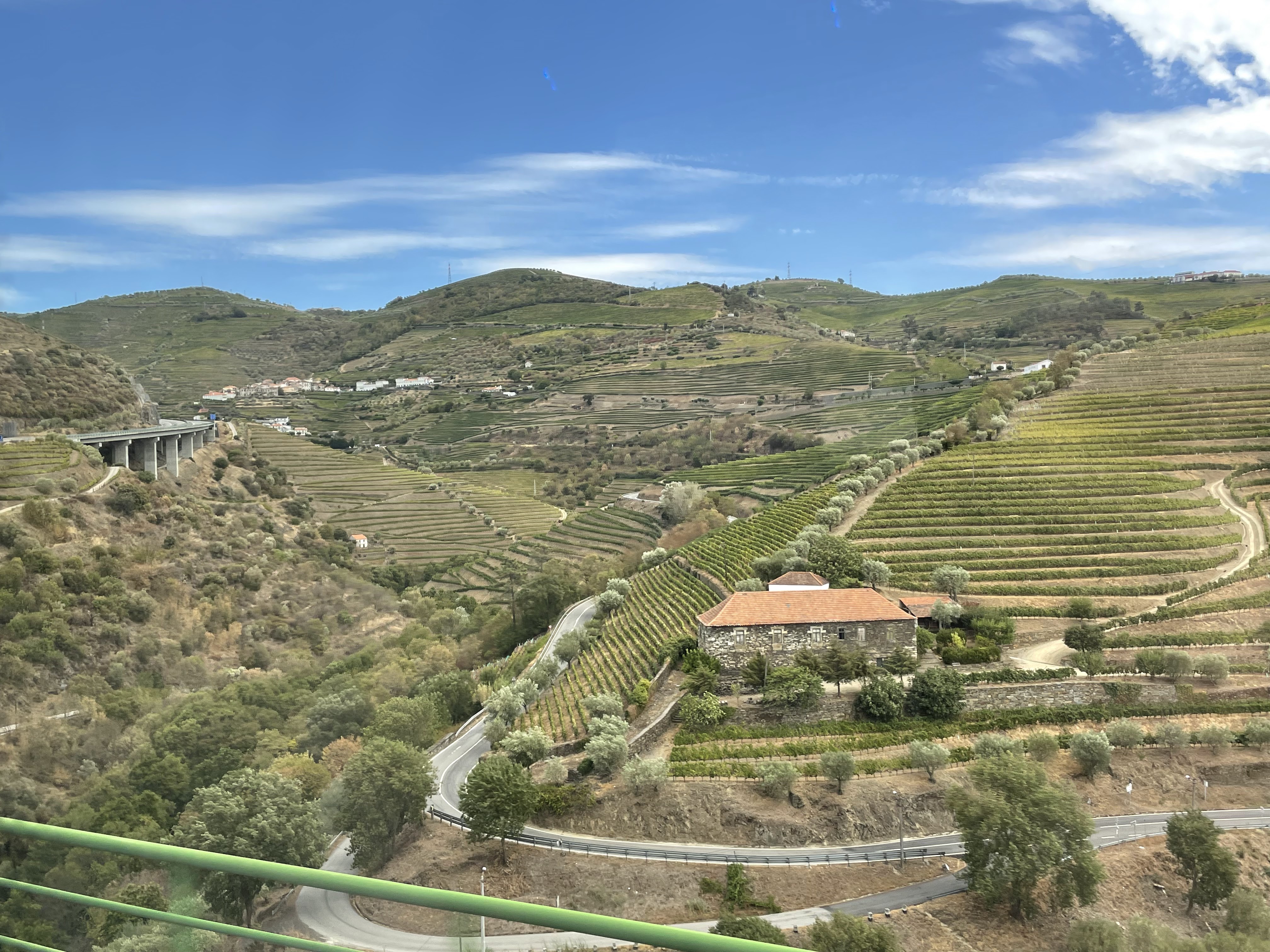
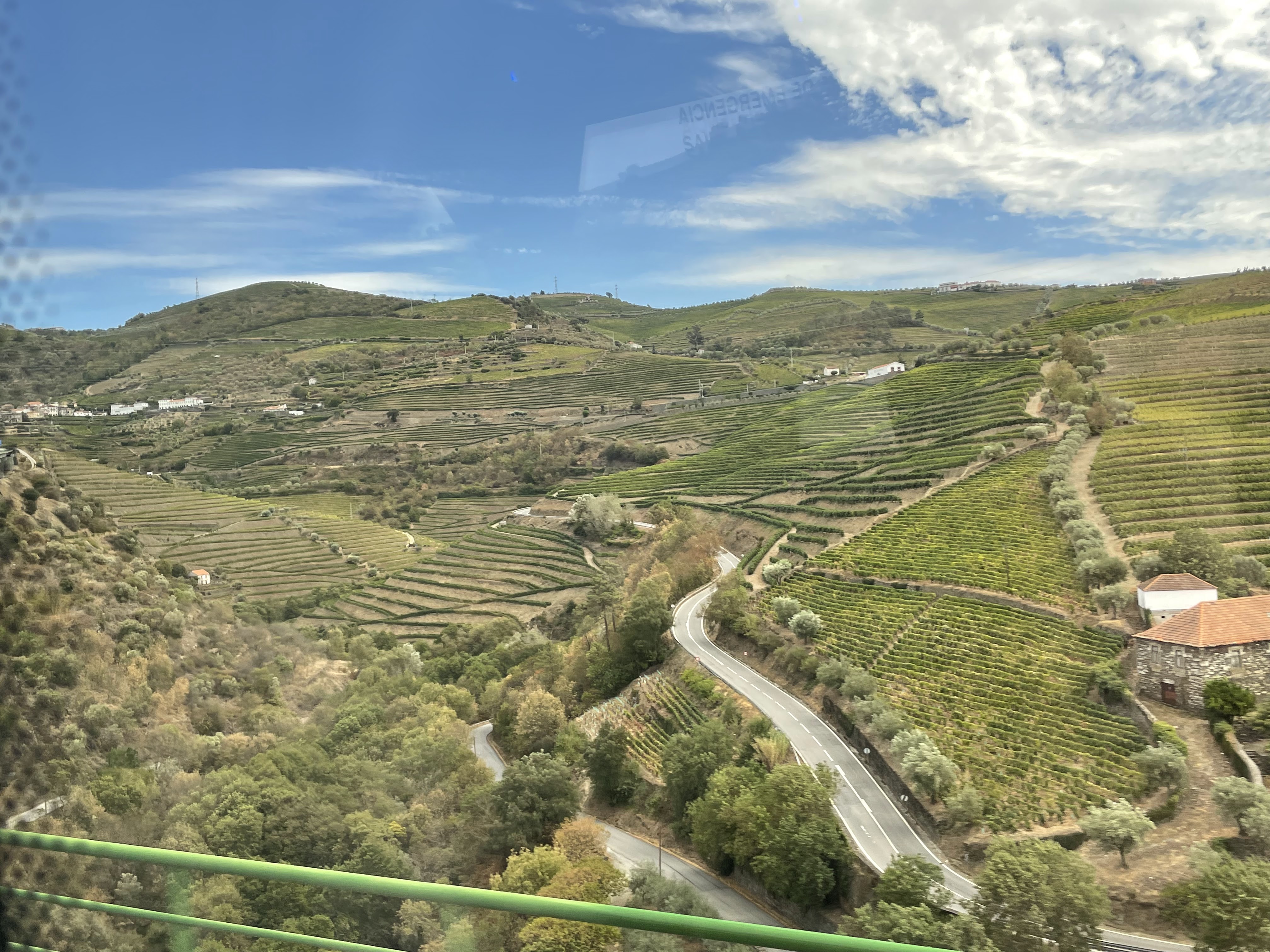
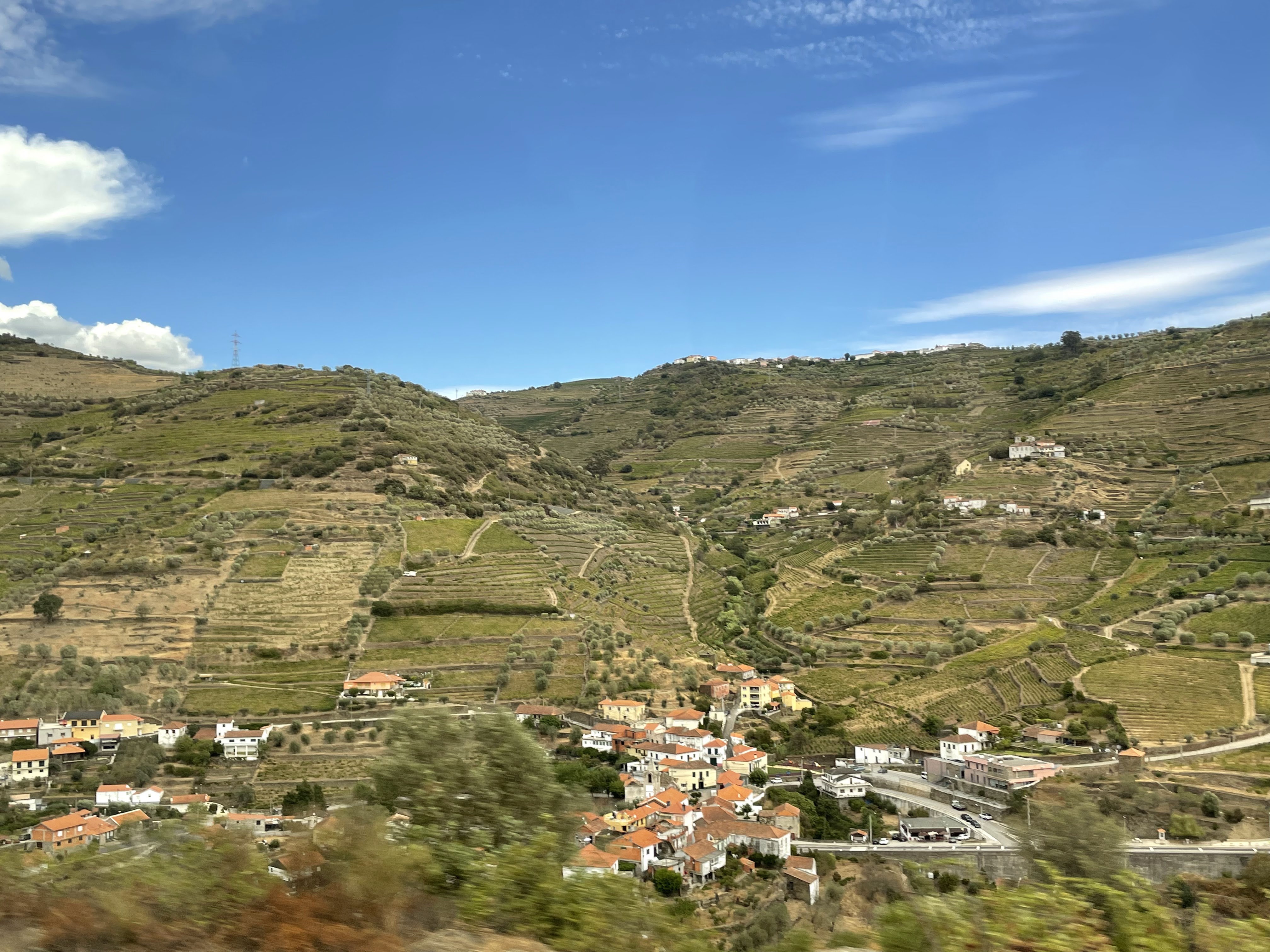
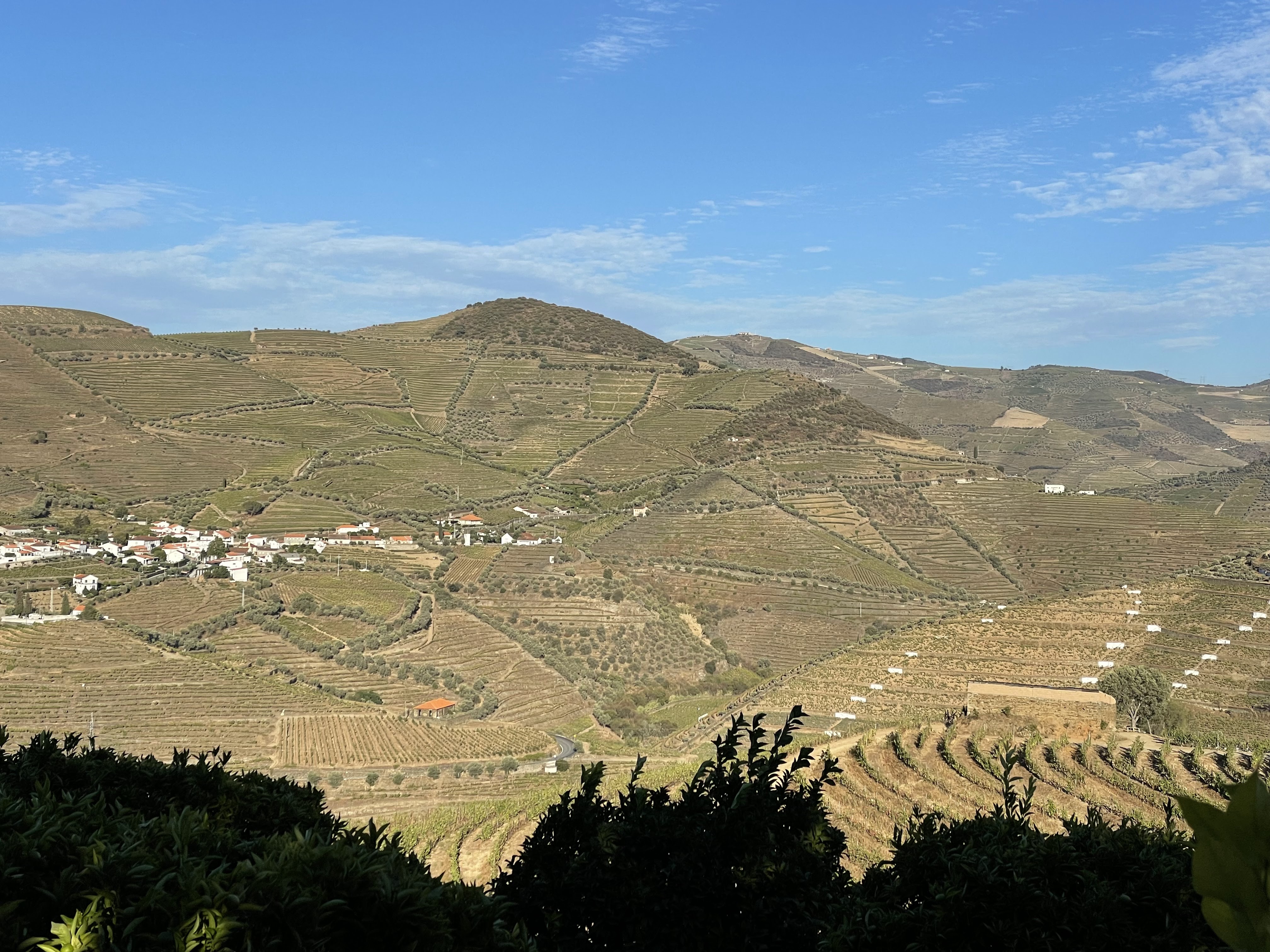
After lunch I snapped a few more pics from the upper deck and then got ready to disembark the ship and board our bus to Mateus Palace & Gardens. In these next pictures you can see very clearly how the mountains are lined with row after row of grape vines! The first couple pics were taken while still on the ship; the others on the bus – and you can see the dizzying heights from the road! Most of the roads we traveled were “two lane” roads, which were really only the width of a single lane here in the US. This means, when you come across another vehicle heading toward you, one of you has to move waaaay over to let the other pass!
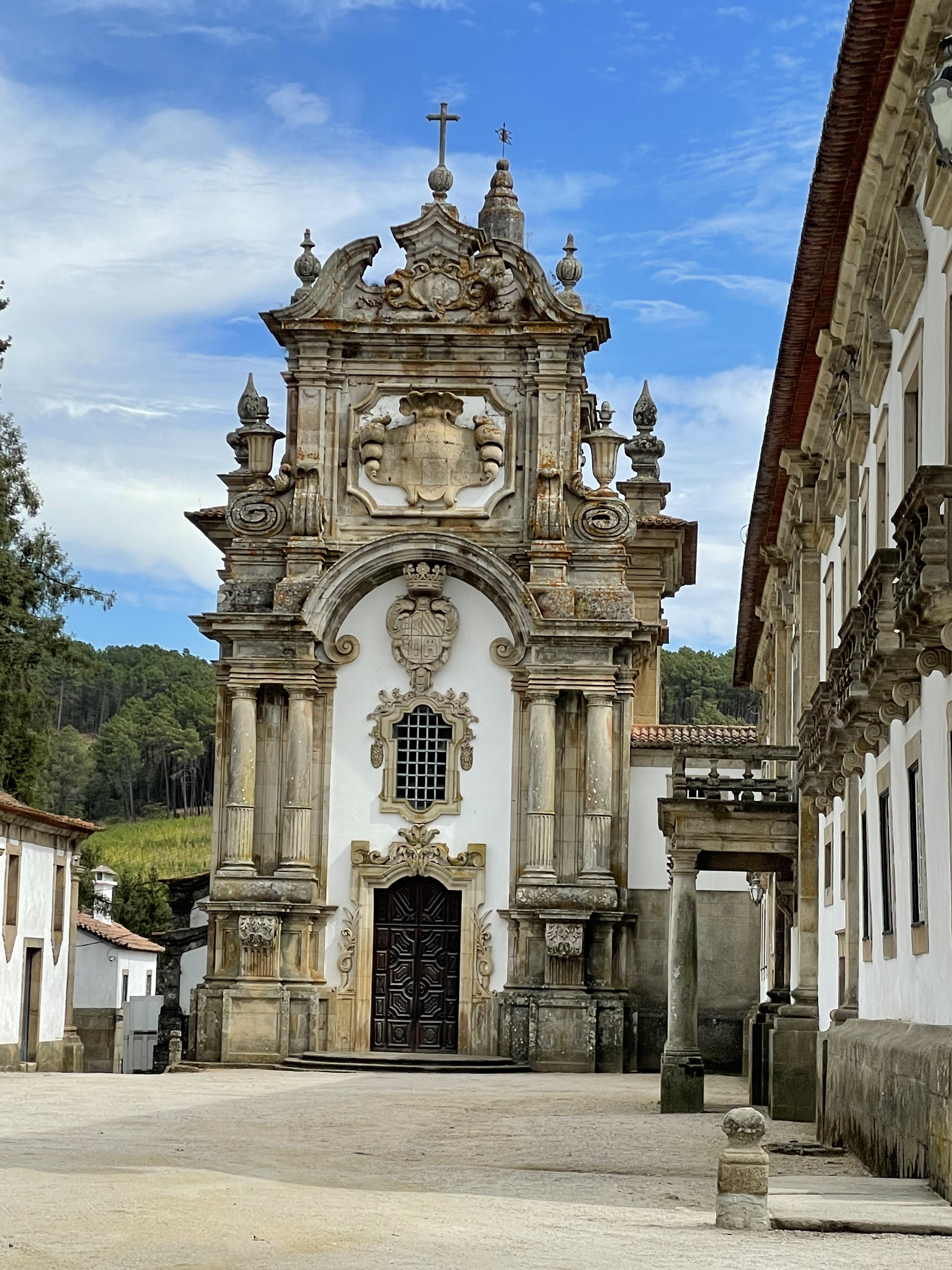
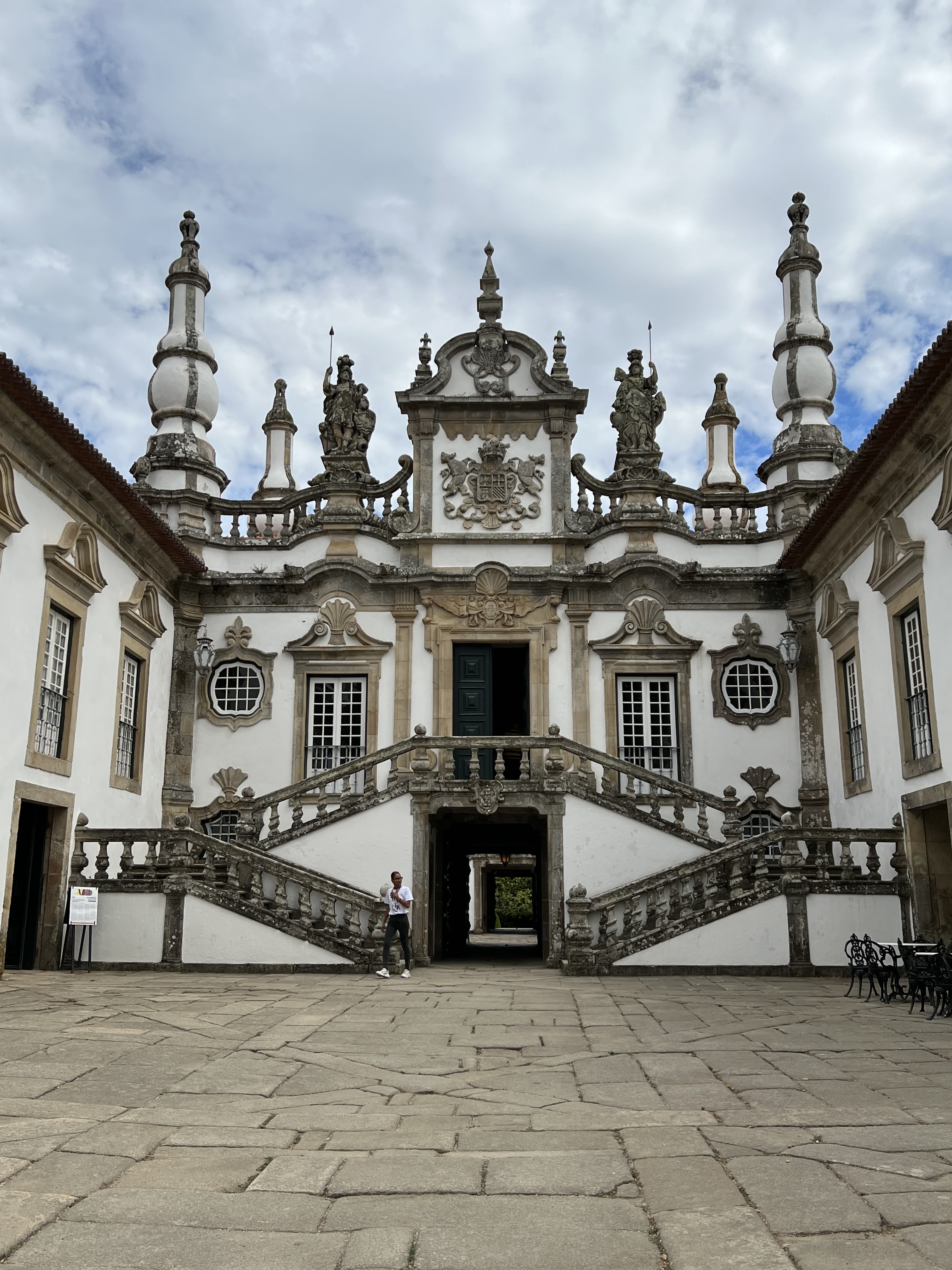
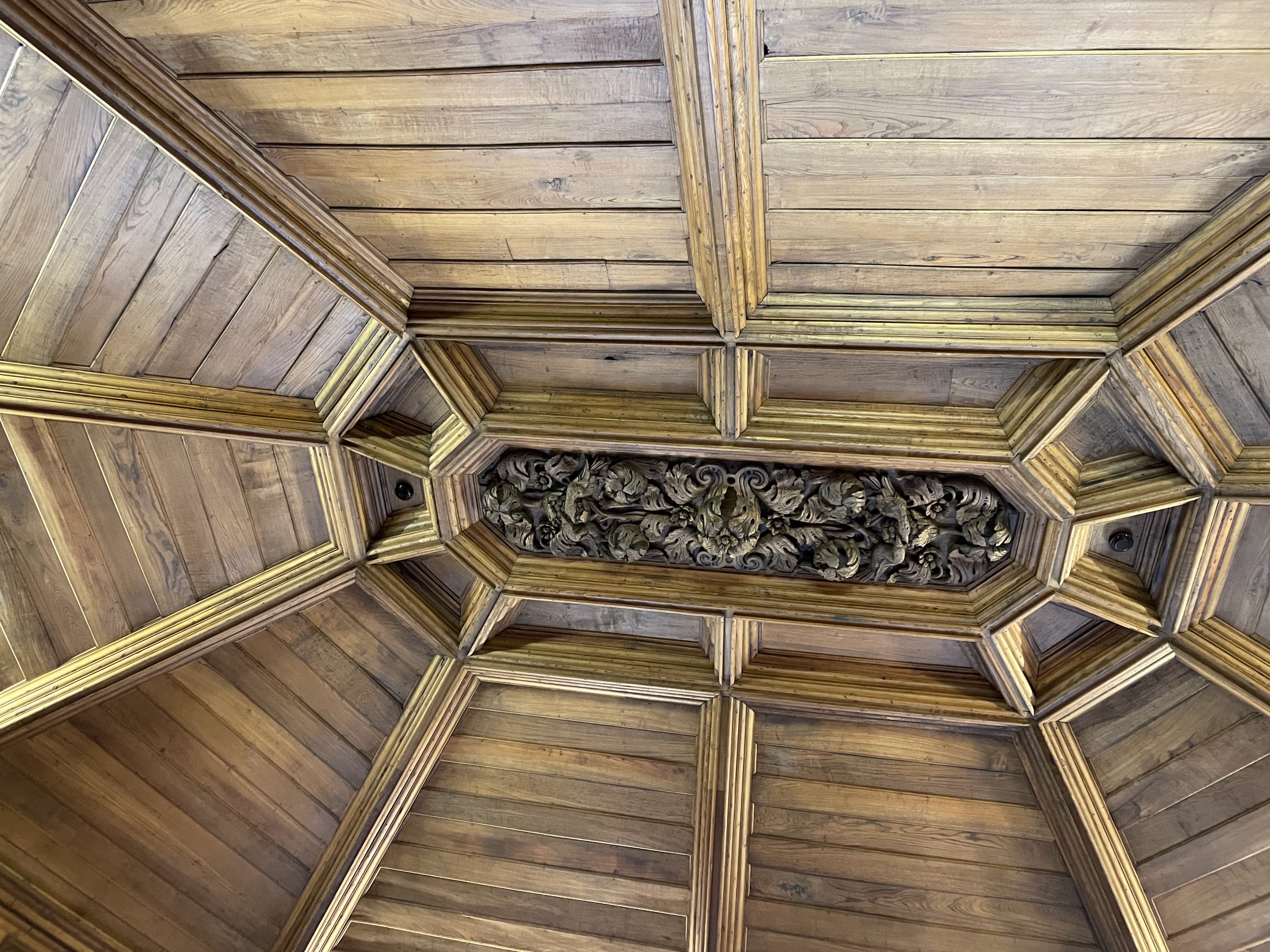
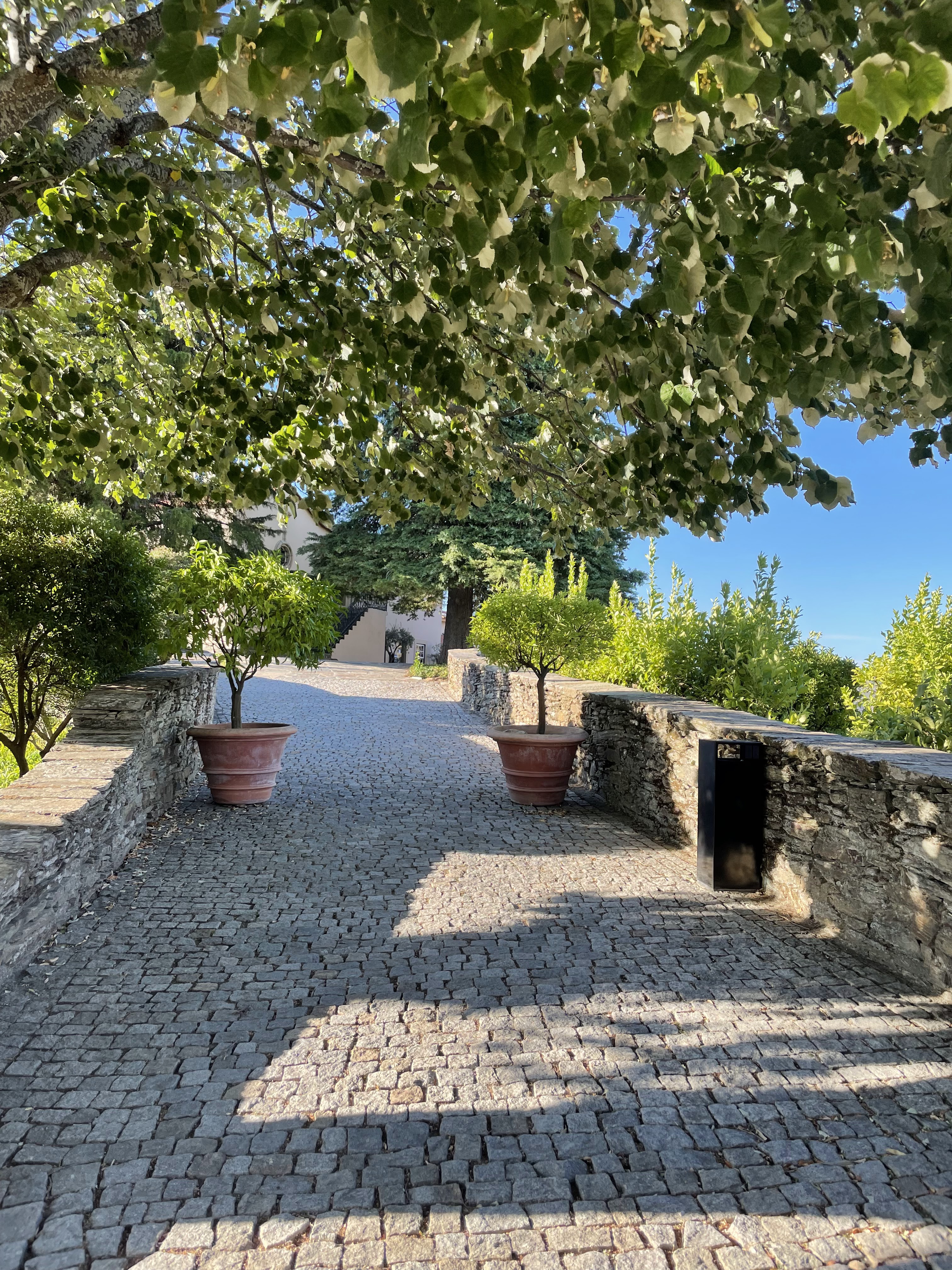
Mateus Palace & Gardens was beyond beautiful! The 18th-century baroque house and gardens once belonging to counts. The property is comprised primarily of the manor, the winery and the chapel. The pictures here are the manor:
One more that didn’t fit into the slide show:
Then on to the gardens:
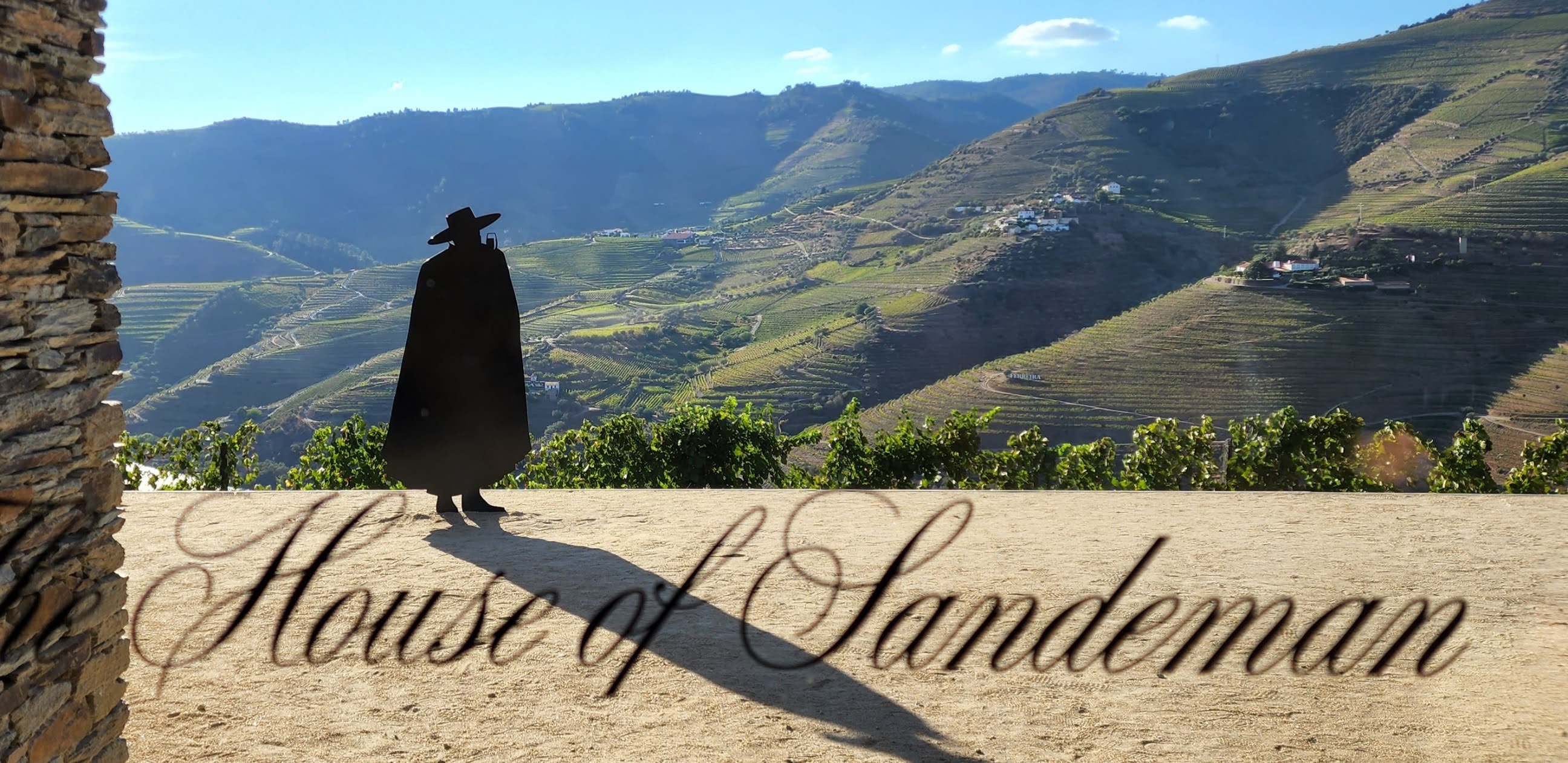
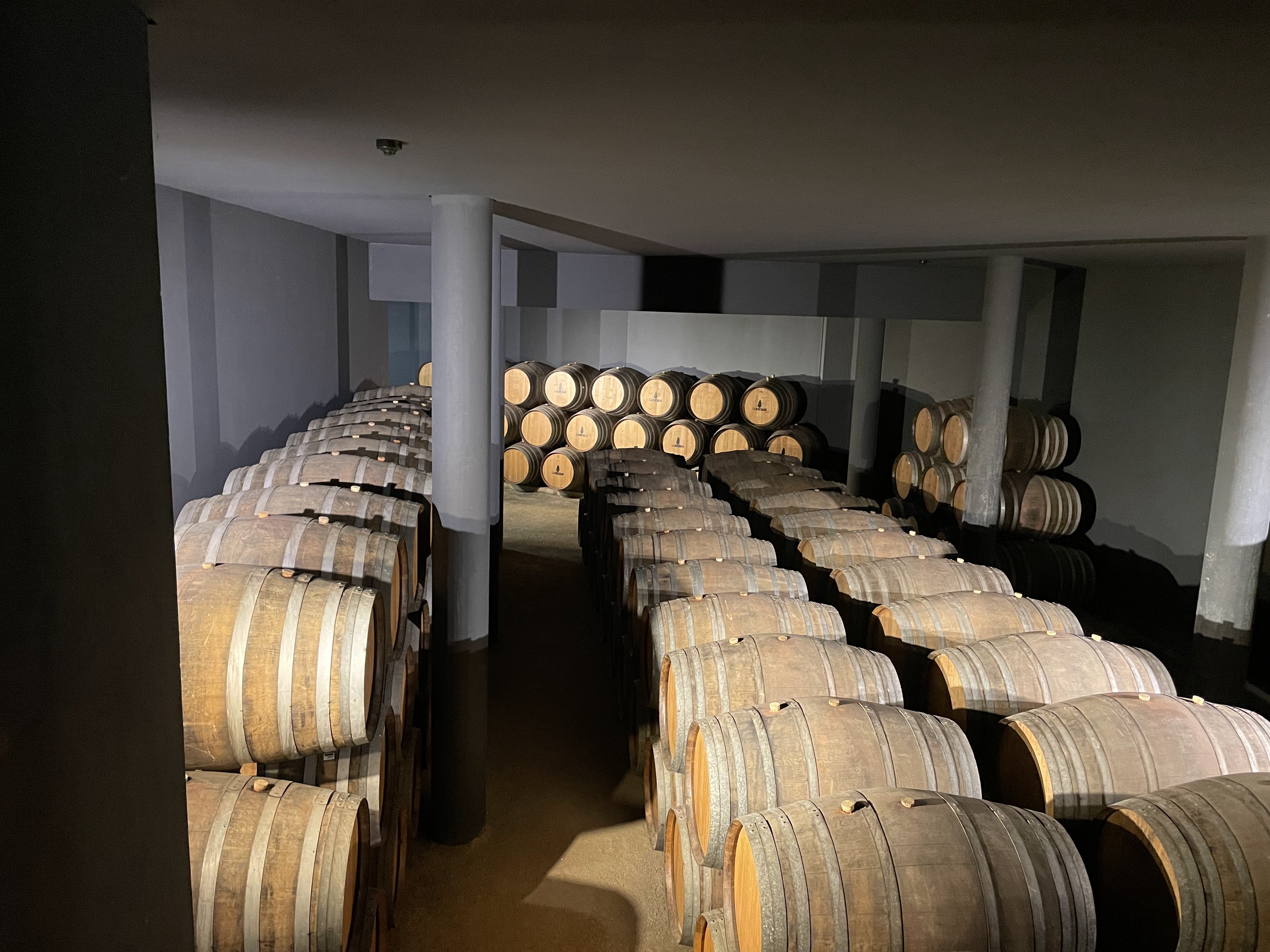
From there we boarded our bus and headed to the Sandeman Winery, (Quinta do Seixo), to learn about and taste (and buy) some wonderful Port wine! Our very enthusiastic guide for the tour did not speak English well at all! I just remember “something Portuguese, something Portuguese, something Portuguese, Welcome to the Vineyard!” Over and over again. She ended each of her very long, fast strings of Portuguese with, “Welcome to the Vineyard!”
In the first pic below, you can see that we’re very high up in the mountains! The roads were single lane, switchback roads the whole way up! On the way down we met another bus and our driver had to do some fancy steering to make room! The three drivers (one for each bus) for these tours have all been with Viking for many years. They are experts at navigating these treacherous roads!
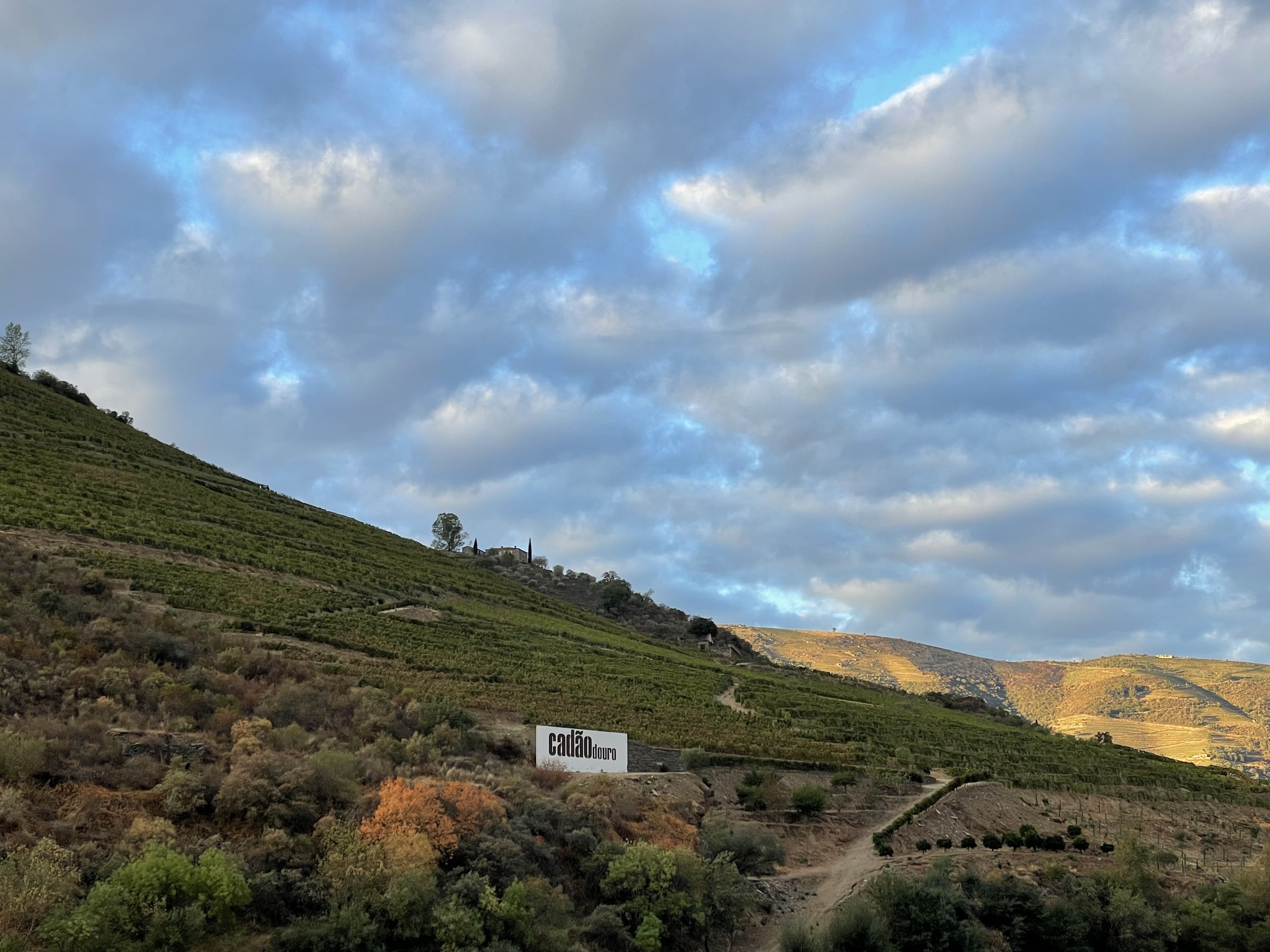
The last picture in the slideshow isn’t in focus, but it’s an example of the giant signs the vineyards install to let you know who is who!
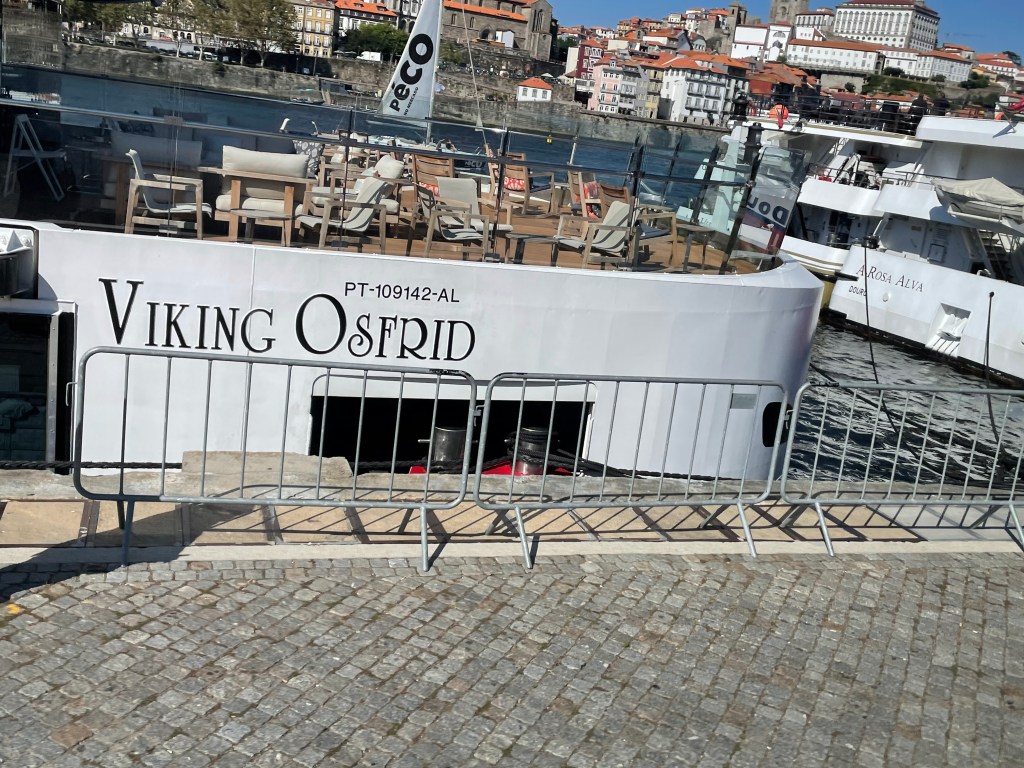
Back onboard the Osfrid, we enjoyed some stunning views, and then had a wonderful dinner. To cap it off, on the upper deck after dinner, we got to enjoy watching a crew member having a workout – well, part of him, at least!
On the third day of my Viking River Cruise, we were up early and had breakfast while our bags were collected and loaded onto our bus. Some of the views from the bus:
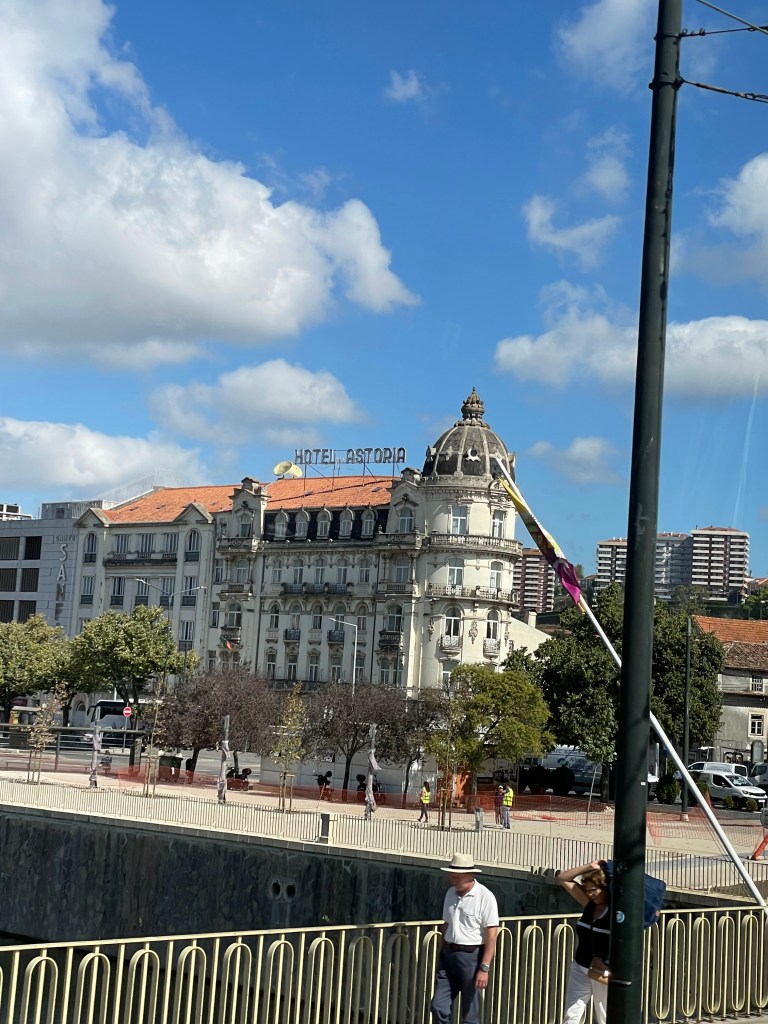
It was a bit of a haul to get to Porto, so we were happy to have a few stops along the way. The first stop was in downtown Coimbra for a short shopping excursion.
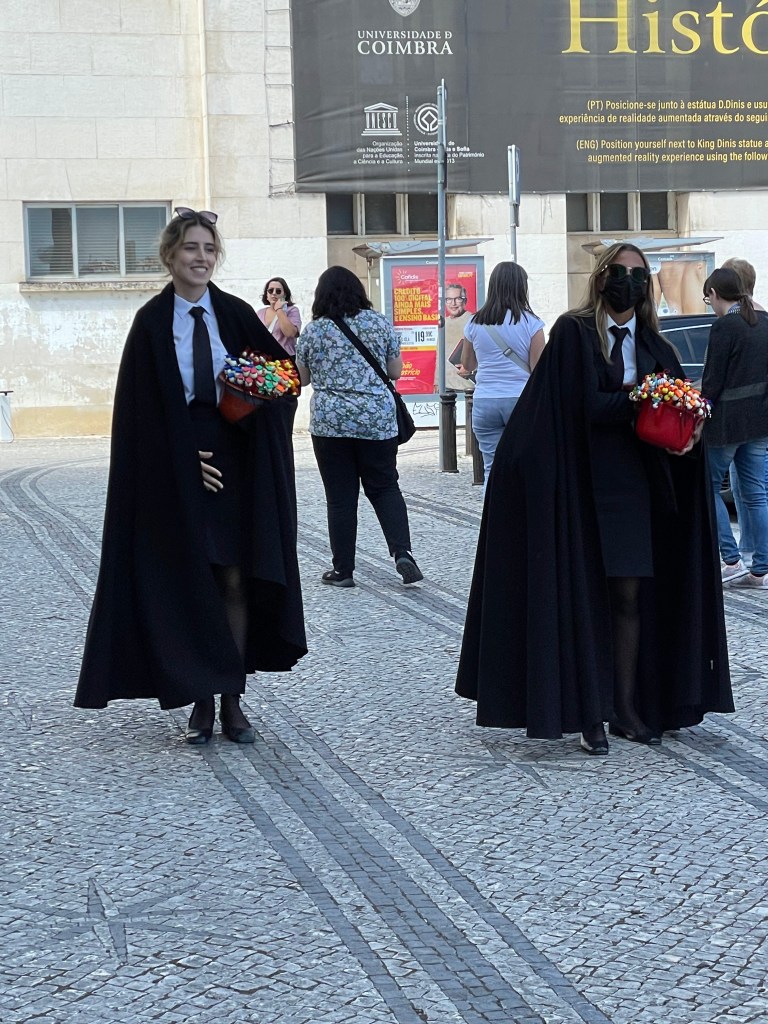
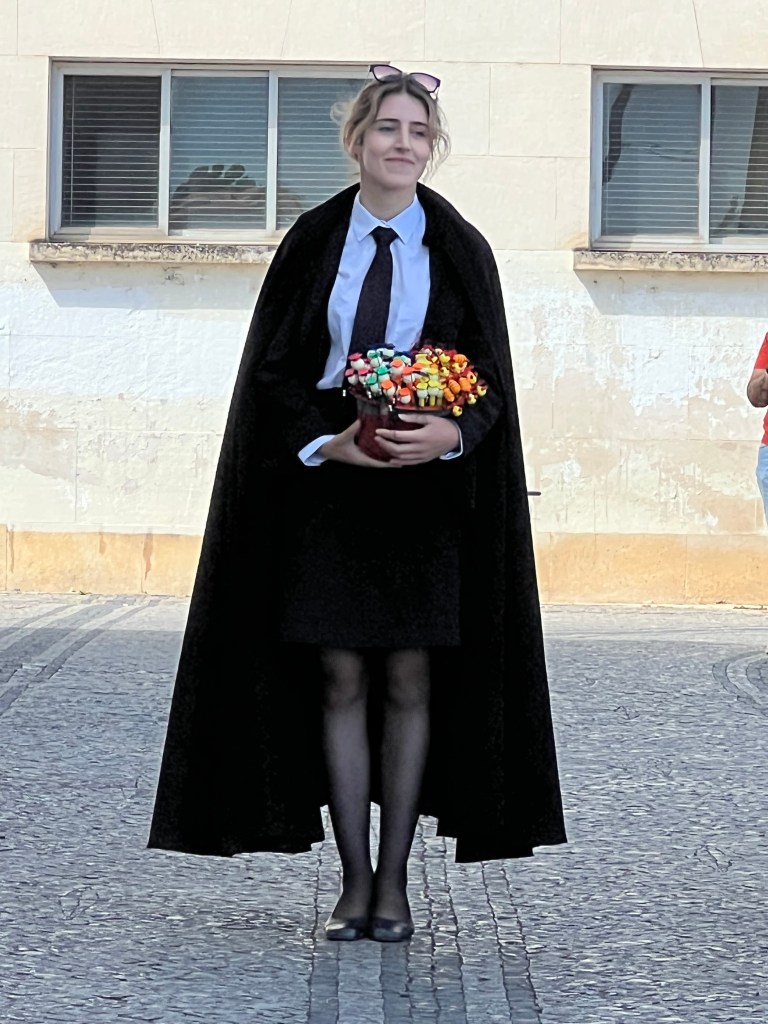
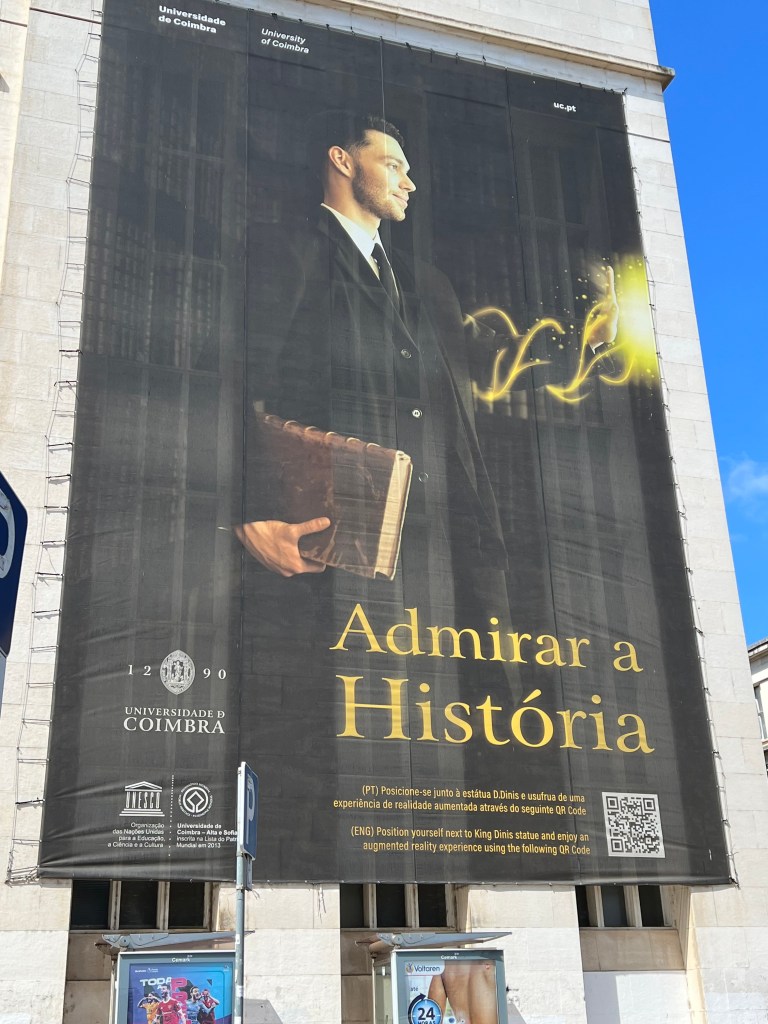
Our second stop was at University of Coimbra, where we learned so many things, some quite unexpected! One of the unexpected things we learned was that J. K. Rowling was teaching English in Porto, Portugal during the time she was writing the first Harry Potter book, and the uniforms worn at Hogwartz were influenced by the uniforms worn in universities in Portugal! Who knew!
Salazar Slytherin’s name was influenced by Antonio Salazar, a Portuguese dictator. There are, in fact, many Portuguese influences in Harry Potter, as explained in this very informative article by Chelsea Szmania. There is also a lot of ceremony around the robes. Here are a few:
First years don’t wear them. You have to be a second year.
You don’t have to wear it every day, but when you do wear it, your cape can never be more than six feet away from you. You can take it off, but if you, say, took it off in class and then left the room to use the bathroom and were spotted in the hallway without it…there were consequences (I don’t remember what the consequences were).
Relationships are represented by tears in the robe. A family relationship is represented by a tear in the front, right – over the heart. Strong friendships are tears on the front right. Romantic relationships are represented by tears in the back of the robe. If a relationship ends, the student must hand-sew the tear using the color that represents their program (law is red, pharmacy is purple, medicine is yellow, etc.). So someone who dates around could have several sewn tears on the back of their robe!
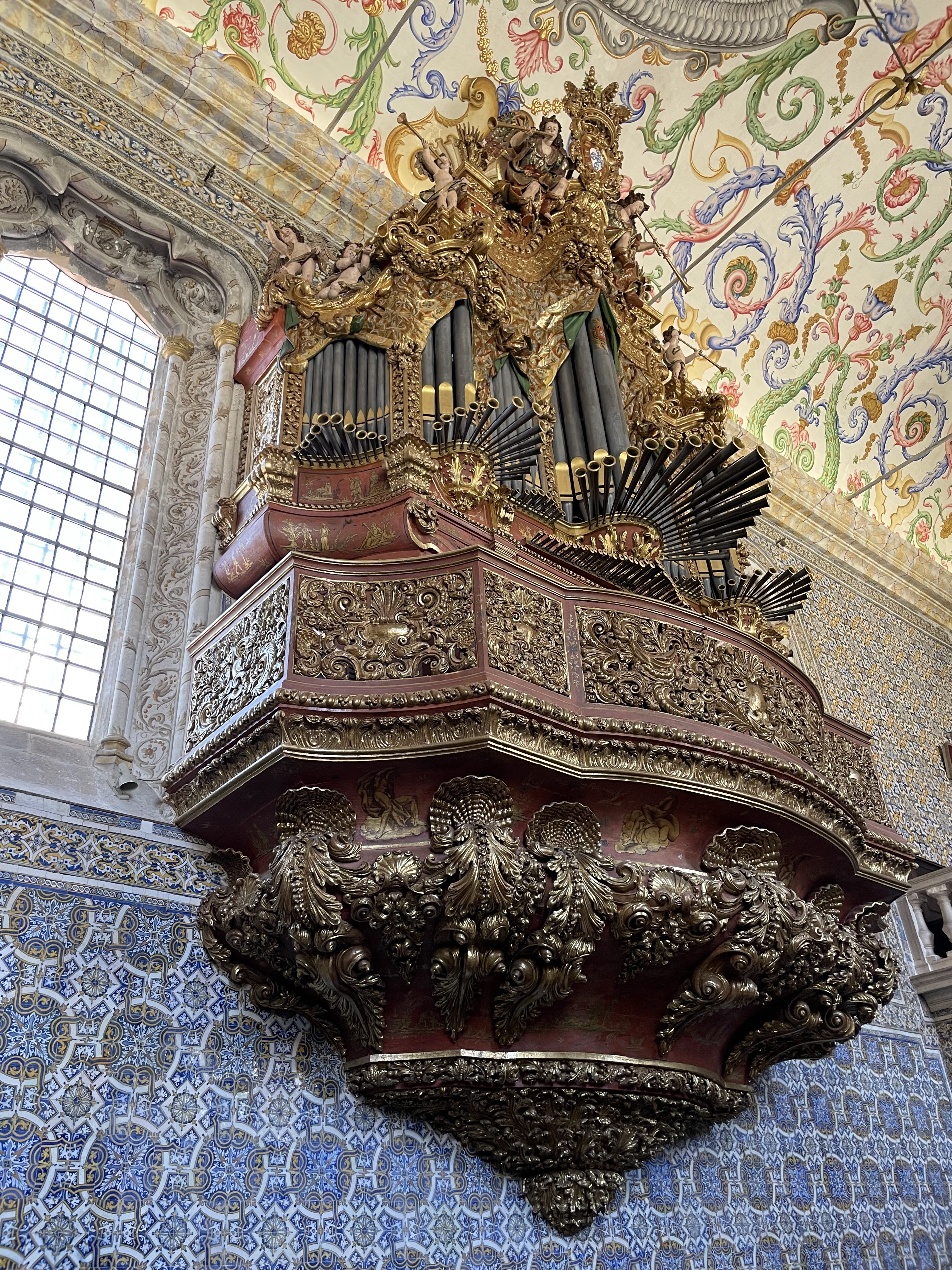
In the photos below are the grounds of the University, which show ongoing restoration. There is a statue there of King Denis, known as the Farmer King for planting a forest to provide raw materials for royal ships and also known as the Poet King because he wrote poetry and was influential in establishing Portuguese as a literary language. There are pictures inside Prisão Académica, which dated back to when the University would hold its own court and imprison students who had broken rules. We were also able to see inside a small library, but the much larger Joanine Library has a no photos rule, so nothing to show there, but the page at this link will has a couple of pictures.
Here are some pics of St. Michael’s chapel inside the University building.
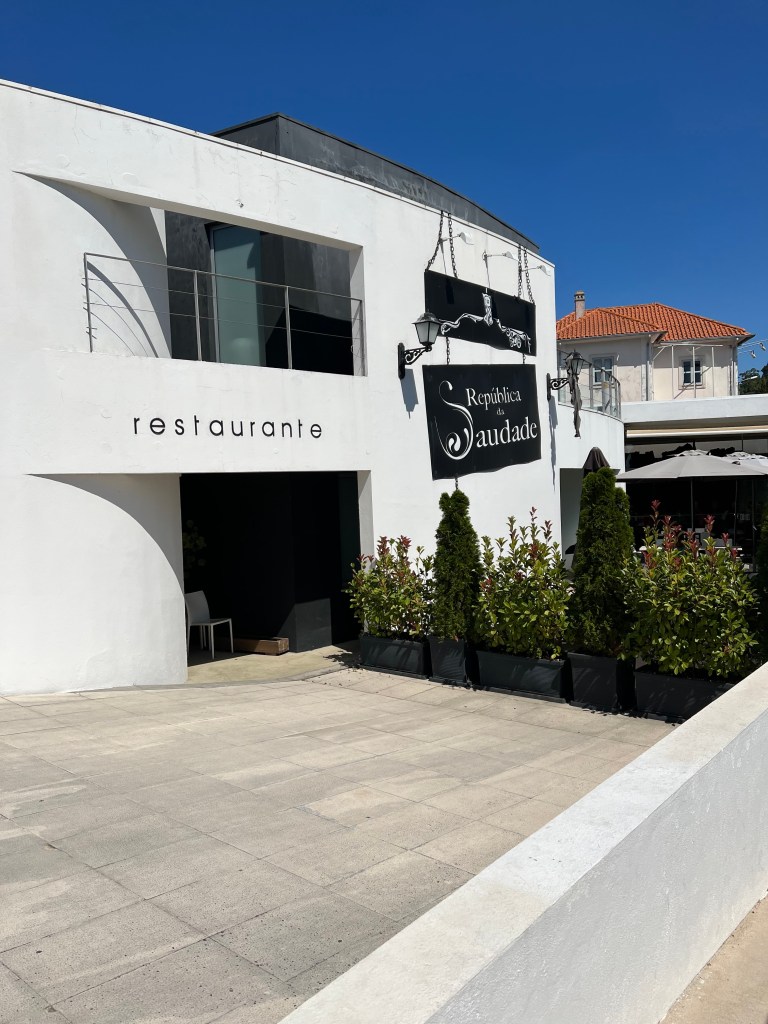
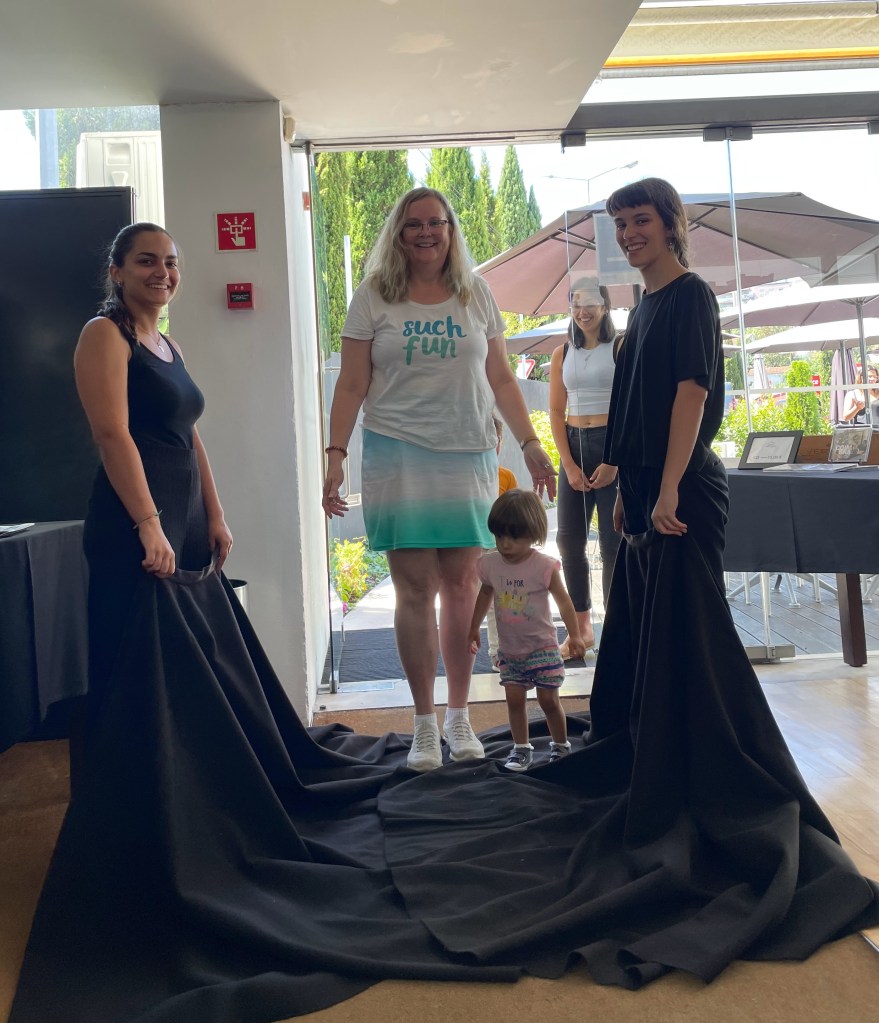
After University of Coimbra, we stopped for lunch at Republica da Saudade, where we experienced one of the robe rituals first hand! The restaurant was staffed by university students, and as we entered the restaurant, there were two students, one on each side just inside the door, holding their robes so that they fell on the floor in front of them and you had no choice but to walk on them to get into the restaurant. Having your robe walked on is an honor.
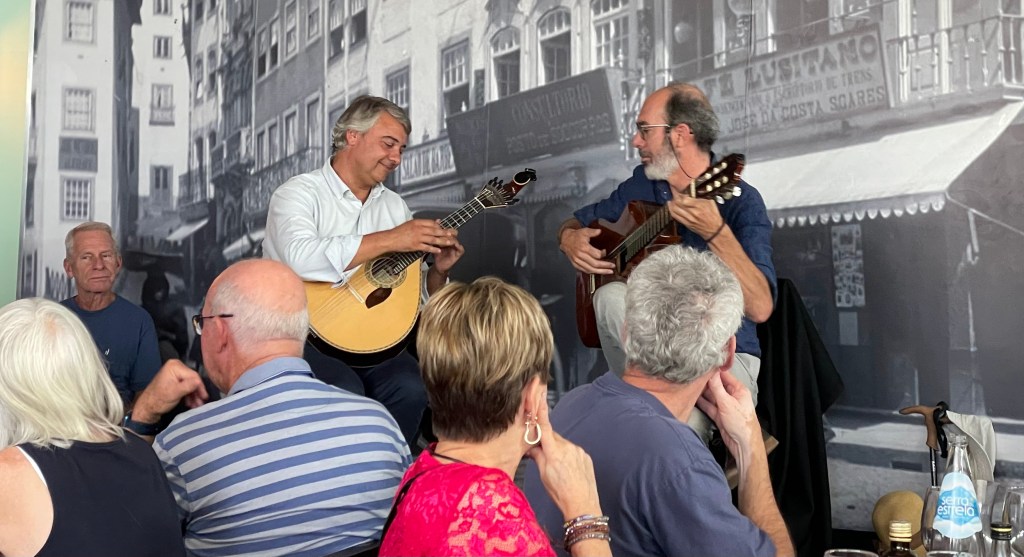
For me, lunch was a wonderful Cod casserole, ice cream and sparkling wine, while listening to Fado Music performed by the restaurant owner and friends. It was beautiful! I don’t have a recording of what we heard, but this recording is by the same group.
I had a photo bomber who stayed with me through several takes of this shot – her mother is standing behind me, just outside!
One of the songs was so full of emotion it brought tears to my eyes!
After lunch we continued to Porto where we boarded our ship and began unpacking before heading to the lounge for a welcome reception with wine and cheese and some lovely piano playing by our onboard entertainer.
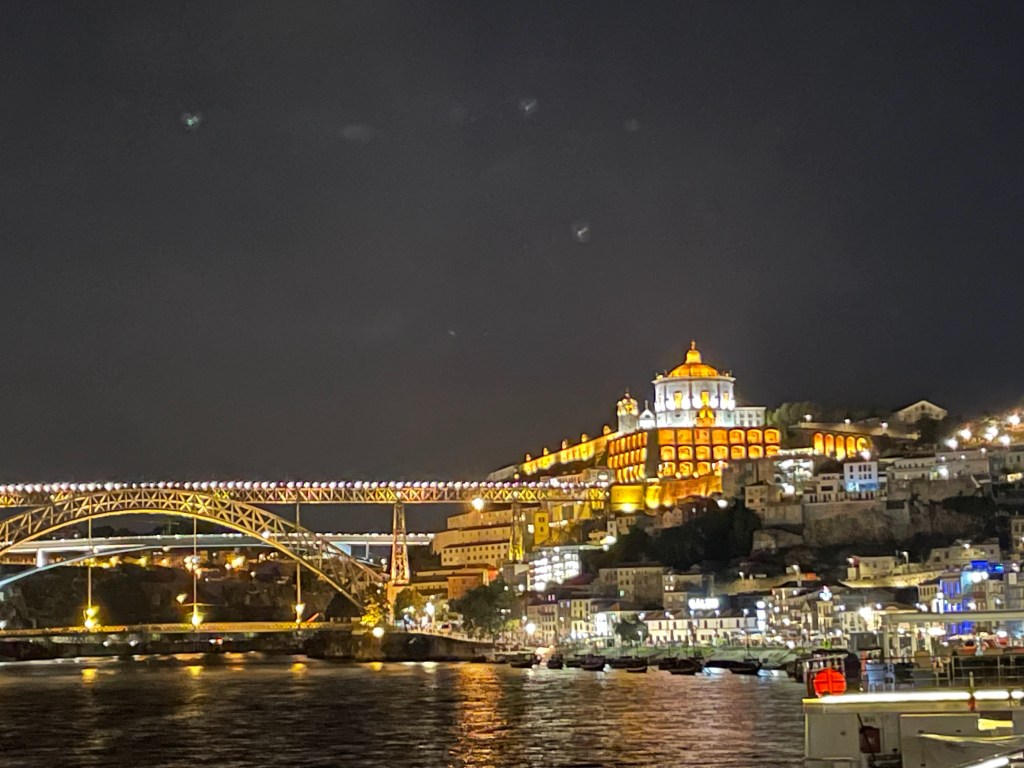
From the lounge we headed to the ship’s restaurant for dinner. It was a long, eventful day, but we had to stop on the upper deck to view the city at night before retiring to our cabins.